

I'm an irredeemable optimist, and that's not always a fashionable position to hold.
We all know the narrative, usually peddled by people who have an interest in terrifying you: War is spreading through the middle East, America is destabilising the world economy, fertility is crashing, housing is unaffordable, superbugs are spreading, AI is coming for your job, soul and libido… you get the point.
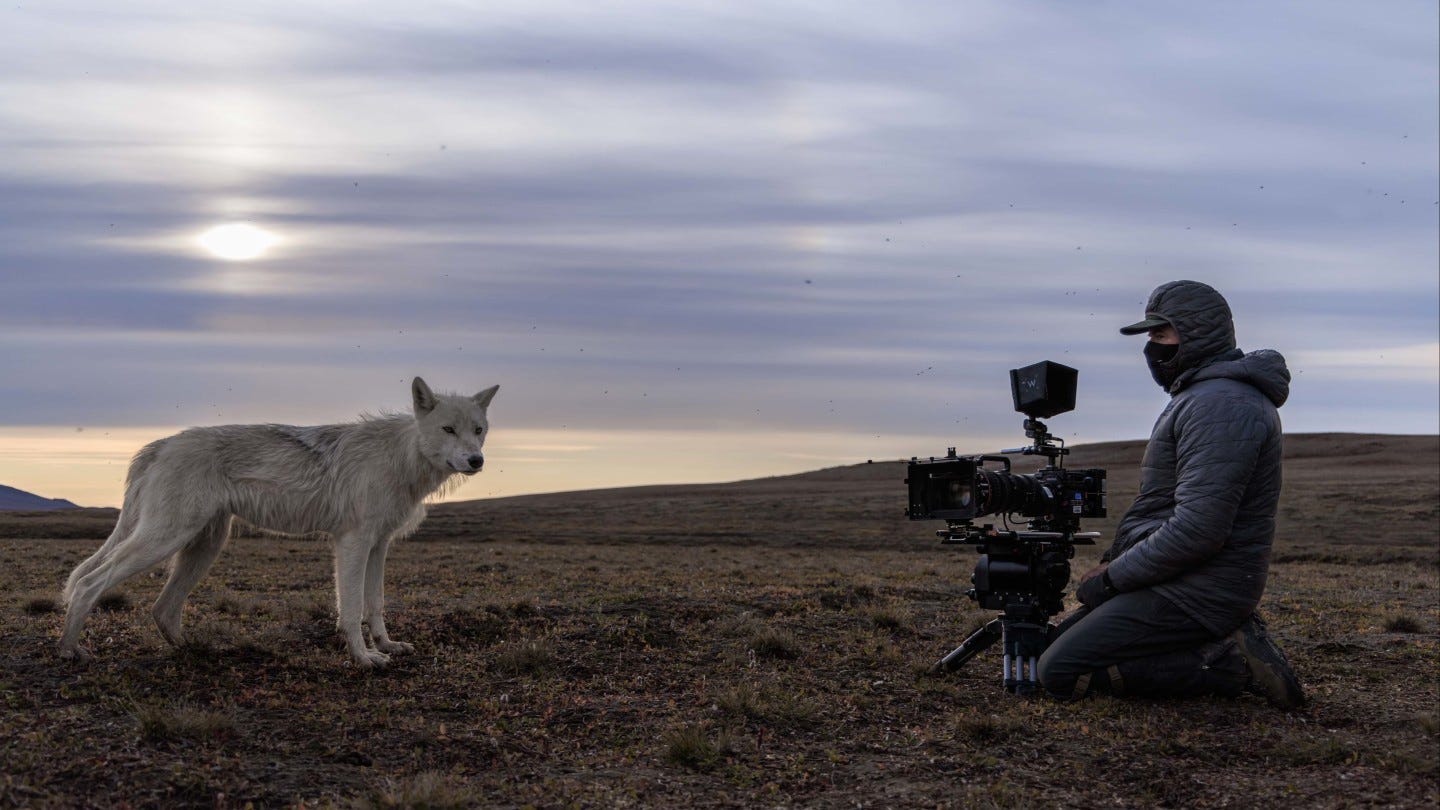
Even now, on a pleasant Saturday while my son tries furiously to resist his afternoon nap, David Attenborough's A Life On Our Planet plays in the background. Amidst the spectacular cinematography and narration from a man we'd all have as our learned uncle, there's an impossible to miss message of doom. On a severe black screen a readout of the human population ratchets ever-upwards, CO2 levels ever-higher and remaining wilderness area ever lower. As the film progresses into the future, whales die, crops fail and dust devils suck at parched fields as mass extinction grips the Earth.
In small-scale imitation, my son, his back to the TV, prods at buttons in a child's book, coaxing animal sounds from electronics hidden in the binding. The floor is covered with scattered toys in a miniature celebration of entropy. Soon he will start stacking construction blocks and smacking them down again, forever the human dualist.
Behind him, Doom is earnestly forecast, to a swelling musical score.
Nah, no thanks. I'll stick with unrepentant optimism.
The global population is 8 billion people and climbing, so it's worth casting your mind's eye back to the 1960s and the release of Paul Ehrlich's bestselling book and prophesy of doom, ‘The Population Bomb’. The book predicted widespread famine and the collapse of food systems as the global population outstripped our ability to feed it. Well, the global population was 3.5 billion people in 1968 and over 8 billion now, and no catastrophic global famine.
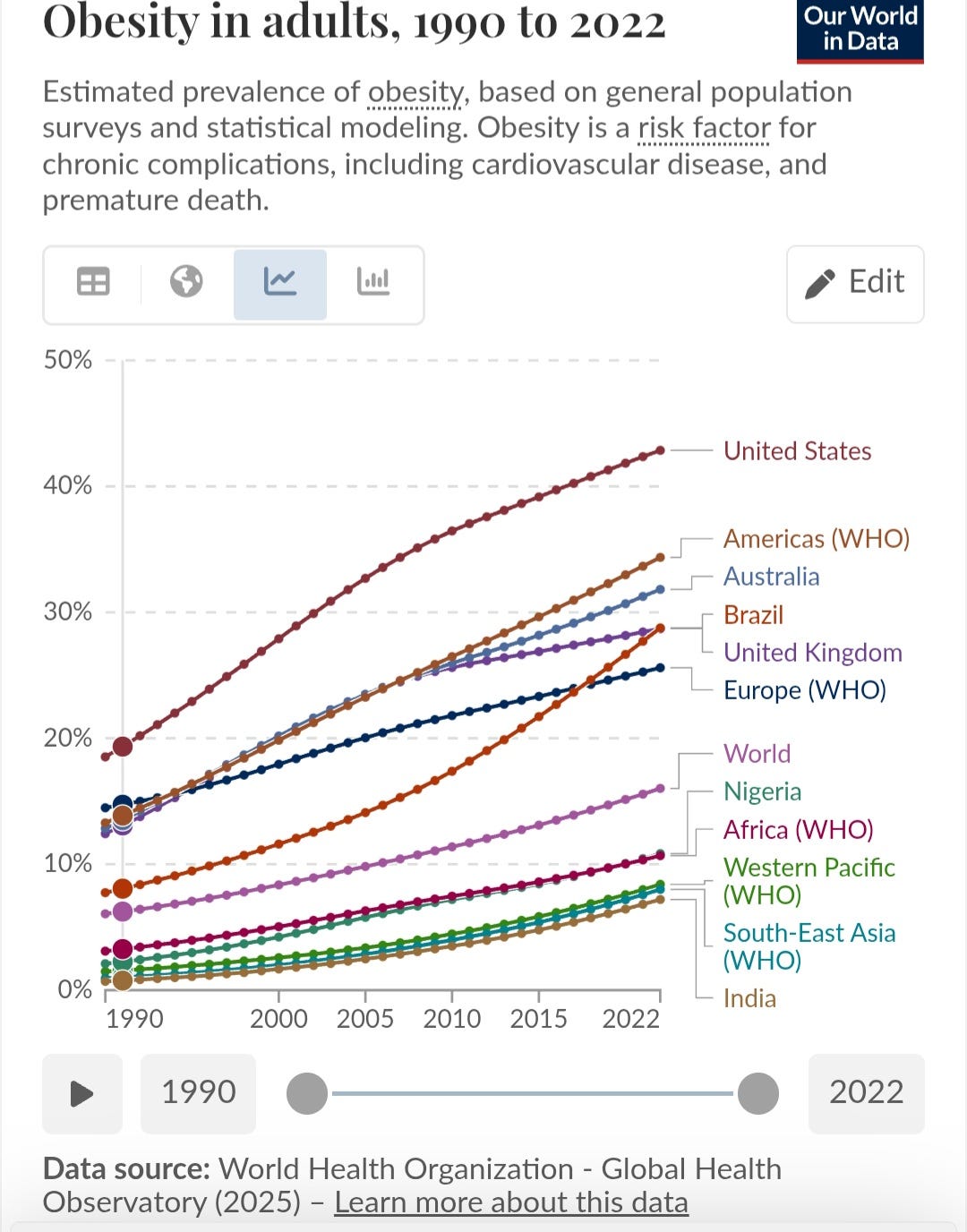
Quite the opposite: Across the world, as ample diets have gone global, we've all become rather… chunky. Obesity is on a rapid increase across the world as food supply far outstrips population growth. Obesity might be a strange thing to be optimistic about, but it's far preferable to its opposite. Better fat than famine.
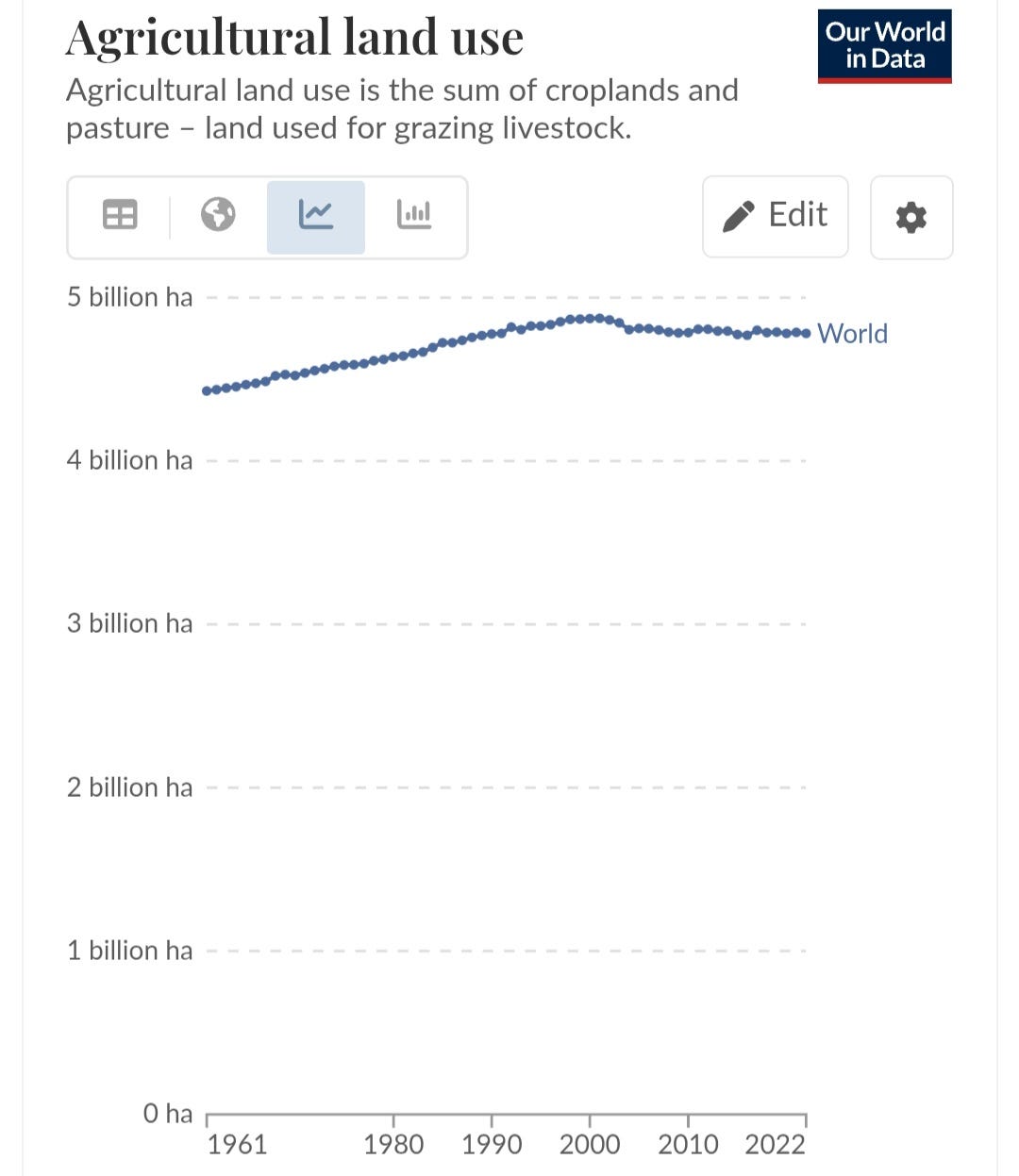
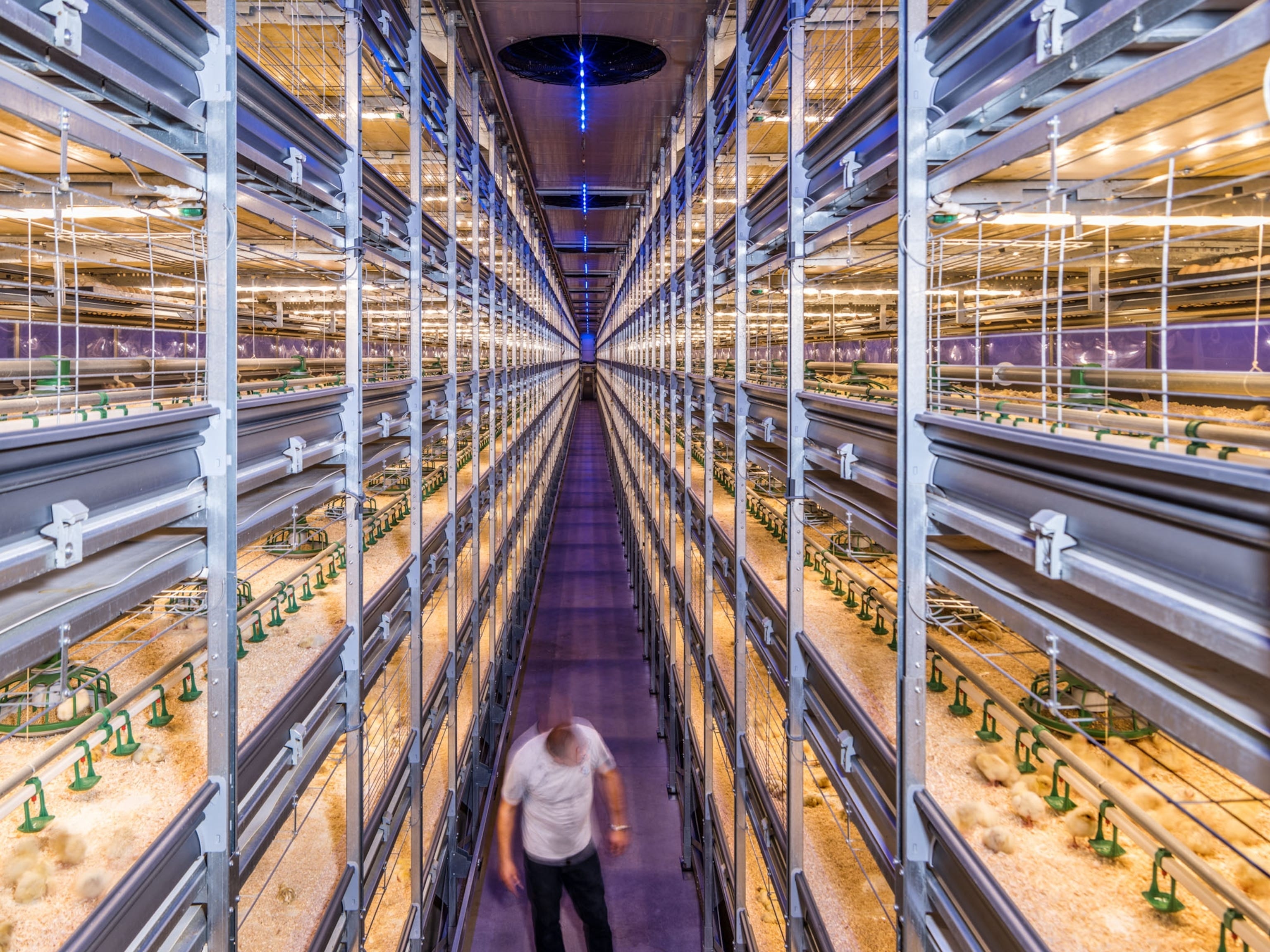
And it gets better, for not only are we producing more food than ever before, but we haven't really needed to increase the amount of agricultural land to do it. Between 1961 and today, the total amount of agricultural land has barely increased, and has actually gone down in the last twenty years, yet the population has more than doubled and we've all gotten fat.
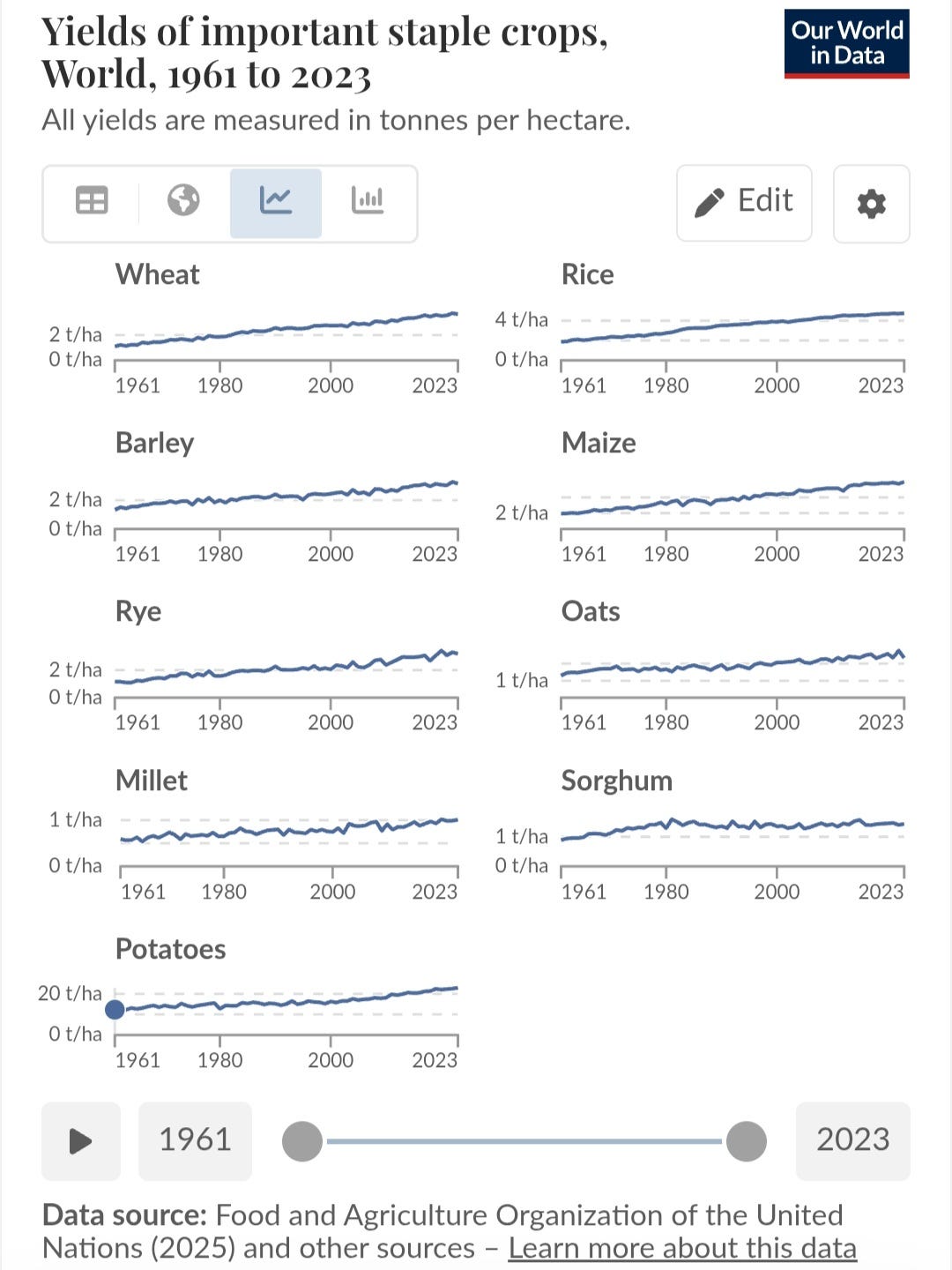
Human ingenuity has, time and again, loosened the noose and opened doors. The global supply of fertiliser was once limited to night soil and guano-covered remote islands, placing strict limits on population growth. Yet in the first world war, a method was found of fixing nitrogen from the air itself: The Haber process requires only methane and energy, and we've plenty of each.
Maybe an infinite amount.
As we vaulted from wood to coal to oil to gas to nuclear and now, perhaps, the mass-scaling of cheap photovoltaic, the bolted door of civilizational energy is about to get its hinges blown off, and we haven't even got to fusion power yet.
Ingenuity breeds providence, which is why the world's third largest agricultural exporter is the Netherlands, a tiny densely populated country that has no right to excel in agriculture, yet it does.
Every wall that humanity reaches has turned out to be a door.
A few years ago, you may recall, a virus broke containment (of the natural or laboratorial sort, you pick) and went on to spread around the entire world. The time from the first panicky lockdown to the first genetically tailored mass-produced vaccine was about 9 or 10 months.
When I came of age, breathless discussion centred on ‘peak oil’; the point at which an ever-increasing demand for the black stuff would be frustrated by ever-declining production. The doomsayers prophesied that oil production would fall as the most economic sources were drained one by one, and with a sad empty-milkshake-glass slurping sound, all the wells would run empty and civilization would begin to fall.
It didn't happen. Not only didn't it happen, but the shale oil revolution turned the world's biggest oil consumer into its biggest producer, and the technological maturity of electric cars might make the whole question moot very soon anyway.
With each limitation we have found another door to open.
Urban disease? Sanitation and water treatment.
Living space? Skyscrapers and fast underground rail.
Speed? The steam engine, the coal fired ocean liner, the internal combustion engine, gas turbine, jet airliner, maglev train…
Speech? The mail coach, telegram, fibre-optics, translation algorithms.
Smarts? The written word, the slide rule, spreadsheets, silicon intelligence. AI.
From Soyuz to Starship, from crop rotation to CRISPR, we have opened doors faster than we can sprint through them. The emerging pseudo-consciousness of AI might be another way to increase the rate, turn up the dial. Is it capable of real invention, or just an imitation machine?
It hardly matters. It's just another door. There will be many more. My children will grow up in a world of wonders.
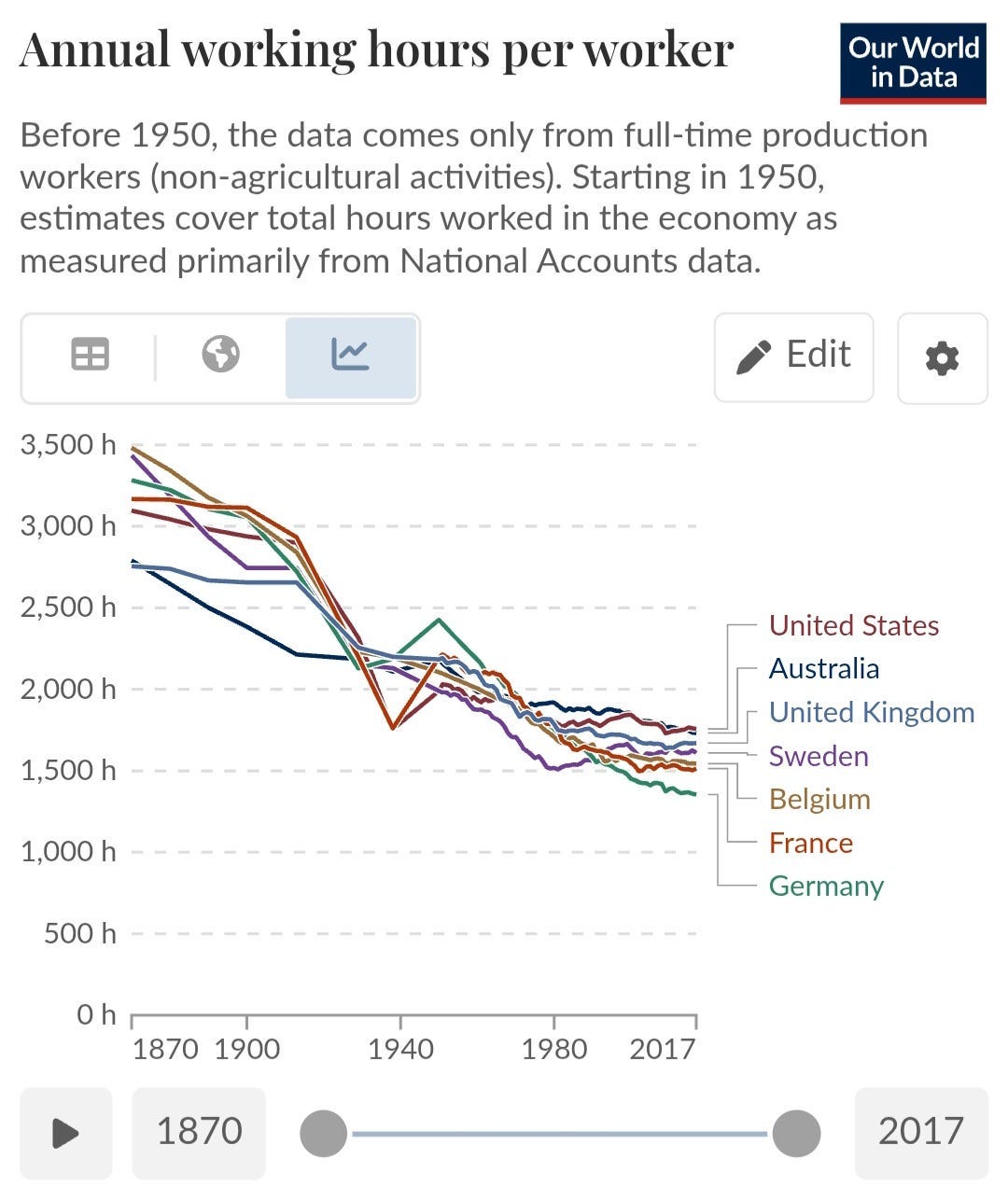
And love. One unspoken triumph of the modern world is what we've chosen to do with our time, because contrary to popular wisdom it isn't work. We spend less time toiling than at any other point in history, and on what do we spend this swelling embarrassment of leisure time?
Well, for some it's sourdough, software and social media, but for those of us blessed with little people, the time mostly goes into our children.
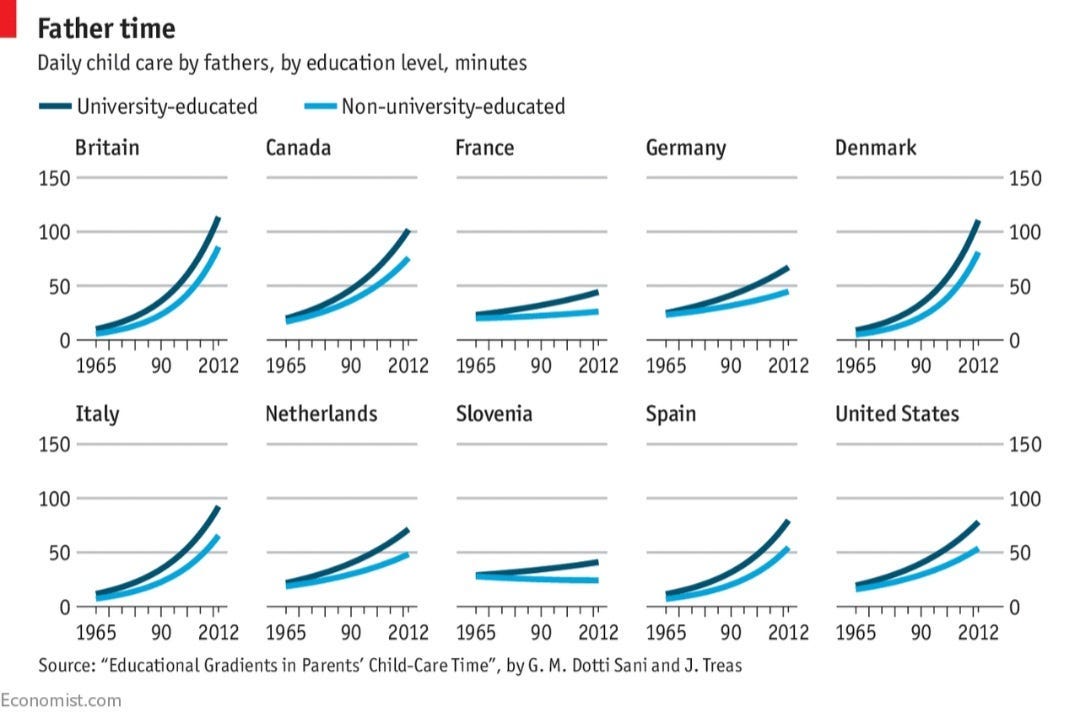
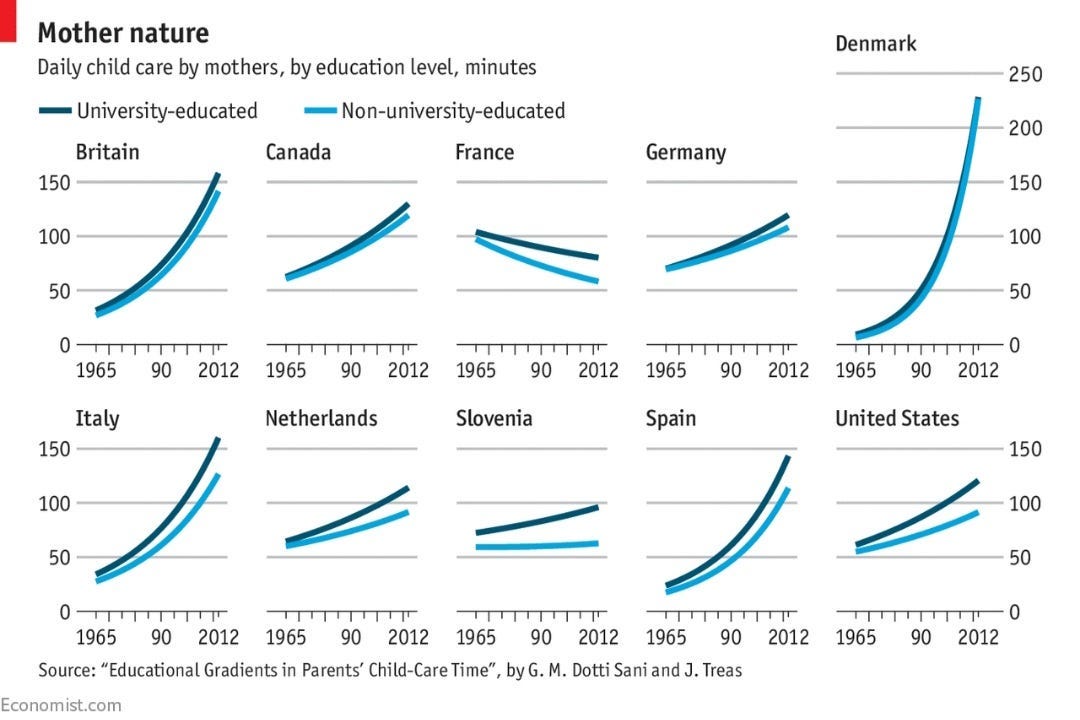
This is a generation that spends more time parenting than any other, even as average family size has shrunk. Our children are the unaware beneficiaries of a historical feast of family-time.
I savour this now, as I boil my organic Italian durum-wheat children's pasta, cut into fun panda bear shapes. I contemplate making a mini pizza with some usefully pre-packaged Italian tomato puree too. Or maybe use some of the responsibly sourced Norwegian farmed salmon. My son has decided to play with a miniature barista set and is marching proudly around with a tiny fake Cappuccino.
Seriously, what kind of world do we live in?
We live in a world where the poorest have access to wonders that an emperor couldn't buy with all his conquests. We've banished hunger and shrunk distance. Limited violence and expanded the mind. We've created a world of plenty and pulchritude so all-encompassing and banal that bored people in their millions go online to argue about culture war miscellany because they haven't anything else to worry about!
And, -just so long as we don't do anything stupid like blow it all up- we have a kaleidoscope future in front of us and our children. Intelligent machines and intensive agriculture, re-wildings and re-imaginings. The exploration of the vacuum and of the mysteries of the human mind. Maybe an instant exercise pill or a truly healthy burger too, who knows?

Of course the doomsayers still creep among us, moping. They shouldn't be completely ignored; some warnings do need heeding or they'll become our future. Gain of function viral research and climate change won't go away just because we stick our fingers in our ears.
But all the same, the doomsday prophets are wrong. They're wrong because they forever underestimate the innovative nature of the human species, because they personally don't have it: That's fair enough, most of us don't, but we've got a pool of 8 billion to pull from, so no problem. They underestimate our ability to adapt and don't realise that every intractable problem isn't a wall, but a door.
And we can always open doors.
Here's to the locksmiths!
This is a great piece, Jordan!
Just a generation or two ago, the experts were certain that mass famine was coming for us…millions would die as the population outstripped our ability to produce food.
Yet, here we are, the population has doubled, obesity is a major health issue, and were are achieving this using LESS farmland. Seems impossible, but actually these trends are intertwined.
We have optimized our food production for calories, not nutrients. Our technology outpaced our biology. For example, as I wrote, we began selection against Omega-3 fatty acids in our food production before we even knew they existed.
Omega-3s are thought to protect against diseases of inflammation, so its probably unsurprising that most diseases of the modern world are related to chronic inflammation.
Yet, in a way, this is a good problem to have. The obstacle becomes the way. The next challenge is producing more nutritious and wholesome food without sacrificing total output.
I'm not quite as optimistic, possibly because my primary interest is ongoing wars, but I'm still on the optimistic side of things. There are only a handful of serious problems where progress is slow or stalled, but the vast majority of problems are now solved or clearly on their way towards it.