The Aerospace Crystal Ball
My predictions for the flight technology of the future

The world around us changes in ways large & small, but somehow the one above us stays the same. The same single-serve meals are eaten, elbows locked, on the same plastic tables in pretty similar looking aircraft, cruising at pretty similar speeds to similar places.
You can't smoke on them anymore though, so there's that.

I'm being unfair. The world above us has soared on a package of technologies that have seen efficiency graze new heights, real costs plummet and the availability of mankind's oldest dream grow and grow. By the end of this year, almost 10 billion individual passenger flights are expected to have been logged since January 1st, and that number keeps getting bigger.
This isn't because we're all so rich that we're awash with kerosene: Any attempt to heat your house with oil this winter will destroy that illusion! It's because under the skin of everything that touches heaven, billions of engineering hours have conspired to make them slicker, safer and super efficient, delivering more for less.
A lot of this newsletter has gone into detailing these hidden techno-triumphs, but the question on every cynic's lips is “can this keep on going?”
It can. Humanity does not lack for imagination and the multi-decade forward planning of the aerospace industry leaves some pretty big signposts as to what is possible. The future of flight could look very, very different to how it is now. Or it might not: Just because something is possible, it doesn't mean that it will be done.
Well I lived in the industry awhile and have been an amateur observer for longer still, so let's pull the cloth off the crystal ball, bat away the demons, tell the big flaming eye to mind its own business and try to predict the future.
Here's what I think is coming down the runway.
1: Electric Dreams.
They're weird, they're insectile and they look like they're about to pounce. Strangely, they can fly.
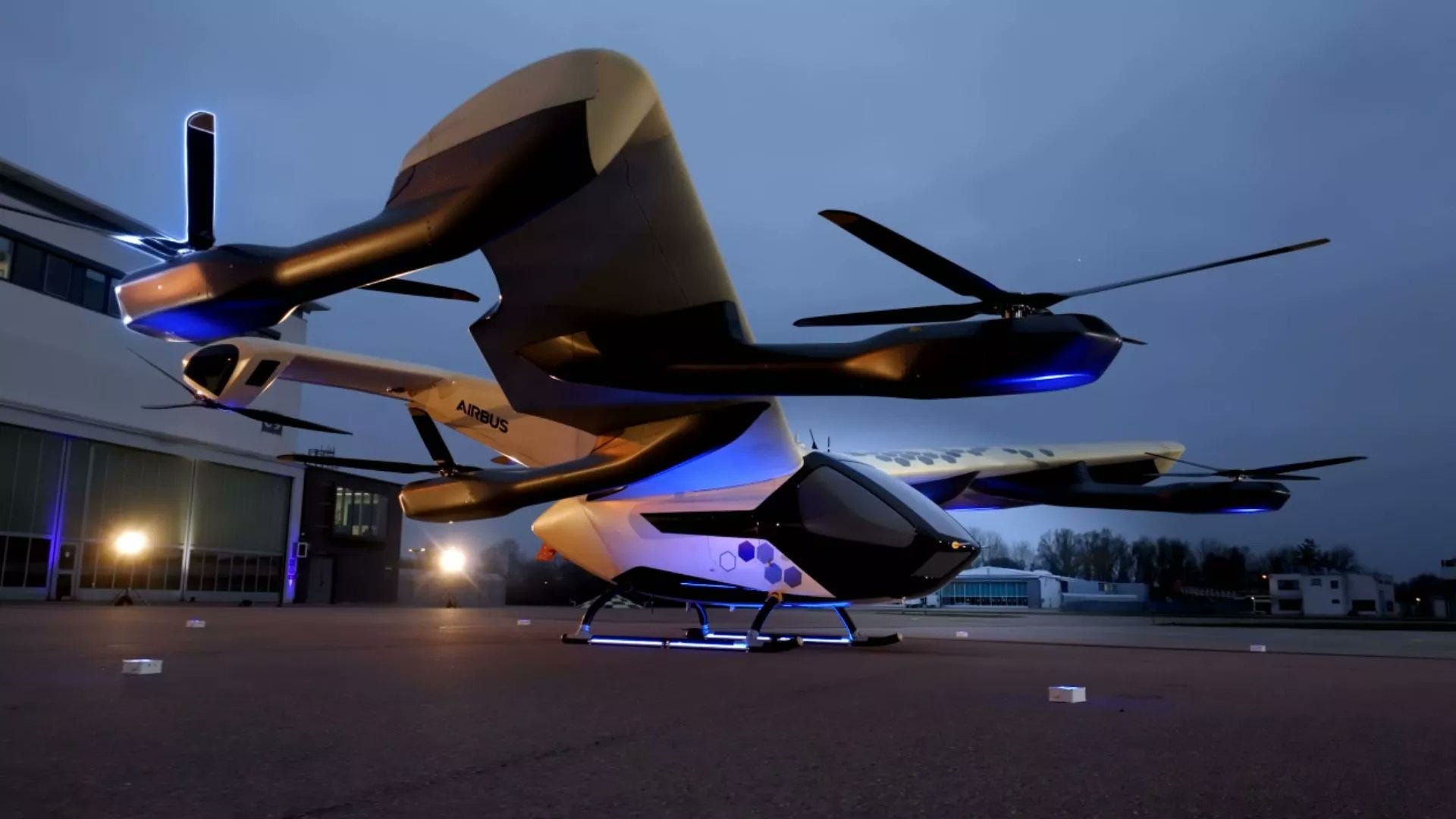
Let's start with the weirdest and most unpredictable corner of aviation: Battery electric vehicles. Specifically, aero-taxis. These have jumped in & out of the news for a couple of years now, as advances in lightweight motors and battery energy density advanced to the point where short-hop electric aircraft aren't just a laughing stock.
For sure, they are short-legged. The buzzing dragonfly-esque battery electric taxis all have one-way ranges between 100 kilometres and 100 miles, or up to an hour in the air, which isn't all that much.
But I'm going to push the boat out. Not only do I think that air-taxis are going to be big, but I think they'll become the perfect laboratory for unconventional aerodynamics & powertrains. Short range and long charge times would seem to argue against this, but give me a minute to explain…
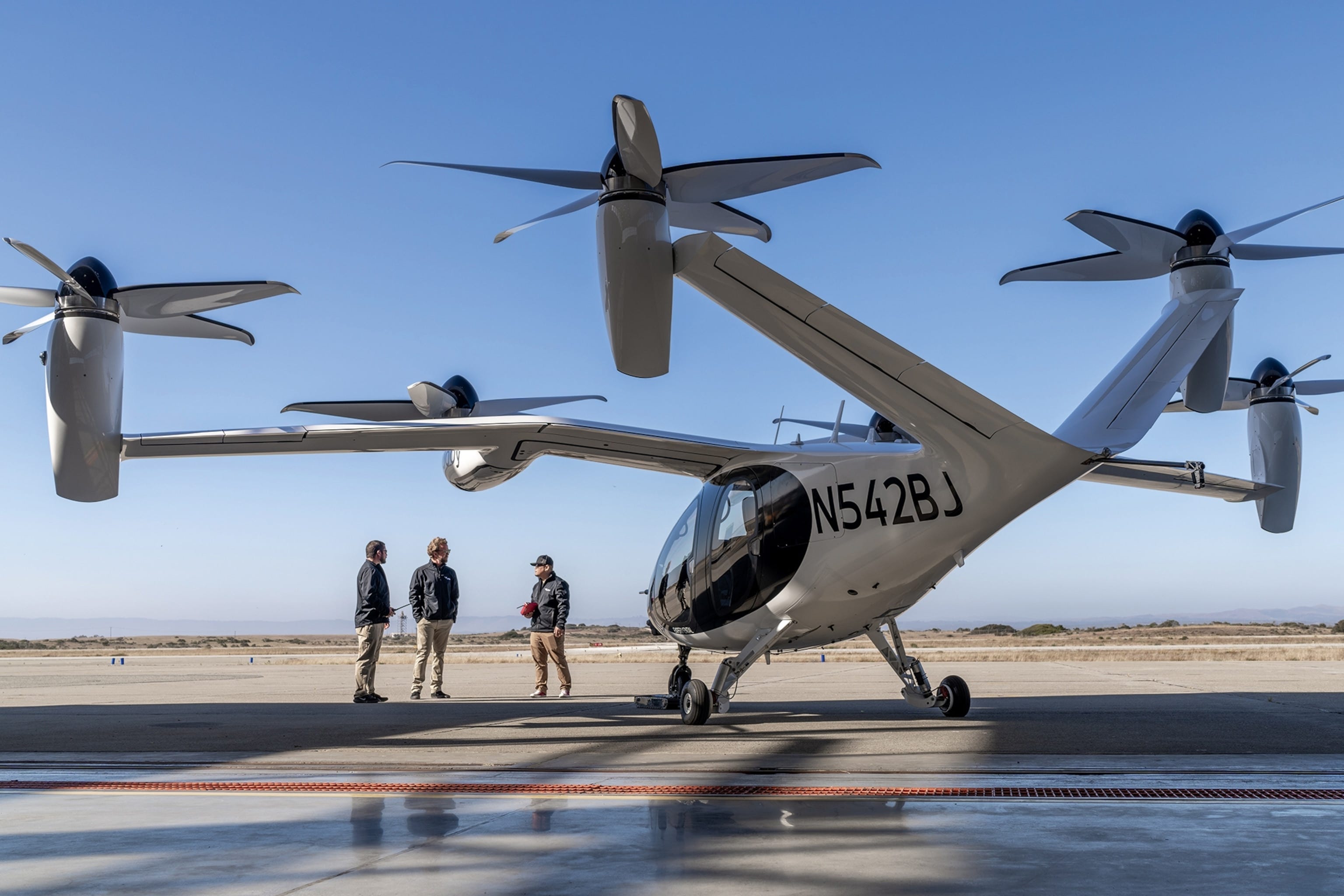
…Firstly, they should be cheap to run & maintain. Even with eight electric motors and eight fixed-pitch props, they're vastly more mechanically simple than fuel-burning helicopters and potentially easier to condition monitor. They also have fewer single points of failure, combined with automated retention of flight capability even with multiple motor failures. Put together, this conspires to make running them easier, qualifying them potentially less difficult (more on that in a bit) and maxxing-out on manufacturing scale effects possible for cost reduction.
And what of turnaround times and fuel cost? Well battery-electric is a cheap and efficient source of motive force, and low turnaround times could be aided by hot-swapping battery packs, which is difficult with liquid cooling but not actually impossible.
No, the biggest obstacles are legislative.
The natural hunting ground of the aero-taxi is a busy metropolis, or airspace near major hub airports, and both of these are rigidly controlled. If allowed to thrive here, their use will blossom and growth will, um, take off. If restricted or tightly controlled they'll end up a dying niche. Which is it to be?
Drone taxis have a unique capacity for flight automation, which is one thing in their favour, but this only works if there's a safe urban flight control architecture built up that they can work inside. A far-sighted individual could foresee sky lanes above major cities, high enough to be safe in the event of system failure but low enough to pass under airliner flightpaths. These could be controlled by a mixture of GPS and local triangulation towers, to allow a drone taxi to slave itself to a motorway in the sky and cruise sedately next to its brethren, before taking an invisible off-ramp to its destination. All very sci-fi, but it's possible, even though we'd still be using pilots for some time yet.
Ultimately it's down to regional legislators. I foresee that US and European nations will be stick-in-the-muds on this, beholden to lobbying forces from their native aerospace industries afraid of disruption. And probably a lot of pressure from citizens who have fully bought into the Cult Of Safetyism that's slowing down the West in general.
Air taxis will thrive, I think, in those jurisdictions brave enough to make room for them. China's mega-cities would be obvious landing zones, and it would mesh well with the country's existing expertise in the drone, battery & electric motor supply chains. The prospect of up-ending stodgy old US and European aerospace players might be too strong to resist. We can probably also expect front-runner cities such as Dubai to take a lead; glitzy entrêpots with a reputation for adventure to uphold.
That'll be enough to ground the new industry as it grows and, shorn of the business models of old and with a uniquely strong incentive to experiment on energy efficiency, it'll become a perfect laboratory for unconventional aerospace designs & power systems: Experimentation that would be too risky for players like Airbus or Boeing, but that we will all benefit from.
For this alone, I'd like to see air taxis take off.
I think they will.
2: Riding the shockwave…
The rotating detonation engine (RDE). Sounds sexy, what is it?
Unlike a conventional combustor, which uses deflagration (subsonic combustion) a rotating detonation engine uses, well, detonation. This is a supersonic flame front progressing behind an endlessly rotating shockwave. Think “harnessing an explosion”.
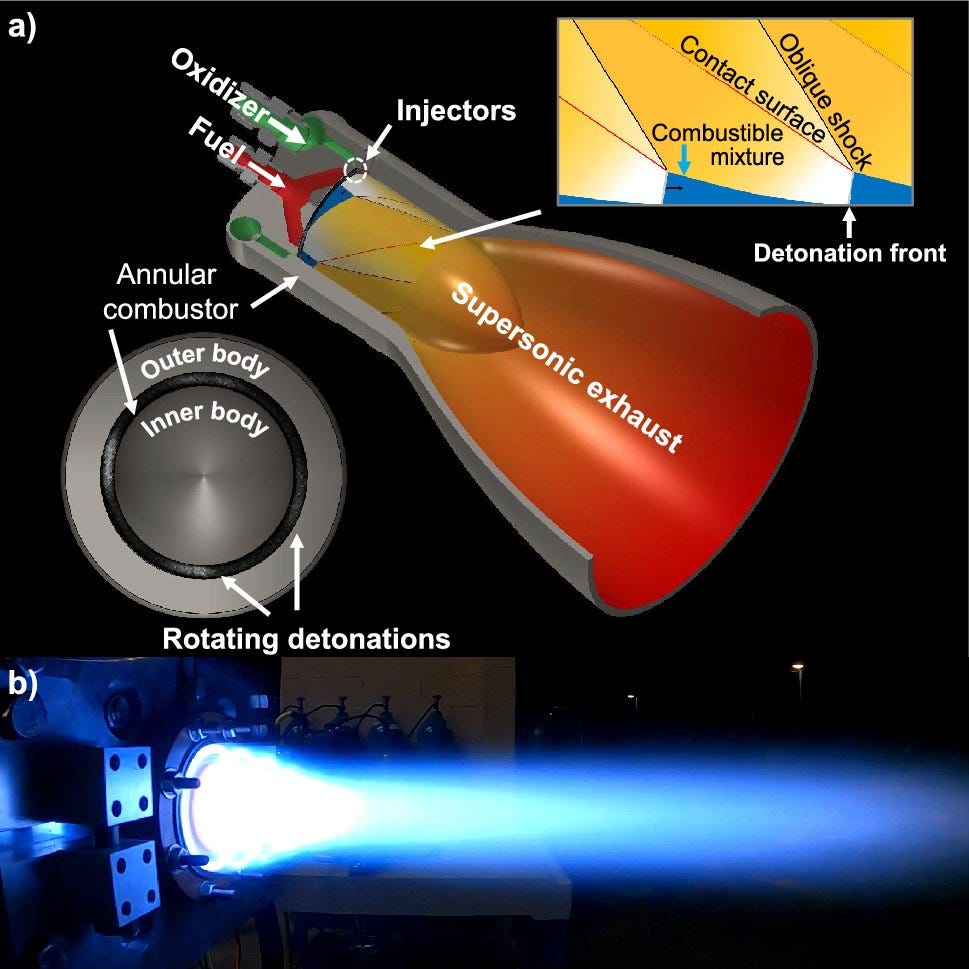
The advantage of the RDE is that it's an example of constant volume combustion (gas volume stays the same, pressure goes up) whereas conventional combustors are constant pressure (the opposite).Without getting too technical that basically makes for a lower entropy combustion, more potential for useful thrust through expansion and up to 25% higher efficiency, in theory.
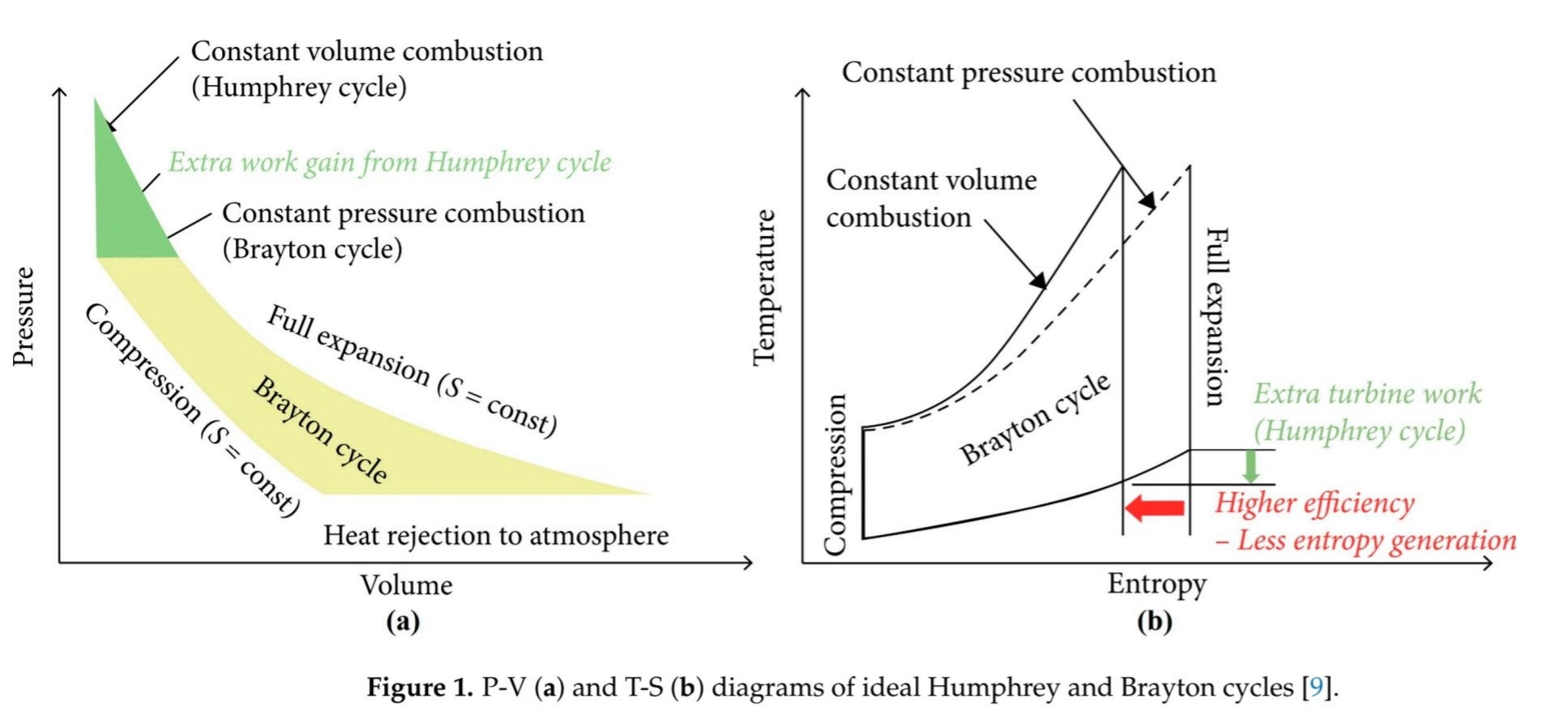
But RDEs are also fiddly things to start and keep running, so they're still in development. What does my crystal ball say?
My guess is that these thermodynamic rings of power won't be seen on civil airliners anytime in the next quarter century, but they will appear on rockets. Rockets, whether the space-based or military sort, have strong incentives to be fuel efficient but don't need to worry about ferrying millions of passengers around the globe, so barriers for entry are lower.
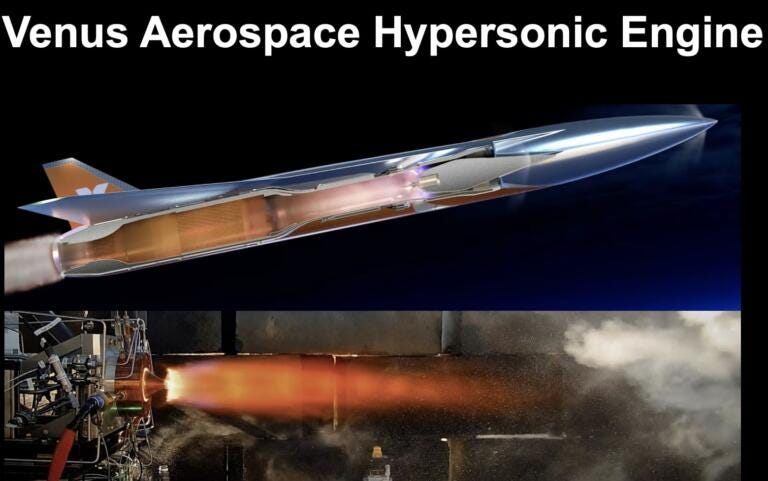
And maybe we'll see them on ramjets too. Ramjets, the quirky thoroughbreds of the hypervelocity realm, are trickier to integrate with RDEs than rockets, but probably easier than gas turbines. I wouldn't be surprised at all to see working hypersonic prototypes powered by hybrid RDE ram-rockets sometime over the next decade. There are already companies looking at this now! Translating this, if it happens, into a large-scale commercial passenger carrying enterprise by mid-century is a long shot. I don't quite see it, but I'd still put money down on it if the odds were good enough.
3: Flying Wings.
And now for something I don't think will take-off.
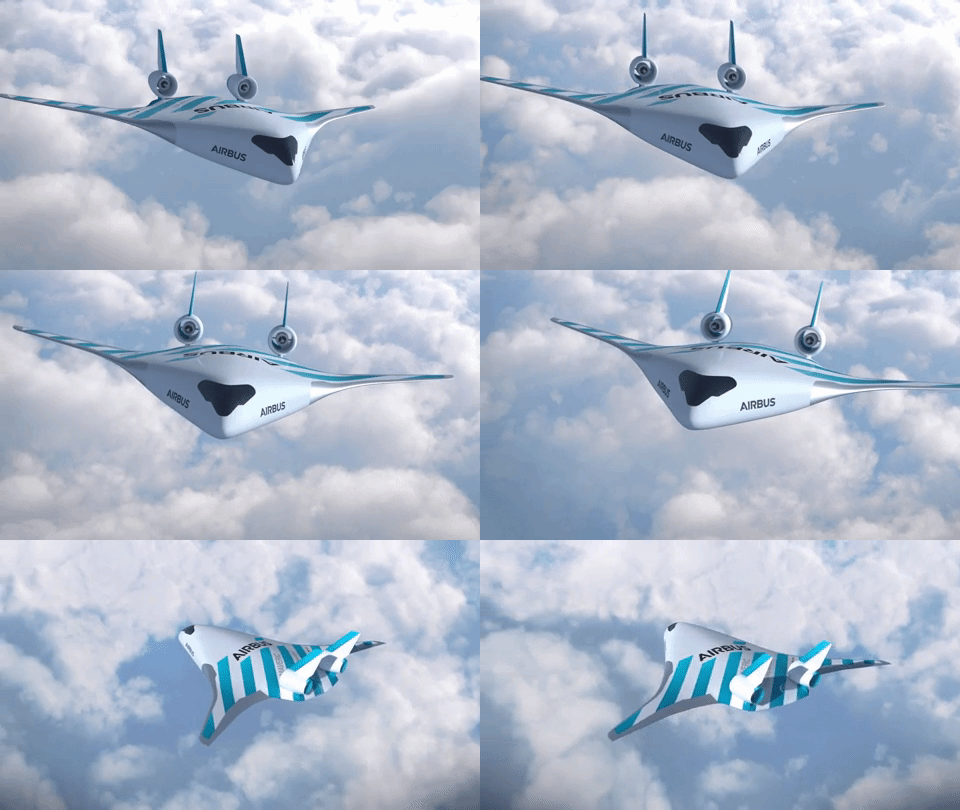
The flying wing concept has been around forever, with its extraordinary efficiency and ideal lift & weight distributions a strong lure, yet few have flown. Those rare few that have been produced have arrived through either extenuating circumstances (late war NAZI desperation in the case of the Horten H.VII) or extraordinary requirements (the Northrop B2 Spirit nuclear bomber).
The common misunderstanding about the flying wing is that it's incredibly unstable, and while that is often the case in a ‘pure’ wing design, it's quite possible to make it passively stable if you're not a purist, throw back the wing and add some vertical stabilizers.
It is, in short, plausible for an airliner, and airliners prize high fuel efficiency, which the flying wing provides. So why am I such a downer on the concept?