
State Your Time Preference!
Good things come to those who...

“Building it will take too long. We need solutions now!”
<insert rent-control here>
How many times have we heard that? Often from people who presumably never had to wait for anything as children. I wanna wanna lollipop now mama! NOW!
Urgency has its place, and sometimes there really isn’t a good reason for something to take a long time and so you need an impatient little bastard to cry foul and hurry things up. Elon Musk presumably wanted lollipops quickly, and that seemed to work out well for him, so why not the rest of us?
Well, what if it’s not a lollipop that someone wants, but clean electricity, or clean water, or a redesigned city? When Parke Neville designed the water system for Dublin city and the creation of multiple reservoirs in the mid-19th century, he wasn’t setting out to break speed records or even supply the city that existed then, but spent years creating a clean water network for a Dublin city the size of which wouldn’t exist for another century.
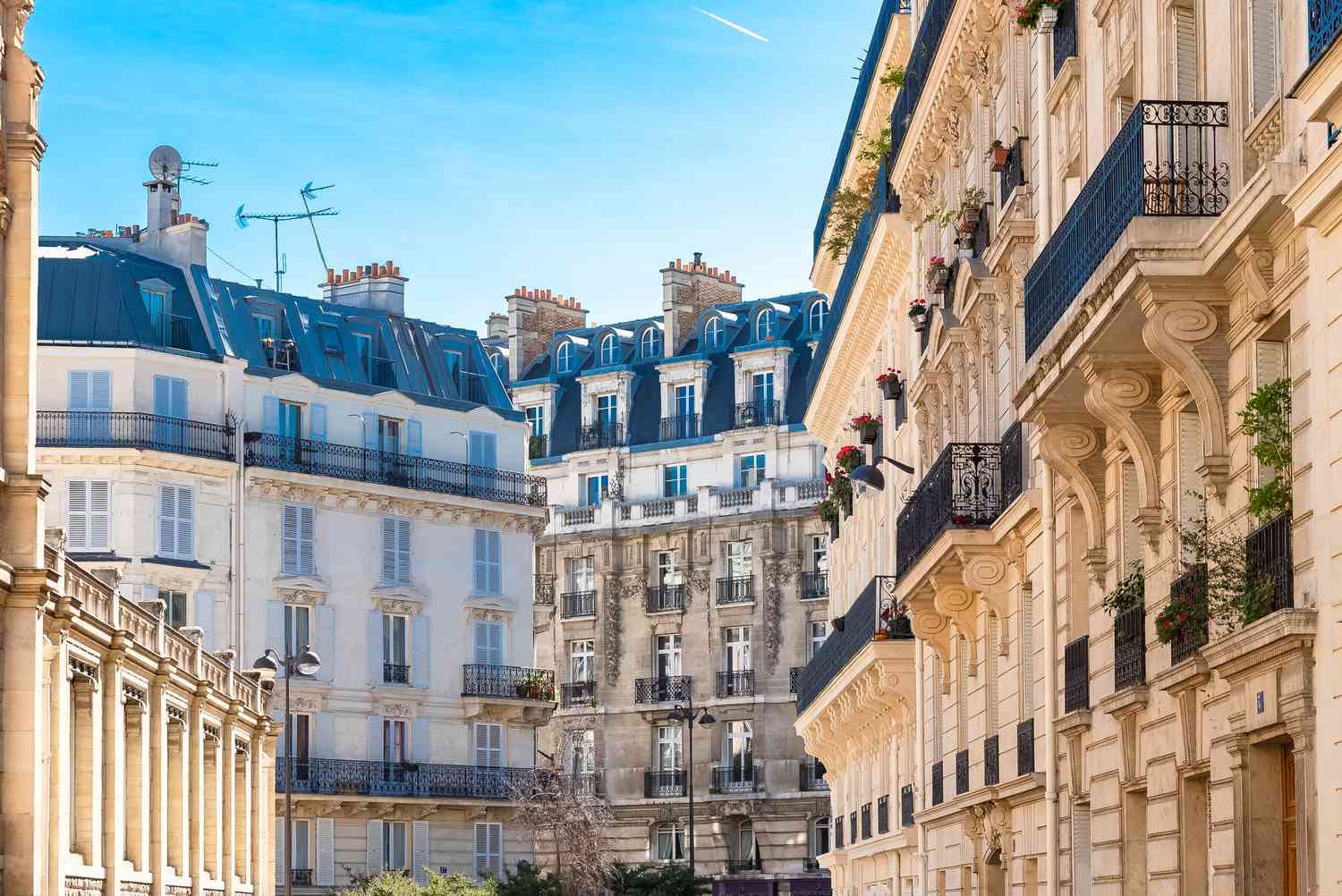
When the centre of Paris was torn apart and rebuilt by Haussmann under the orders of Napoleon III, it was a project that displaced thousands, caused uproar and took almost two decades, but created the majesty and wide boulevards the city of lights knows today.
And now? As recipients of millennia of human progress and centuries of engineering wizardry we can rend atoms themselves to make our morning cuppa and declare things like “There’s no point building nuclear power, it takes too long! There’s a climate crisis and we need action now!”
(Cue a rushed and poorly-functioning compromise.)
It’s a thought-terminating cliché and we really should know better, but we hear it all the time. We hear it whenever we sell-out for a quick buck or fail to plan for the future. We saw it when Orbex, a small private space launch company in the UK with cracking technology, was allowed to fold because nobody in government saw the benefit of planning for the decades ahead. Or possessing any vision for the future beyond the next headline.
We see it whenever someone turns down a plan for trams, light rail, or a subway with “Why? It’d take years and we could just buy more buses now.” (That's Leeds and many other UK cities, for those who missed the reference.)
We see it when we fudge the numbers for the next quarter instead of owning up and fixing the problem. We do it when we buy instant meals instead of ingredients because who has the time?, and we call for it when we demand that the government give handouts instead of building infrastructure.
It's called time preference. If it's high then it means you value the now a lot more than the later, and prioritise accordingly. If it's low then it's the other way around.
We start our lives with a high time preference, because children aren't patient at all. They need to learn that skill, and sometimes the environment doesn't make it easy, but it's vital: A low time preference is a key predictor of life success. It's the ability to inconvenience yourself today to help a stranger in the future.
That stranger is you, of course. That's the metaphor.
A low time preference is a prerequisite for all strategy, and most life success. It's the grit to build a career, the planning to buy a house, the sacrifice to raise children. It's why the strategists win at life, and all the games of Go.
But that low time preference is cultivated, and it can be killed.
If the environment is chaotic or dangerous then a high time preference makes sense, because you can't plan for the future amidst chaos. Warzones don't cultivate well-adjusted societies and domestic war zones don't cultivate well-adjusted people.
Entire cultures can have high or low time preferences too. Low-trust societies, where instability is the rule, incentivise short-termism. Poverty destroys the future, while stable high-trust societies like the ever-smug Scandinavians build it.
Chaos begets chaos, and order begets order. It can be a virtuous cycle.
Or a destructive one. The Germans are a characteristically conscientious bunch, so the Weimar Republic's hyper-inflation between the wars must have hit them hard: Every man that had planned for his family's future, scrupulously sacrificing, would have seen his savings wiped out by the chaos of an out-of-control currency. Between this and the inter-war settlement, the sense of betrayal must have been fierce, wreaked by a high time-preference world thrust onto a society wedded to order and planning.
Little wonder they answered the call of a dangerous populist. Beware the orderly person thrust into chaos!
And what of today? Our highest-trust, lowest time-preference societies are in a strange kind of bind. The same nations that brought about the Messmer Plan (a two-decade nuclearization of French electricity), that drilled for offshore oil at the limits of technology and laid down motorway networks and Concorde seem scarcely able to repeat those feats today. We are stuck in a short-termist pincer, being pinched to death. On the one side, the faux-rationality of the spreadsheet class and the quarterly cashflow statement. On the other side, the siren call of social media and the TikTok-ification of our attention spans.
And now, like the rental crisis in Ireland, electricity markets across Europe and transport and housing everywhere in the Western world, we shy away from the infrastructure that we'd once have built and instead pledge handout after handout. Buying people and votes one day at a time until the whole awful edifice collapses in on itself.
Just so long as it doesn't collapse today.
Were we always like this? Maybe, but it's hard to be sure. Perhaps we were no more patient decades ago, just less encumbered by paperwork.
Or perhaps we really have begun a slow shift to higher time preferences and less social trust, as we lose ourselves in atomised microcosms, delivered by dopamine. Less patience, less community, fewer kids and more Self. Inward-looking and fixated by the minute, more and more, no longer building because we forgot that it's an option.
It's all about the next-year commitment and not about leaving your grandchildren something.
Hopefully this is just grouchy dad-vibes and I'm wrong. Hopefully our time horizons aren't really shortening, because if they are then we're in a heap of trouble: The Western world's big problem is infrastructure, and that requires commitment over time.
We're still living on the infrastructure of the old world, put down by men with more vision than you or I, but it won't last forever. One day it'll fail and crumble, the cracks in the concrete spreading, the paint falling away, leaving the ruins of a world that thought in centuries and only lasted that long.
So let's ignore the 5-year investment return for once and build something for our children's children.
Let's build a house.
Let's plant a tree, a forest.
Dams and river defenses.
A nuclear power plant.
A city on Mars.
The future. It's for them, not us.
Amen.
I think it is a generalised, society-wide phenomenon. The spirit of the age you might say. That being to elevate the individual's preference, their personal rights and property rights, above the general social good.
The wind of liberalism picked up in the 1970s and 80s, and for a time it was worthwhile, but that wind has kept blowing in the same direction for decades now and a great many people have forgotten that it's even capable of blowing in another direction. We need some balance, a bit more pro-social outcomes, even if it comes at the price of some individual rights.