
Sky Poets
The remarkable story of Scaled Composites

It's easy to look skywards at the beige behemoths that connect the world and conclude that innovation is Done in aerospace: Two engine pods and slippery wings slapped onto a cigarette. Basic. Knock them out like washing machines and let's go home early, right lads?
Not quite. Not only is there a feast of innovation under the skin of our sky-bound servants, but there's a company out there making real mavericks, and it's sent one brand new, and often crazy, aircraft design into the sky every year for decades.
It's called Scaled Composites. It's circumnavigated the world, built giants, flown reusable spaceplanes and taken asymmetric-wing oddities to the sky.
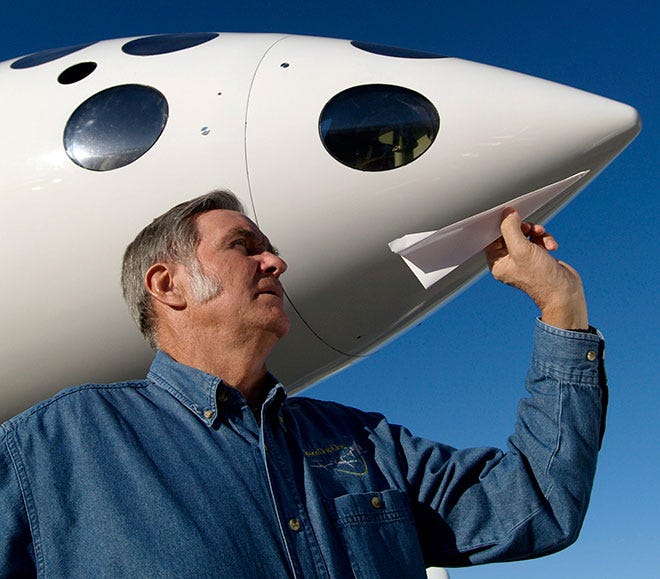
And it's spent most of its life led by Burt Rutan, a mutton-chopped CEO and Chief Designer who looks like a Victorian time traveller sent to bring originality to aviation.
He's managed that handsomely.
What follows is a paean to the most inventive aerospace company you never heard of, and its signpost to the future of flight.
1: Oblique wings & the swingin’ sixties.
Before Scaled Composites even existed, there was the Rutan Aircraft Factory, founded by Burt Rutan, who was also chief designer & lead engineer. For some time he had churned out home-build kit aircraft of delightfully unconventional design, making heavy use of composite materials.
This took a novel turn in the late seventies when Ames Industrial were contracted by NASA, and subcontracted Rutan’s team to design a unique experimental aircraft: The NASA AD-1.
The Oblique Wing.
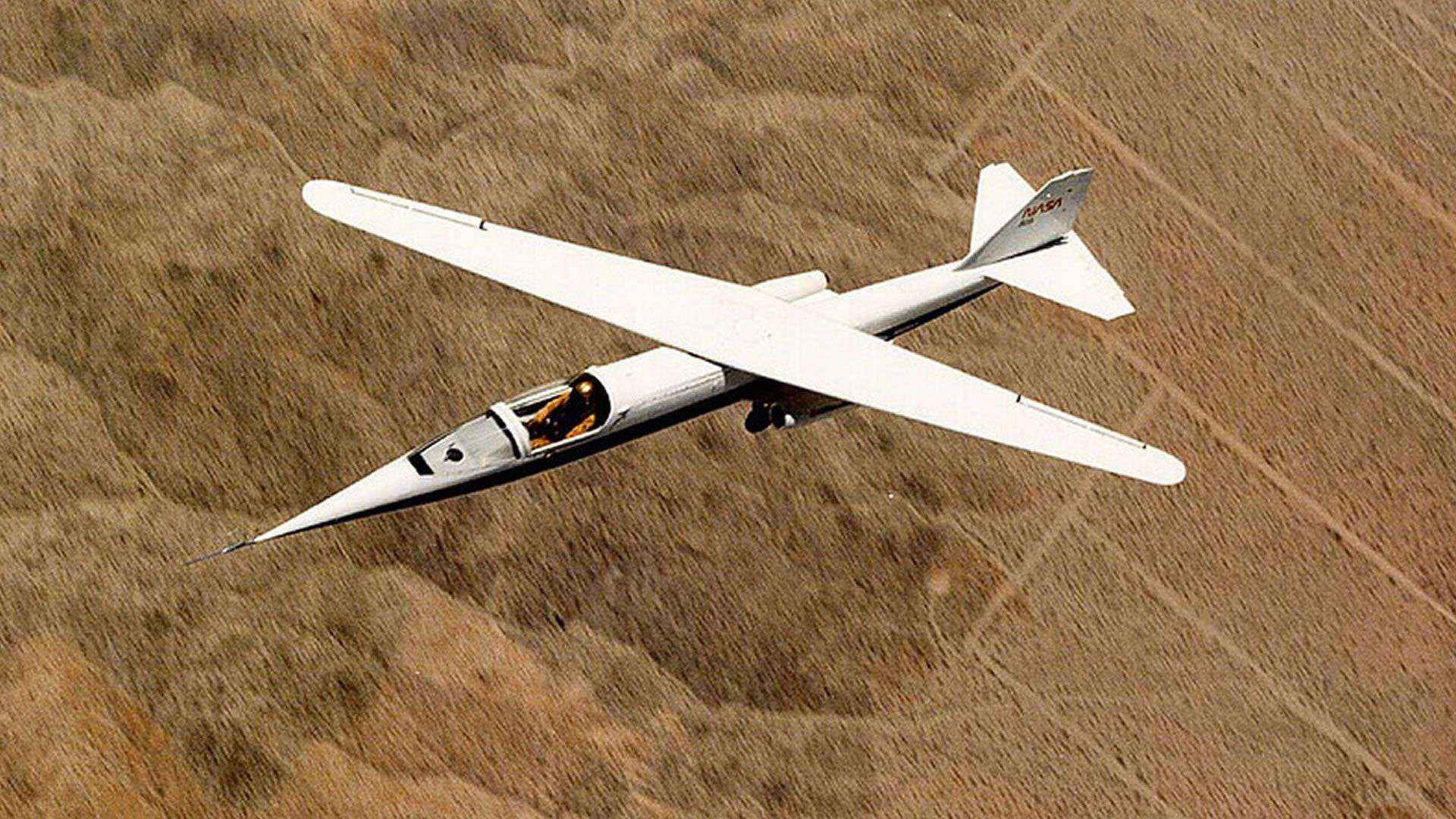
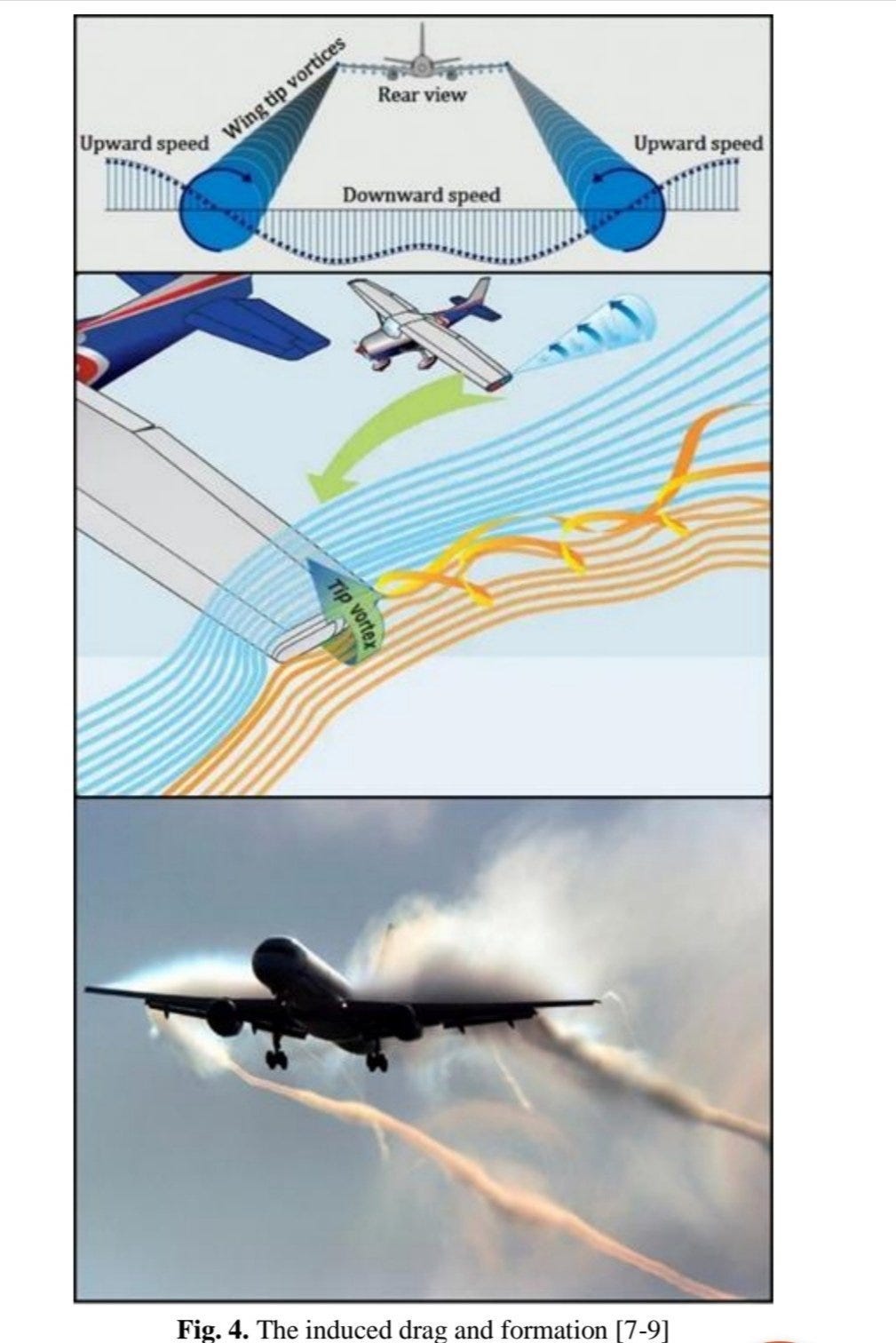
Let’s take a step back. The decade previous, the 1960s was swingin’ for a number of reasons, and one of the nerdier ones was the sudden profusion of variable geometry ‘swing-wing’ aircraft in airforces. The swing-wing concept was simple, though complicated to pull off: At low speeds and during takeoff & landing, an aircraft should ideally have a modestly-swept but high span wing (low length, high span width), like an albatross or seagull. This optimizes for high lift at low speeds and also reduces induced drag; a phenomenon dominated by vorticity at the wingtips. More on that later.
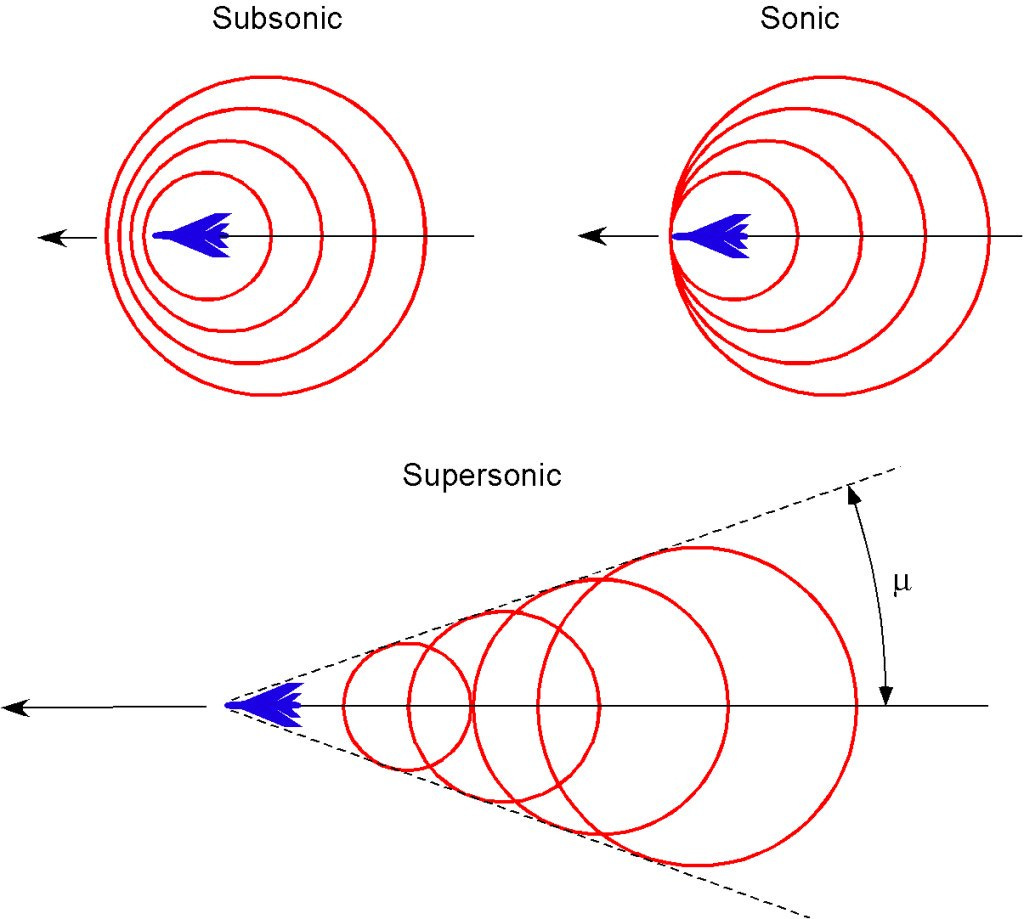
By contrast, at transonic and supersonic speeds, and aircraft should have its wings swept back, because at such crazy-nuts speeds shockwaves will form on the leading edges, with their angle dependent on Mach number, the speed of the aircraft relative to the local speed of sound: The higher the Mach number, the tighter the ‘shock cone’ produced and so the more swept the wing should be for lowest possible drag. As a result of this, many aircraft were designed with variable geometry wings that could articulate back on sturdy rotary joints to let them fine-tune themselves for their conditions.
But back even as far as the second world war, an opportunity had been spotted by bold aerodynamicists to do one better, and create an oblique wing, which pivoted from a single mid-mounted joint in an asymmetric fashion. The images demonstrate this amply, and at first it makes no sense at all: How could something that weird fly and why on God’s green earth would you do it?
A few reasons.
NASA engineer Robert T. Jones had investigated this concept in detail and realised something big; that an oblique wing could outperform conventional symmetric swept-back wings at supersonic speeds, with much lower wave drag. This takes a little explaining…
Wave drag is drag caused when air is squeezed by a supersonic aircraft that approaches too fast for air to step out of the way. This causes shockwaves to form, a draggy and wasteful physical phenomenon. Minimizing this can be done by adhering closely to something called the ‘area rule’: In short, imagine that you walk down the length of an aircraft and with every step you turn and cut it in half, before prizing it apart and admiring the cross-section. The area covered by this cross-section should change only slowly and gracefully as you move down the length of the aircraft, in a steady curved parabola up & down. No sudden steps or cliffs allowed! This is how you minimize wave drag when flying supersonic.
Now imaging a symmetric swept-back wing, which creates a sudden rise and drop in cross-sectional area. Getting around this is tricky and often requires awkward fuselage contours to fit the area rule (like the F-106's infamous ‘coke bottle’ fuselage). However if you just make the wing oblique, pivoting around the midpoint of the aircraft, then the profile of the wing will adopt a natural up & down curve, adhering to the area rule while remaining sharply-swept. That means minimal wave drag, a more cylindrical fuselage and even simpler mechanical systems compared to a conventional variable-geometry wing.
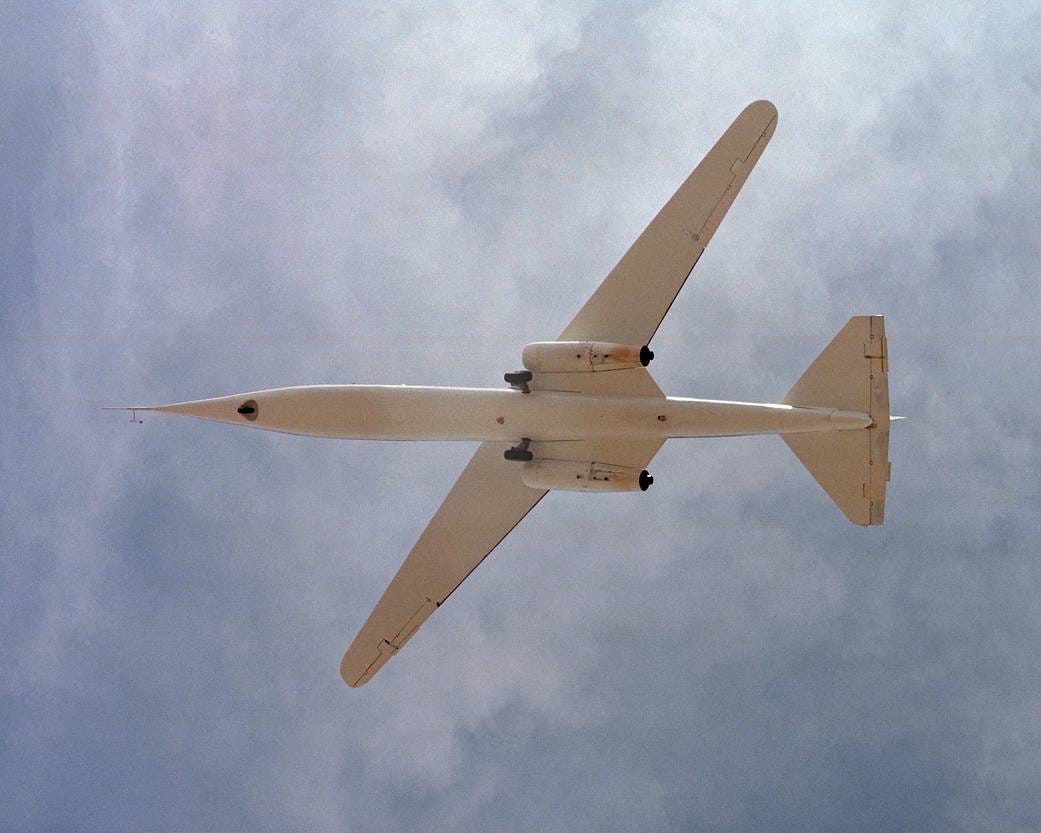
You just have to put up with a few stability effects and it looking weird as hell.
Rutan’s team designed the AD-1, which flew a limited flight test regime with NASA and proved out the concept. It was not taken further, in part due to the challenges of dynamic coupling in the roll & pitch axes, coupled with difficult to manage aeroelasticity problems, particularly on the forward-swept half of the wing. It was a brave and interesting attempt though, and opened Rutan up to a world of experimental aircraft. Scaled Composites would form soon after.
And the AD-1 was only the beginning.
2: Starship.
In the eighties, the Beech Aircraft Corporation had a problem. It needed to replace its fabulously successful but long in the tooth King Air series of twin engined turboprops, and in doing so shake up the notoriously conservative general aviation market with something revolutionary. Something head and shoulders beyond the competition: An aircraft from the future.
Their project was the Starship.
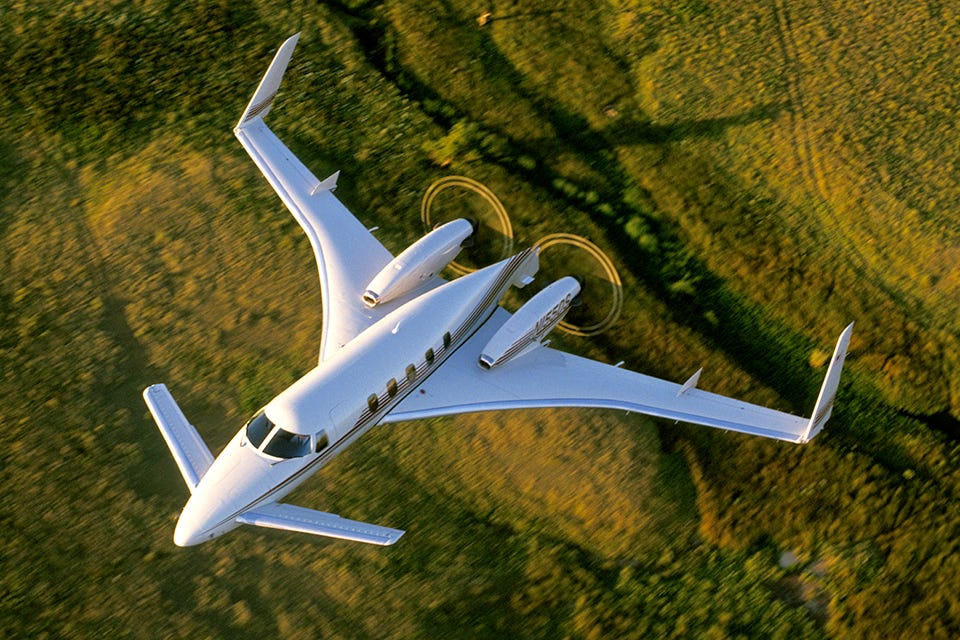
The Beechcraft Starship is something from another world that you’ll have seen on the front covers of niche aviation magazines, if you're as weird as me. It was designed to create a step-change in general and business aviation, leaving aluminium behind and turning to carbon composites as a primary structural material. Super lightweight, rigid and exceptionally strong, composites are almost perfect for aviation, and indeed they’re everywhere now… but the eighties was almost too early to introduce these wonder materials, as manufacturing composite structures was still a morbidly expensive act of craftsmanship.
But someone has to be first, and it was to be the Starship!
But Beech, and Scaled Composites which it had absorbed, was not satisfied with material changes alone, and Rutan’s team was given leeway for truly radical design. It needed to be quiet, comfy and capable of approaching 400 mph while retaining the classic fuel efficiency and short-field capability of traditional turboprop aircraft… and they delivered, but it didn't look normal. At all!
The main wing became rakishly swept-back near the root to assist in stall resistance and high incidence flight for short takeoff, which gave leeway for the rest of the design to become more efficiency-orientated. The propellors were rear mounted in a pusher configuration to maintain the cleanest possible airflow over the front of the aircraft and to reduce cabin noise. This configuration ruled out a tailplane, which drove a canard fore-plane configuration instead.
Well, that's one side of the story. Another is that pusher props and canards were taken as an entry condition of the design, driving compromises elsewhere, and the science-fiction sweep angle was as much to do with managing this than short-field performance. I'll let you draw your own conclusions.
Burt Rutan had explored canards before with kit planes and this was known territory for him, but for a business aircraft it was completely unique.
One of the less appealing aspects of pitch control on a standard aircraft is that the tailplane must often act in opposition to the main wing: A pitch-up motion requires that the tailplane push itself down, producing negative lift and sapping the aerodynamic efficiency of the aircraft. A canard foreplane, by contrast, can act in the direction of the pitching moment, a benefit to short-field performance.
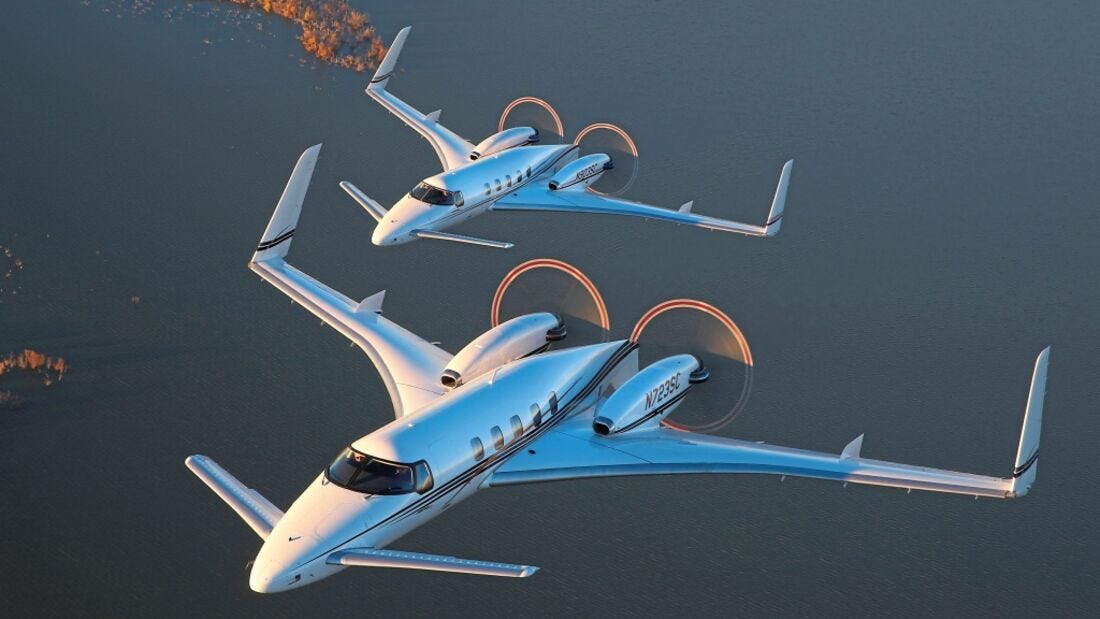
Another strange feature of the Starship was the lack of a central tailfin, which was a deliberate noise-reducing measure: A pusher-prop configuration places the props a little too close to the vertical fin for comfort, and pressure oscillations from the props can cause cabin vibrations that are amplified by the fin. Rutan’s team chose to remove it, replacing it with extended winglets on the end of the plane’s skinny main wing. In doing so, the function of vertical stabilizer and drag-reducing wingtip sail were combined, saving weight and improving efficiency even further; something that would have been impossible with a conventional configuration.
Incidentally, if you want an explanation of how tailfins and canard fore planes stabilize an aircraft, check out the article linked below which goes into dizzying detail.
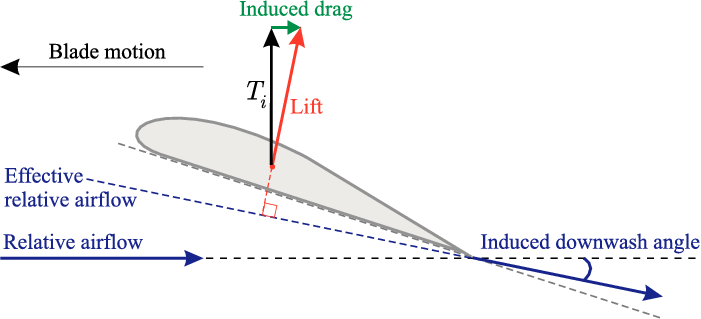
As for the winglets themselves, the function of these are to weaken the vortices that curl-up at the ends of a wing from the interaction between high pressure under the wing and low pressure above. These vortices push the air between them downwards, which tilts the incoming airflow, creating a component of lift that acts in opposition to the direction of aircraft flight; in short, drag. We want to reduce drag, and so a winglet, or wingtip sail, aims to weaken this vortex and reduce induced drag on the plane. Scaled Composite’s idea of combining this feature with a vertical tailfin was genius.
And the aerodynamic sleight-of-hand didn’t end there, for the canards up at the front of the plane had another Weird Trick to play to trim the aircraft…
During takeoff or landing, the main wing needs to generate as much low speed lift as possible, even at the expense of efficiency, and so flaps are extended to change its profile and steepen the lift curve for the wing. This works, but it pushes the aerodynamic centre backwards. To make up for that, a tailplane or foreplane would usually need to apply elevators up or down to counteract the nose-down pitching moment caused by the flaps and stabilize the aircraft. Burt Rutan decided this was wasteful, and thought of another, slicker, way to do the same thing.
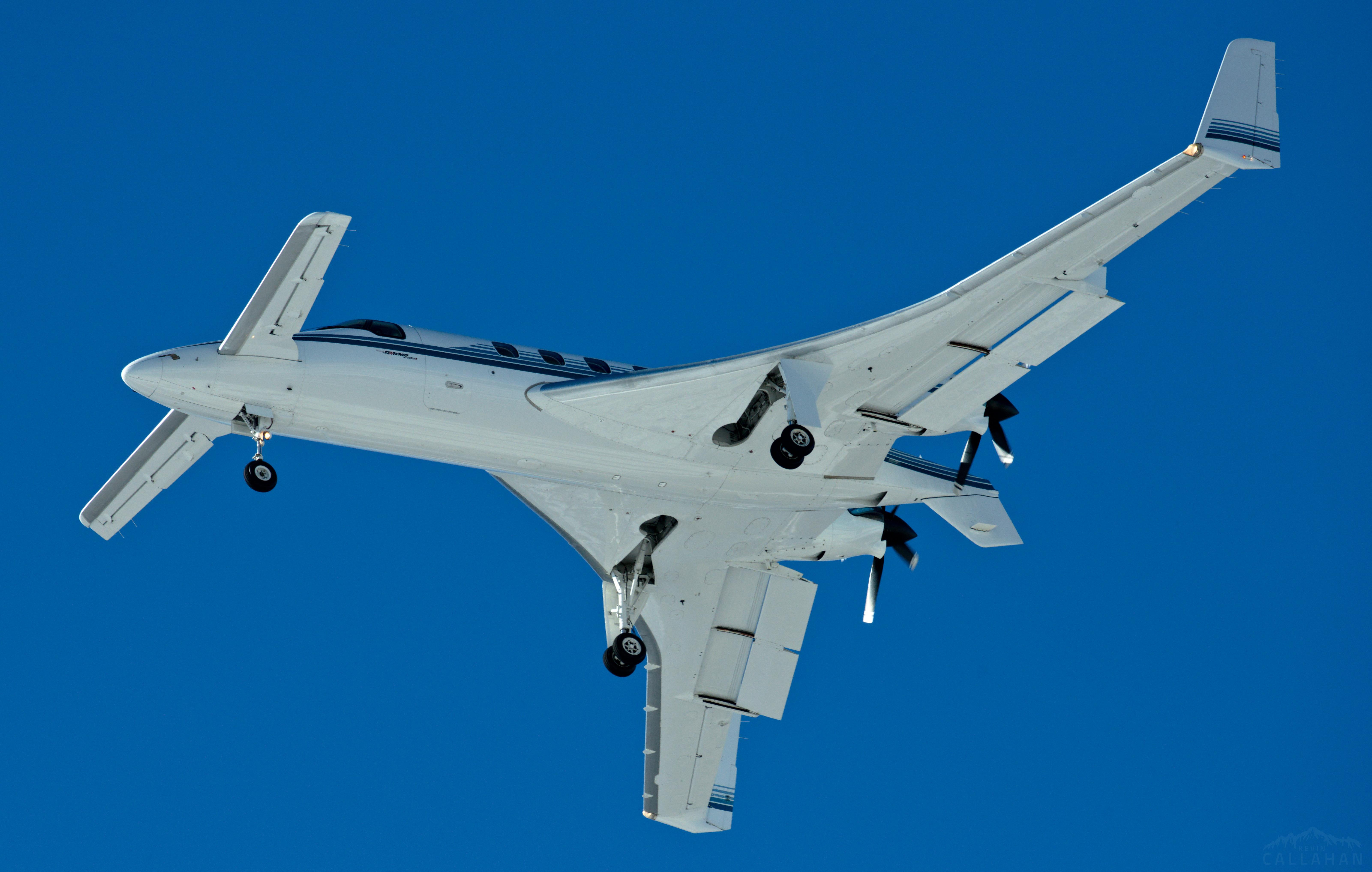
He just changed the canard’s angle of sweep, tilting the entire foreplane either forwards or backwards!
Yep, the swingin’ sixies were back… eighties style!
This is why the Starship in cruise shows off a sexy swept-back canard foreplane, but the very same Starship coming in for landing with its flaps extended will have its canards swept forwards against the airflow, like Dick Dastardly's moustache. It was unconventional as all hell, but that’s what the Starship was all about.
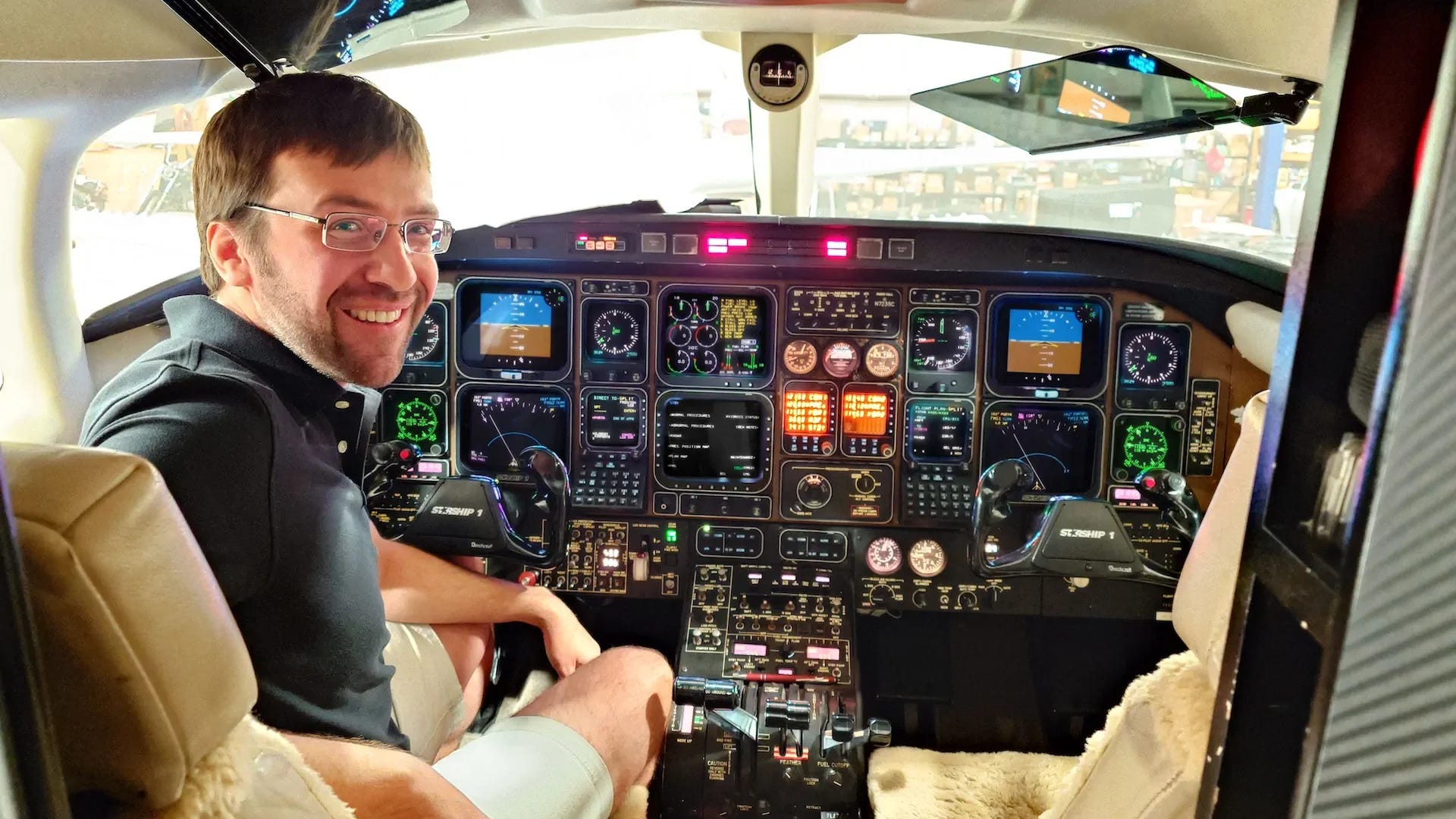
And that unconventionality didn’t end on the outside of the plane! Inside, traditional analogue dial gauges had been replaced entirely with an all-glass digital cockpit. This may seem de rigeur now, but at the time the approach was revolutionary, fusing important data streams and reducing pilot workload.
Alas, the Starship was not a commercial success. The new technologies proved difficult to certify, and the 85% composite body difficult to manufacture with the tools of the time. Put together, this delay increased cost to a level where Starship simply couldn't compete, and only 53 were ever built: A classic case of the future arriving before its time, and paying the price. Even the characteristic variable-sweep canards were contentious; sure, they added aerodynamic efficiency, but like all variable geometry systems they also add weight and it's not clear the trade was worth it.
Many other innovations introduced with the Starship would eventually become mainstream, but it would take decades. Being early costs!
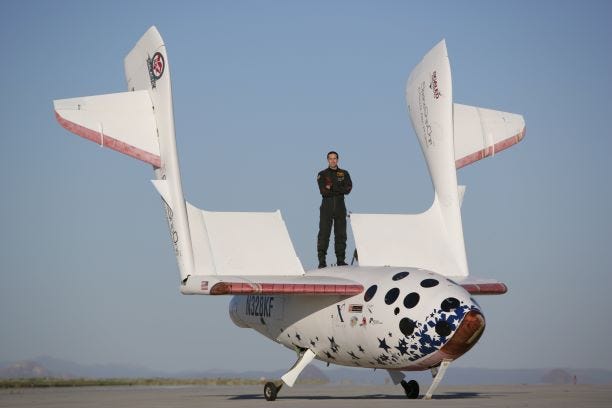
Our next entry betrays a little bit more of this unconventional design instinct, and the willingness for Scaled Composites to flirt with the Weird.
3: The Mudfighter.
Military aircraft don’t need to look ‘normal’, so the designers can run off and exercise a little bit of imagination, though not usually as much as Burt Rutan.
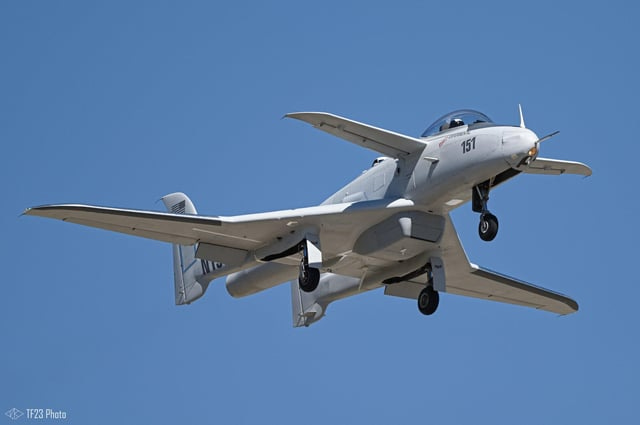
The Model 151 ARES was to be a low-cost replacement to the venerable A-10 ‘Warthog’, the gruff and pig-ugly tank killing and close support specialist that has stubbornly refused to die for many decades now. Beloved by soldiers (who like the idea of friendly death orbiting nearby) but less so by the airforce (who don’t like flying a big slow target within range of every missile in the area), the A-10 has been a wart-faced poster-boy for countless years, particularly for its gun.
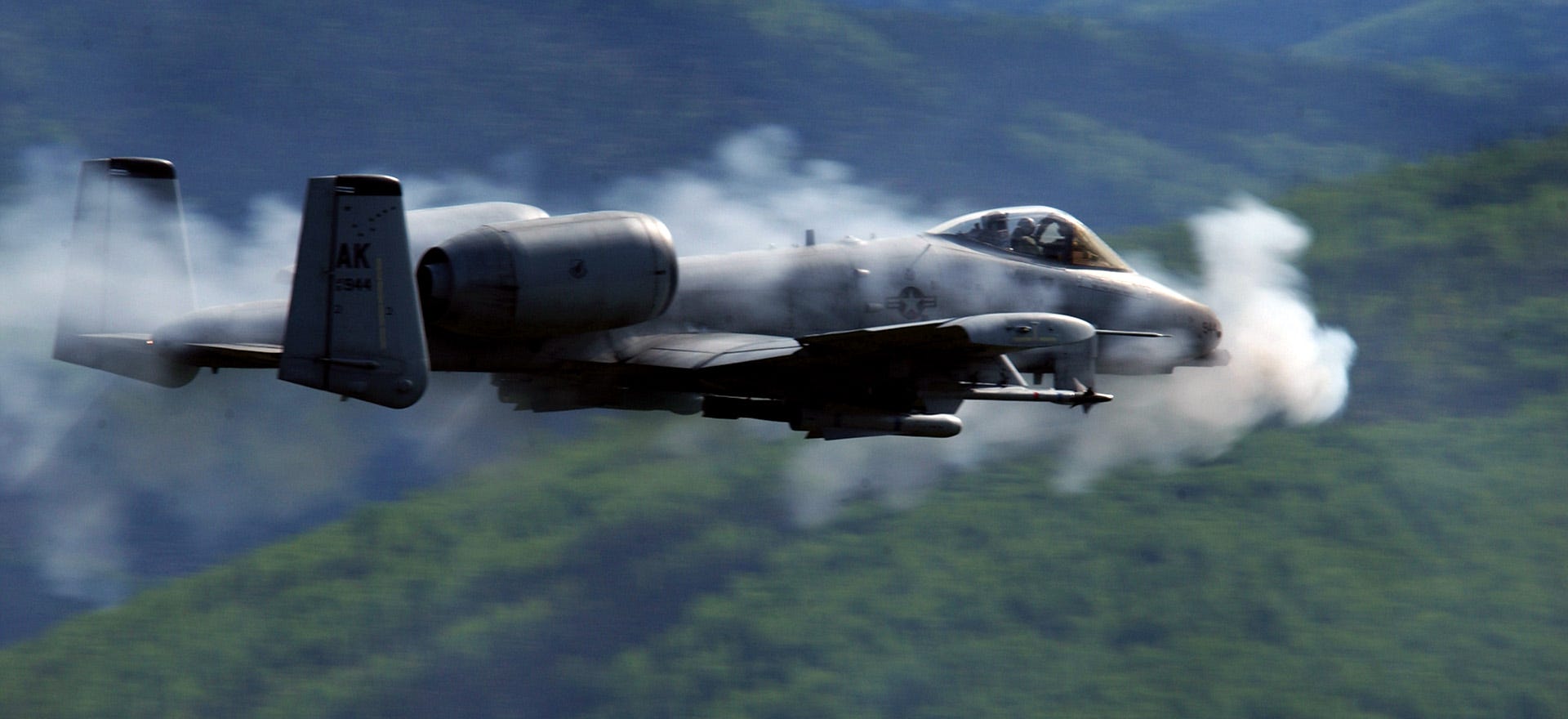
The A-10 was built around the gun, a terrifying seven-barrel 30mm rotary cannon bigger than a car, designed to rend open battletank armour like Christmas wrapping. As the Cold War drew to an unexpected close, Rutan’s team were tasked with designing a light, low-cost successor to the A-10, and created Model 151, dubbed the Mudfighter.
A high aspect ratio wing with twin-boom tailfins closely coupled to wide canards, the Mudfighter was effectively stall-proof, as the canard foreplanes were designed to stall before the main wing, lowering the nose automatically. This gave the aircraft that distinctive ‘Rutan’ design flair and looked suitably menacing to boot, but the real weirdness was the design of the gun and engine emplacement on this nimble fighter.
