
How do combine harvesters work?
I'll give you the key...

Would you like a gluten-free fairtrade pesto chicken wrap? Now with fewer carbs and 25% extra smugness! I'll throw in a low fat chocolate coffee protein milkshake for your journey too, if you like…
The modern world can be a bit surreal if you think about it too hard.
With all of the fuss around AI and the imminent Automation Of Everything (any day now, we promise!) it's easy to forget that history's greatest ever feat of automation has already been & gone, and we owe our entire modern world to it.
It goes unnoticed, because it doesn't live in a satanic mill, a humming data centre or a roaring factory floor. It lives out in the fields, hemmed-in by hedgerows and tended to by tractors. It hibernates in winter and comes out every harvest time to stretch mechanical sinews and put in working days longer than any factory shift.
It's the combine harvester.
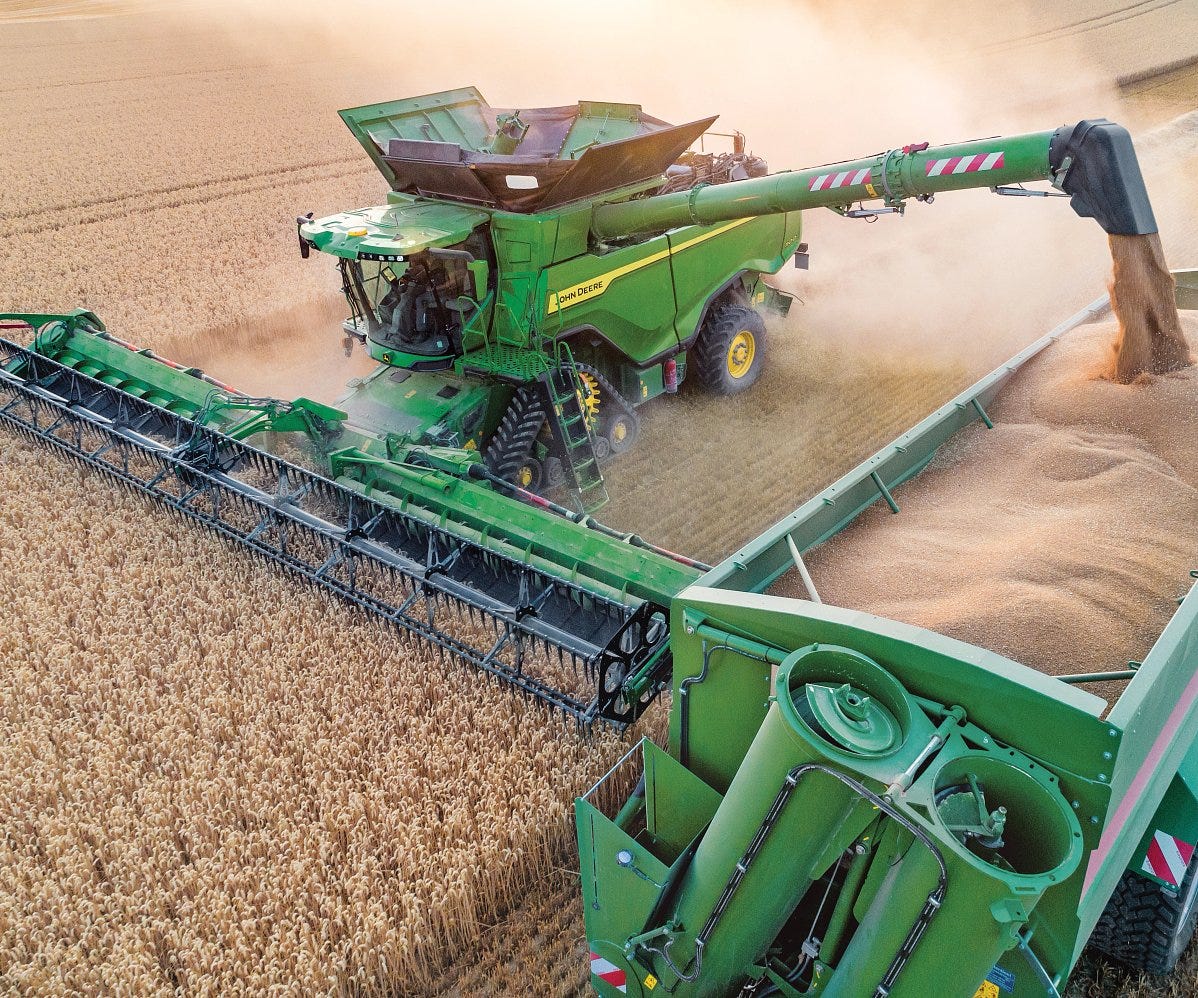
But while the work of the combine looks from the outside like useful magic, and inside the cabin is sophistication that would put any software jockey to shame, its innards are based on sound mechanical principles.
It pulled society kicking & screaming into modernity: Do you want to know how it works?
I'll give you the key.
1: Bent stalks and broken backs.
In late July every year, the school bells ring for the last time in the academic year, and millions of children pour out, smiles splitting youthful faces. It's summer time and school is out! Holiday hijinks guaranteed, because they won't be back until September.
Parents, faced with a yawning gulf of crowded days, expensive flights and favours called-in, may see this differently. Why is the summer break so damned long?
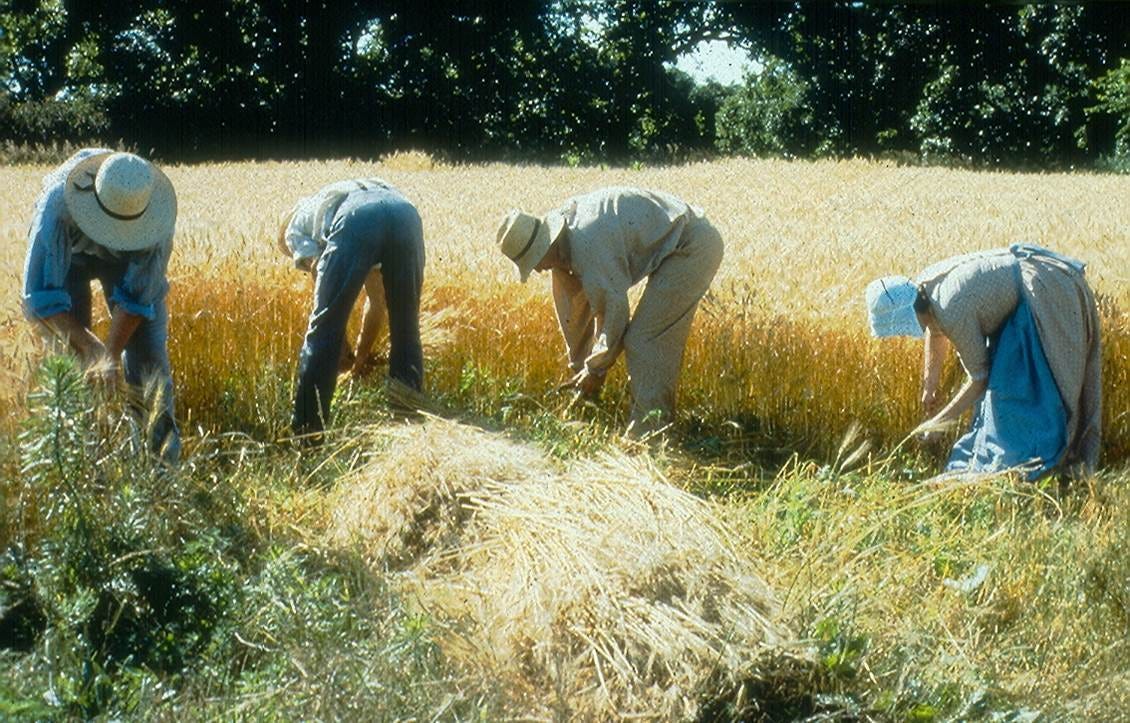
It's long because back in the day there was no break at all, and the summer sun would beat down on toiling backs, bent to the barley. The children would work with their parents, and the teachers would be out in the fields too. The harvest period was serious labour for sturdy arms & backs, entire towns were committed to the effort, and the real celebration came only once it had been gathered, threshed, winnowed and stored.
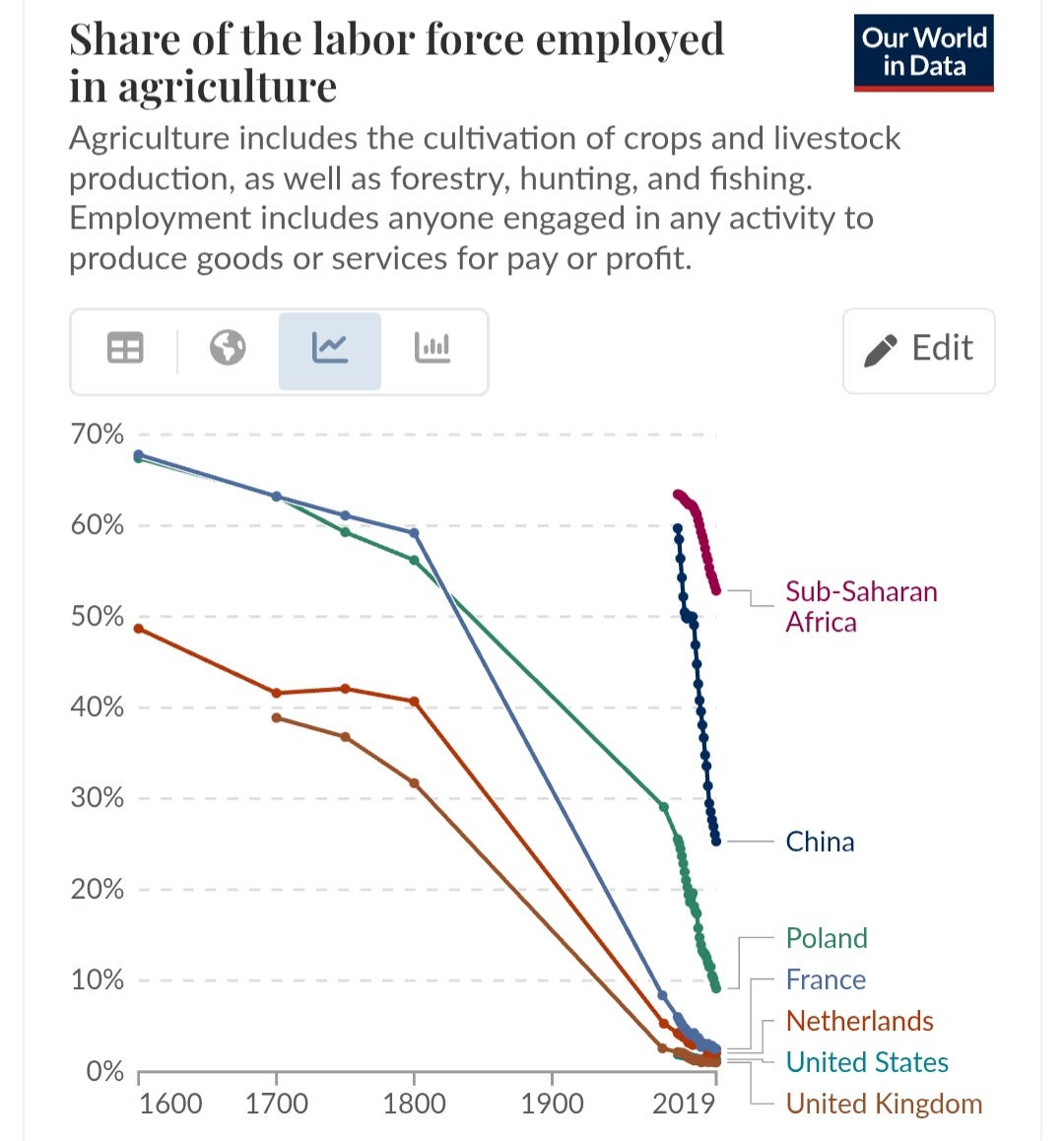
For most of human history we were chained to the land, with the vast majority toiling in fields to support a tiny productive urban elite. It wasn’t just the combine harvester that ended this, but a cornucopia of advancements that really took off from the 17th century onwards, with selective breeding, four-field tillage, early mechanisation and eventually artificial fertilisers in the 20th century. It's the original productivity drive, the social revolution that predated all others and gave us the foundations of our modern world.
Probably the greatest symbol of this is the combine harvester, large examples of which can do the work of entire towns in times past and are travelling boxes of loud agrarian magic. GPS guided, sensor-rich, auto-piloted self-monitoring & sophisticated, few farmers own them outright but instead buy the time of specialist agricultural contractors: Men who put in truly ungodly hours at certain times of the year. Make hay while the sun shines and so forth…
OK, so what exactly does that involve in this context?
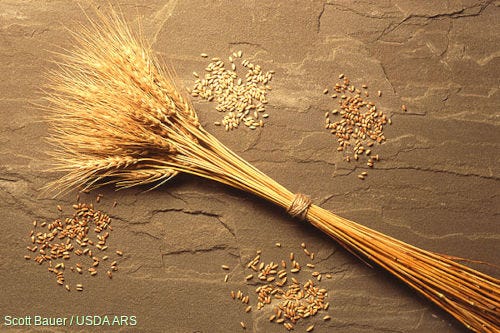
The harvester firstly needs to cut the stalks and pull them from the field. It then needs to perform the function of threshing, which is the separation of the grain (useful!) from the stalks (not useful). After this the released grain must be winnowed, which is a fancy way of saying that it needs to be sorted from the chaff (seed husks). After this the harvester needs to move the separated grain and store it for deposition en masse into a tractor trailer, while the harvester is still working and on the move, and finally the waste stalks should be deposited on the ground that the harvester has just moved over, so that they can be ploughed in to fertilize the soil and return much-needed nitrogen. That or baled for animal feed or bedding, depending on the nature of the farm.
All that in one pass! How hard could it be? We’re going to go through these bit by bit, and compare the olde-fashioned ways of doing this with the machinery of the combine. Start your engines!
2: Children of The Corn: Reaping what you sow.
Traditionally, reaping would be done by a man with a scythe or a grain cradle, which can be thought of as a sort of multi-level scythe with fun little basket features. This neatly severs the stalks and deposits them in a sweeping two-handed motion that can be performed upright, using the strength of arm, hip & leg. A neat ergonomic solution that minimizes back-strain, it’s also surprisingly quick when done by an experienced reaper.
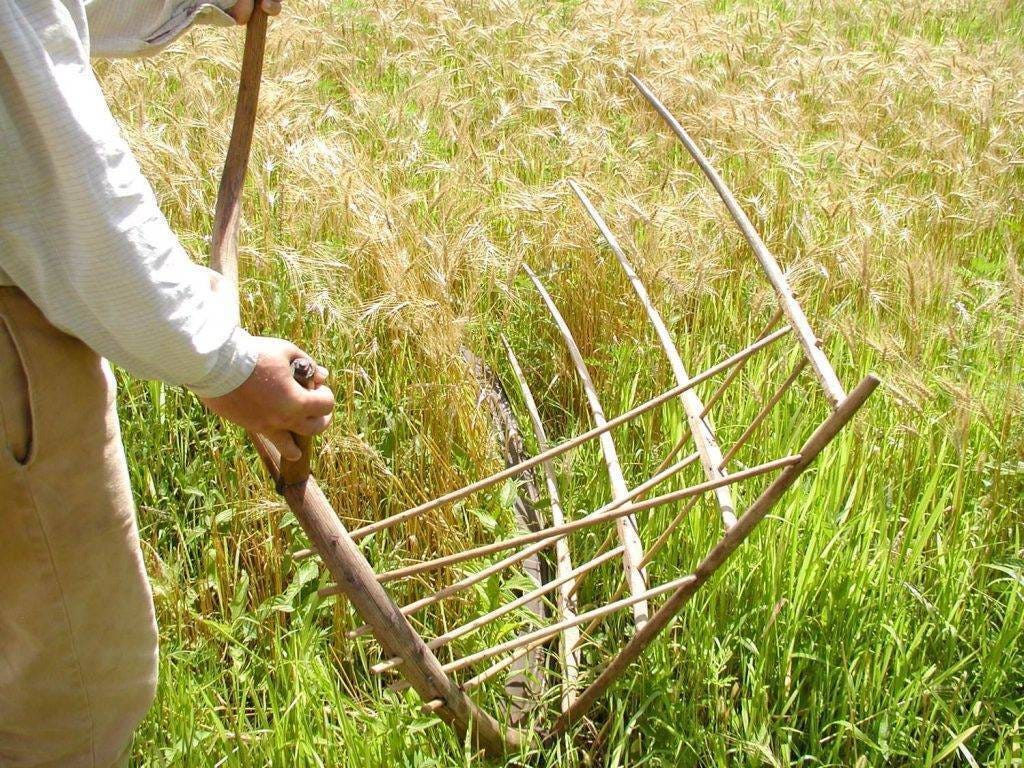
-Or lots of experienced reapers, because one bloke isn’t going to go out into a large farm and do it all by hand. This is a big job and needs more than a man with a bladed stick, no matter how charming the image. It’s also a multi-part job, as cutting the stalks is only one aspect of gathering the crop; traditionally, the men with the scythes would be followed by other men or women who would gather the crop and, in the case of wheat, bind it into bundles to be stood up and dried in the sun.
A combine harvester, by contrast, will do all of this at once, driven by a serious-looking man who may or may not be watching streamed content on his phone, depending on how long he needs to keep going in a straight line before he reaches the edge of the field. That’s quite a step-down in labour costs, and it gets better than that: Because a combine harvester can hit a big field, or many fields, or an entire farm in a single busy day, the need for extended bundling & drying disappears.
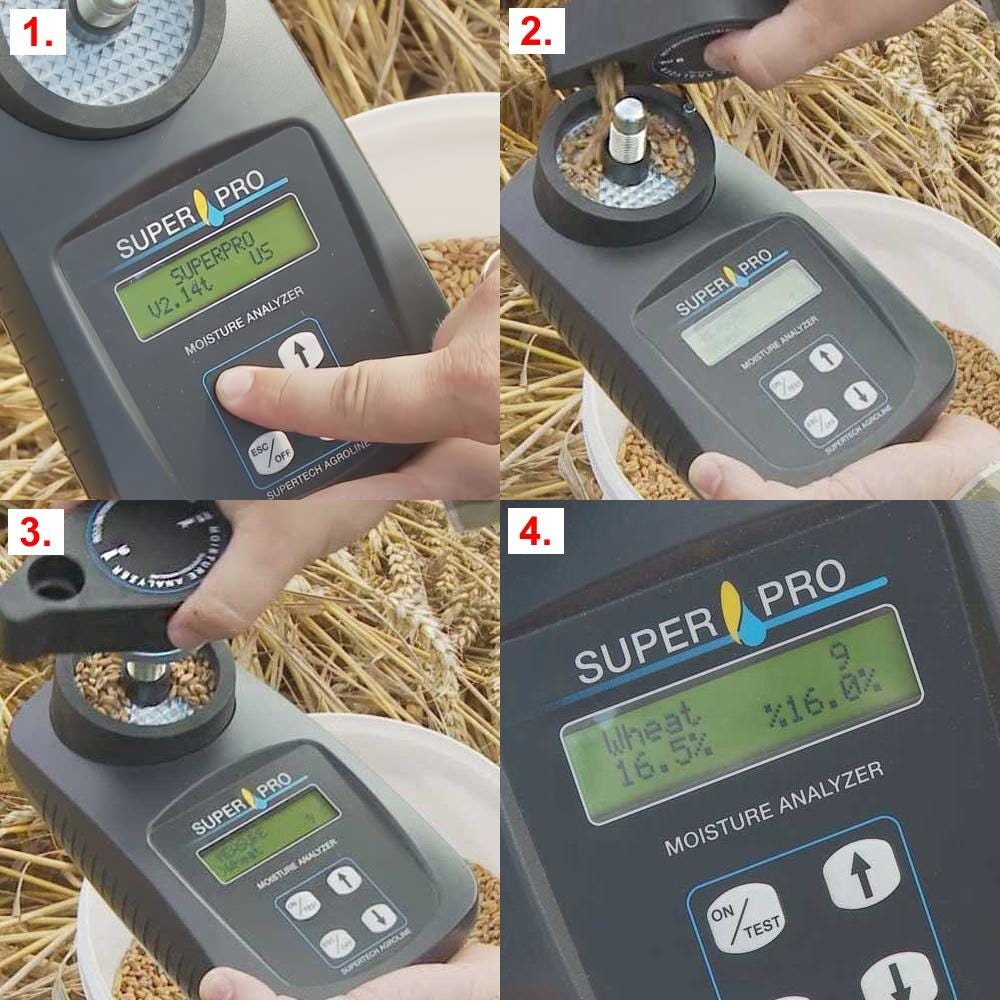
This does of course require that the grain is suitably dry before you begin the harvest, and to ensure this is the case the farmer will use a grain moisture meter. This is a handheld sensor case that scrunches up a sample of grain and applies an electric current through it, before measuring the resistance. Because water conducts electricity, a calibrated grain moisture meter can give an accurate assessment of the moisture content of the grain, and let the farmer know when the weather has seen fit to let him harvest it. This is crucially important, as the mill will pay on a variety of quality factors, one of which is moisture content, due to the expense of kiln drying for excessively wet produce.
Cue nervous walks into swaying stalks to feed grain into the meter, hoping for the magic number that will let you try to book time with a busy contractor…
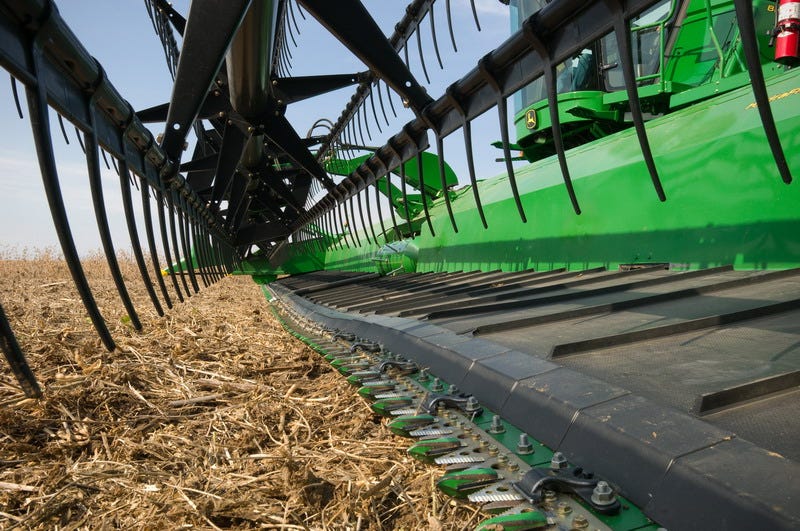
So back to the combine. The crop is gathered by something called the ’header’, which is the massive unfolding cutting device that you see on the front of combine harvesters. They travel with these folded or disassembled. Headers are interchangeable, as you might need different ones for corn than for wheat, barley and the like. The ones we’re most used to seeing are wheat harvesting headers, which comprises a massive rotating reel that gently catches the crop and pushes it into the cutter bar: For the cutter bar, think of a gigantic version of your electric hedge cutter. Both are hydraulically adjustable to different heights to account for the condition of the soil.
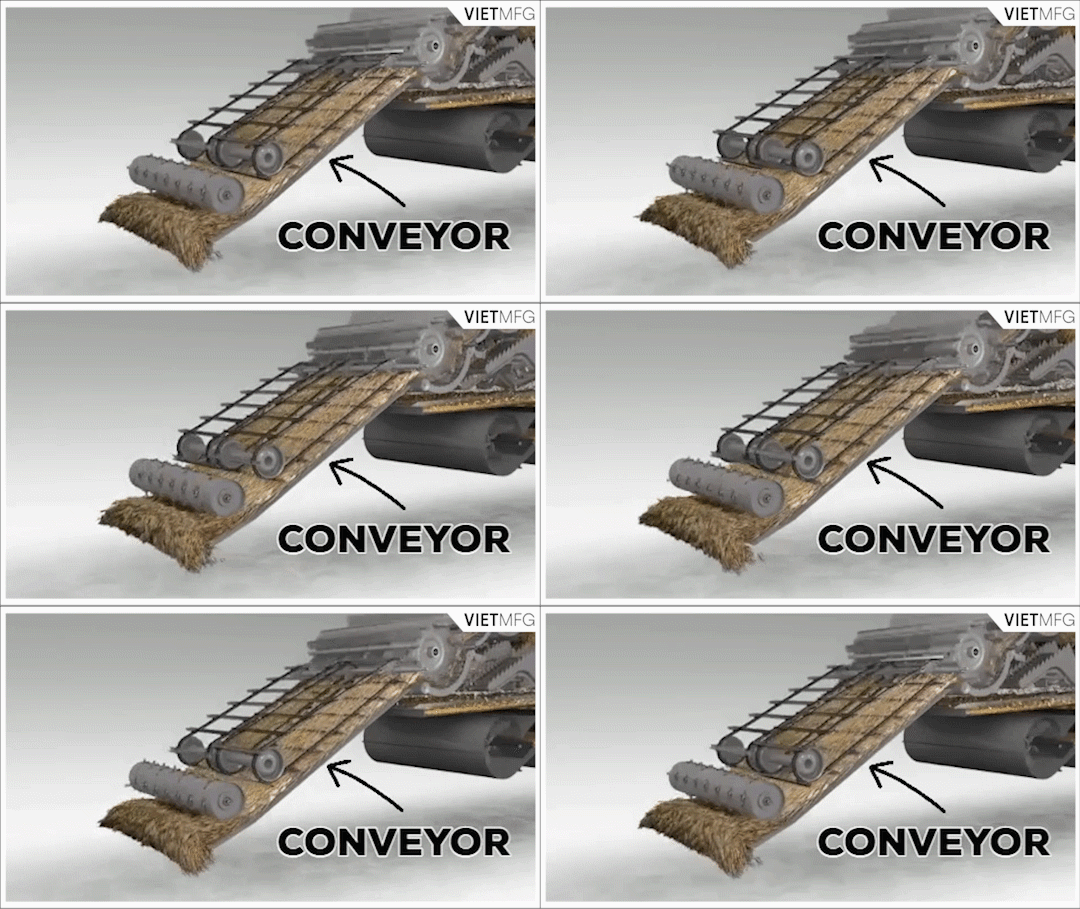
Once the stalks are cut, the reel deposits them onto a horizontally-moving belt or auger, that draws the cut stalks inwards to the axis of the combine and onto a grain conveyor that pulls it into the innards of the machine. Here the harvested stalks enter the next, and most important, stage: The rotary mechanical heart that is the threshing drum.
Because stalks are useless unless you’re a cow. We want to separate the good stuff: The grain. Let’s get threshing…
3: The Grains Of Wrath.
Threshing is not an easy job to do manually, because it needs brute force and lots of it! You’d think that separating grain from a grassy crop, -something that happens naturally if you just leave it long enough- would be a piece of cake, but no. You can bunch up the wheat and repeatedly hit it against a surface. You can get livestock to trample it. You can use a wheat flail to crush it. In all cashes, blunt trauma and acceleration is used to physically knock the stubborn grain away.
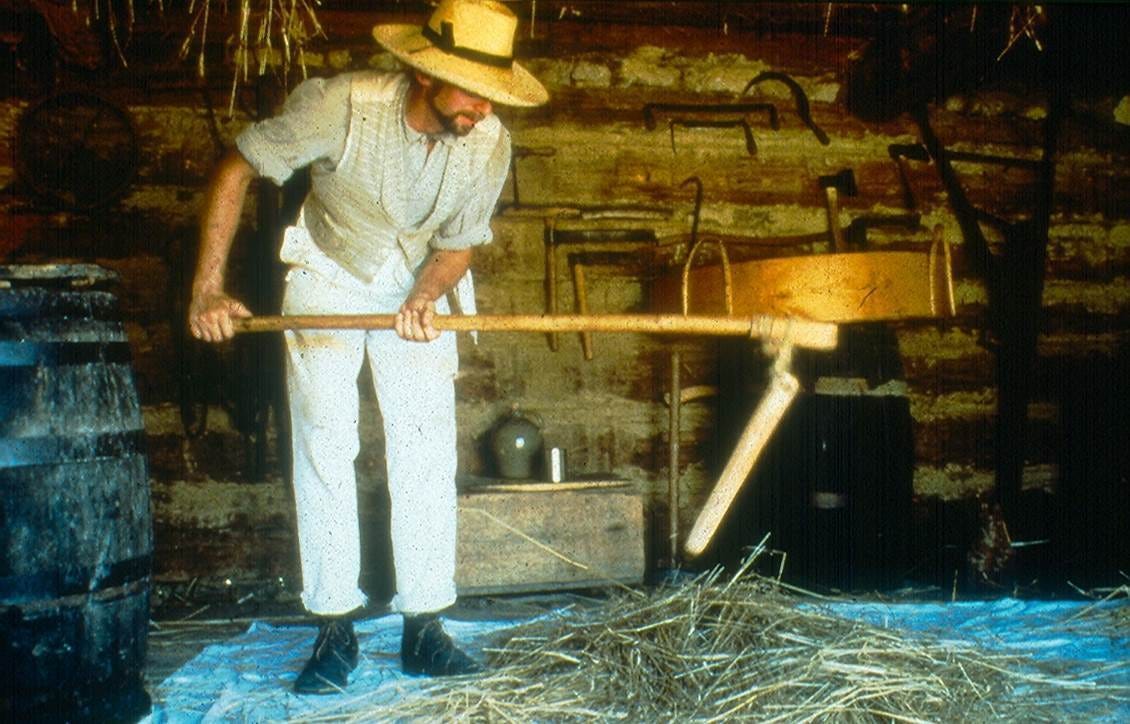
A wheat flail is a long stick, coupled by a flexible joint such as a leather thong to a shorter, heavier stick (the beater). With this a man can physically beat wheat into submission on a stone floor or a tarp, breaking the bond between the grain kernel and the rest of the plant. It’s doable, but bloody exhausting: One man with a wheat flail can flail about 7 bushels (420 pounds) of wheat a day. That sounds like a lot, but a large farm can produce thousands of tons, making wheat flailing an activity for an entire agricultural army, as it was back in the day.
But a combine harvester can do it on the move!
The fundamentals by which grain is threshed is similar: Lots of blunt force impact and sudden acceleration! But the combine harvester, being a big machine, can do it much more efficiently than a man.
