
Forest Technopolis
Return to an alien world

Ireland's largest mixed wild-growth forest is two metres wide and about seventy thousand kilometres long.
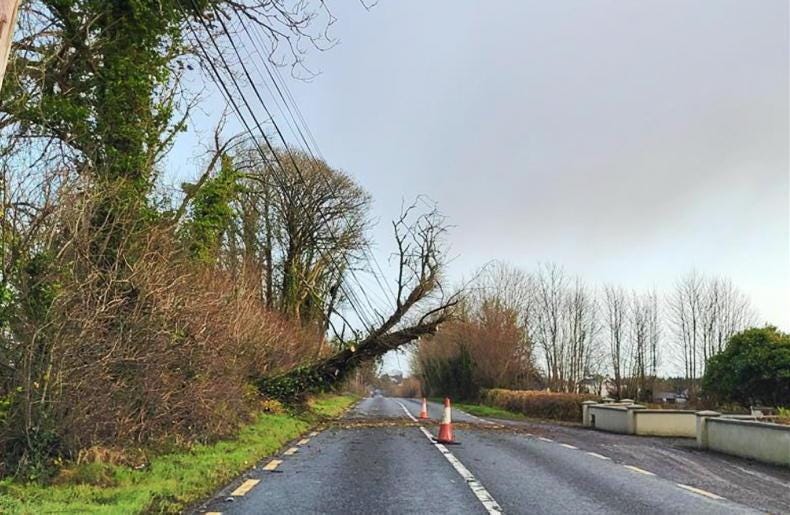
I've been a bit cheeky in the definition of ‘forest’ there, but the sad truth is that in green & bucolic Ireland, many of the country’s truly old growth trees stand in a regimented line of battle along the verges of our many, many country lanes. Such is the state of forestry here that to encounter the glorious chaotic tangle of real old, wild growth you're best off getting out of your car and jumping into the thorny mass of branches and briars right next to you.
And then spending some time applying antiseptic cream, because you'll be cut to ribbons after that.
Like much of Europe and Asia, Ireland has been part of a huge, unsung ecological victory as temperate forest cover has bloomed since 1990. Almost 100,000 square miles of new forest has been added in Europe and 150,000 in Asia, which is quite the feat.
Globally, of course, a lot more has been lost, particularly in South America and Africa, but good news is good news and we should treasure every bit.
Except… not all forests are made the same.
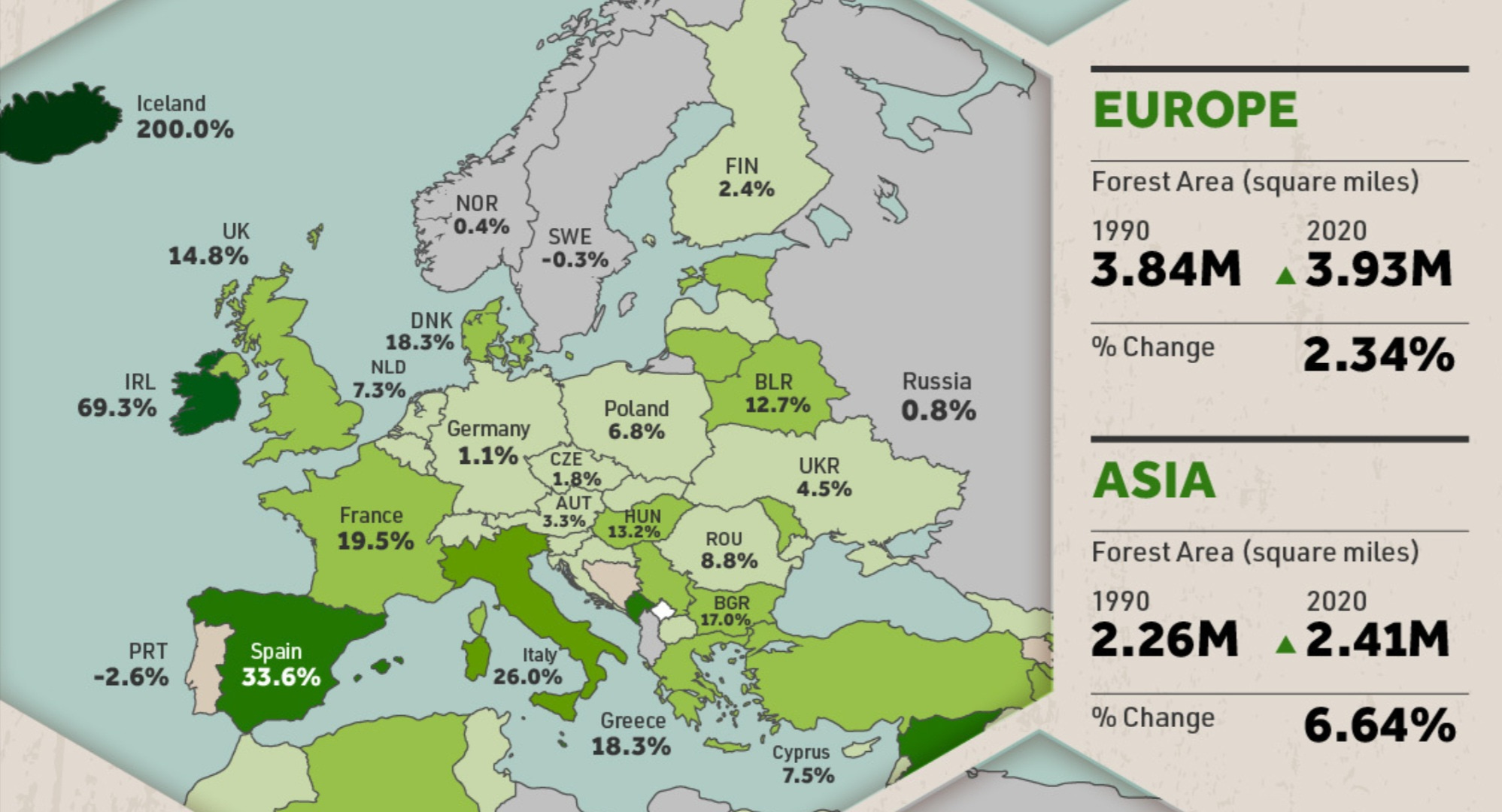
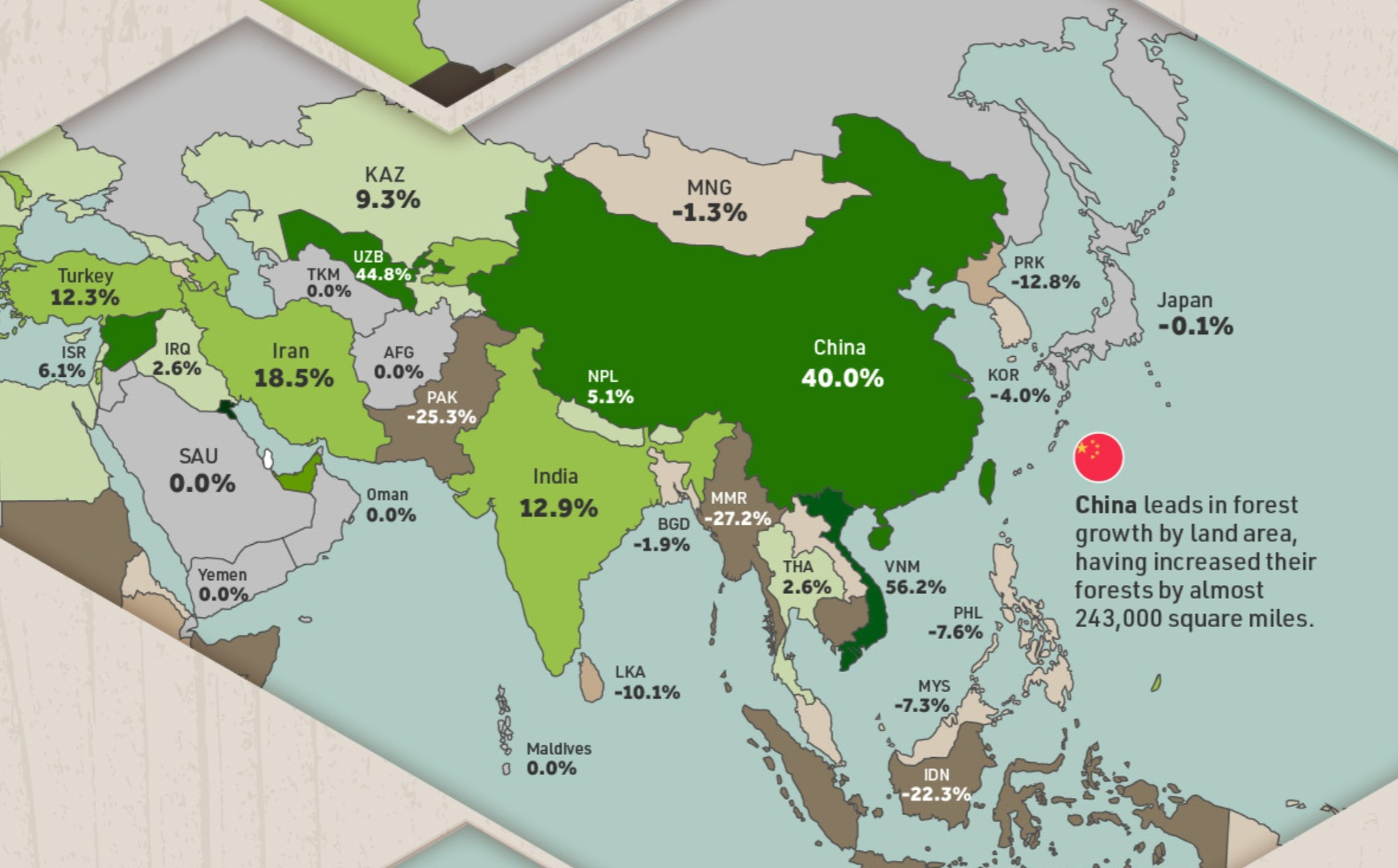
See this graphic, courtesy of VisualCapitalist: Ireland stands out a mile and you can already see the smiles of proud paddies at that: Job’s done, lads. That's another thing we’re great at! Who's up for a pint?
But all is not quite as it seems, and not just because Iceland shamed Ireland by tripling its forest cover in the same period. Seriously, are they dousing the fjords in Miracle-Gro over there?
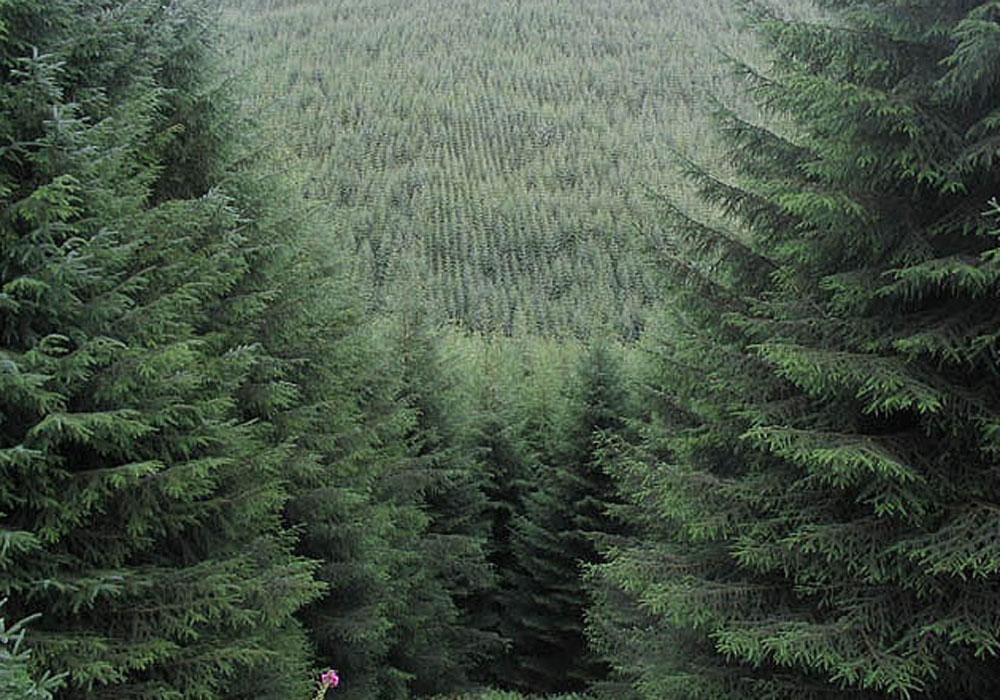
All is not as it seems in Ireland because firstly it’s growing from an incredibly low base and secondly the vast, vast majority of that forest cover is for logging: Regimented rows of commercial conifers, chiefly non-native Sitka Spruce.
Ever walked through a mature Sitka plantation? It's a silent death zone, where your footsteps in an endless depth of pine needles is the only sound, absorbed without echo by the Sitka sentinels. Not exactly the Amazon.
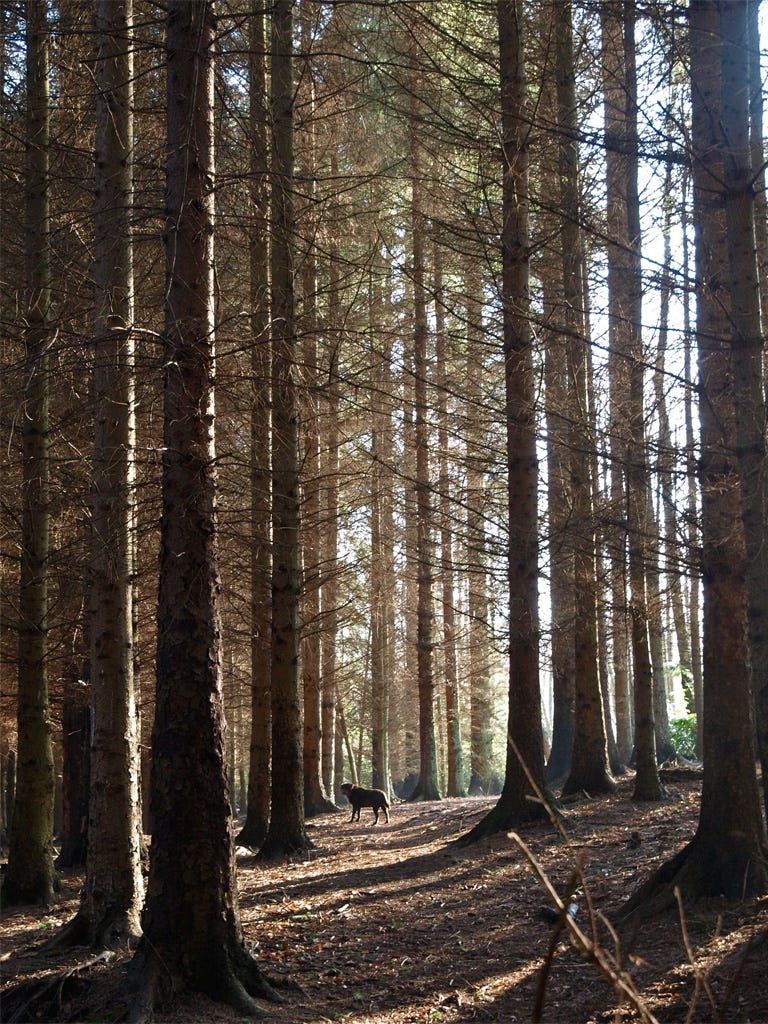
But then Ireland and the British Isles have never had an Amazon. Have they?
Actually, yes. It's hard to visualise now, because the natural world has been so completely warped here, but we're not living in anything close to nature, and unlike many places in the world you can't even see it with binoculars and wishful thinking.
Whilst the natural landscape of, say, Arabia is the wisdom of the timeless sand and the natural world of Norway is fjords and craggy interiors, the natural world of Ireland and Britain is something that disappeared long ago.
Temperate rainforest.
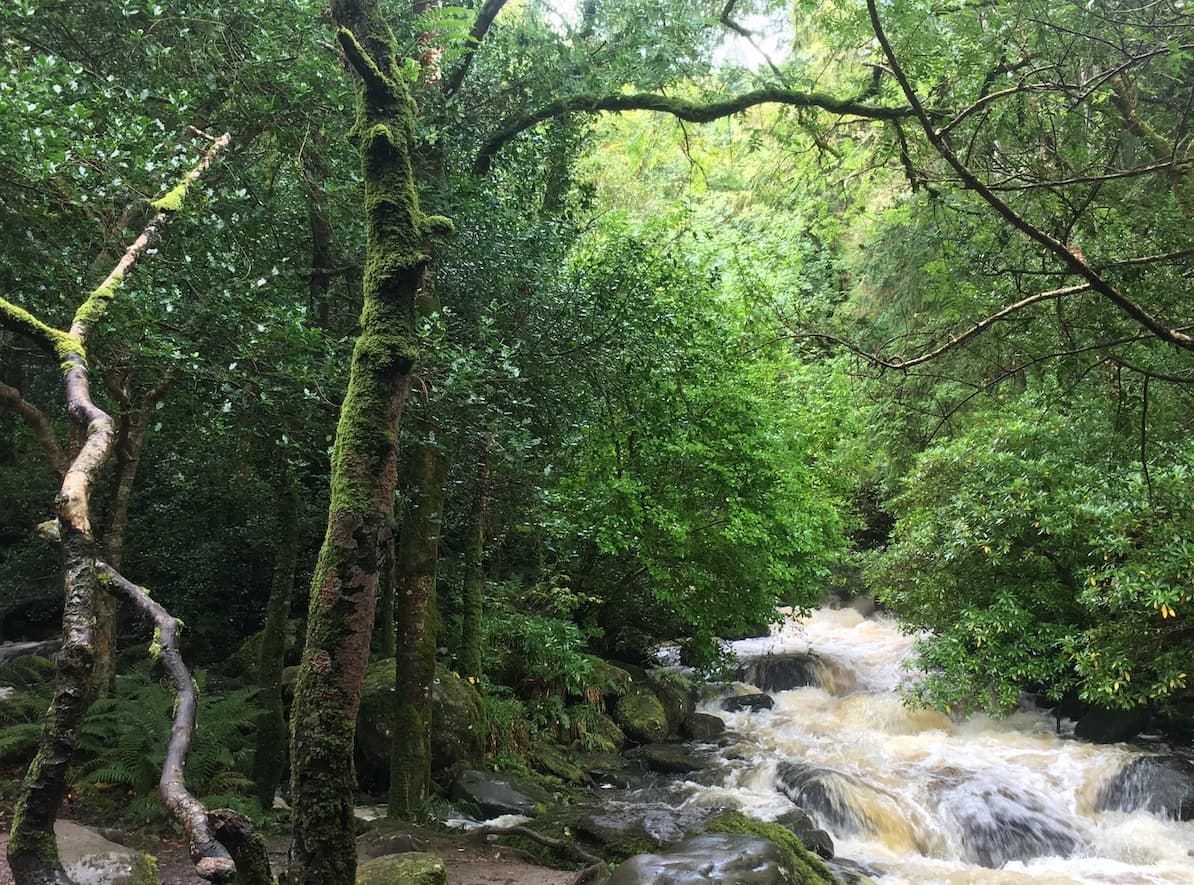
Before human settlement stripped the forests to raise crops & livestock, or build Ships Of The Line, Ireland and the British Isles were 80% temperate Atlantic rainforest by area. This huge lost wildwood, haunted by bear, wolves and stranger things, explains a lot of old myths long since dissolved into a changing world. The Fairy Folk, sacred groves, the shape-shifting Púca… all seem thoroughly ridiculous to modern sensibilities, but they were born to a vast vanished world of wet bracken, bog and branches that had everything to do with mystery and nothing to do with humans.
We drive everywhere now in a few hours. This swift journey was once an eternity in an alien world.
Can we get some of it back? I'd like to venture that yes, we can, and it can coexist with the hyper-productive techno future that we're even now hurtling ballistically towards.
Over here in Europe, but also in North America and much of Asia, our societies are no longer driven by agriculture. We need it, obviously, because we need food to live, but it's not a bedrock of our culture anymore. Few people are aware of the incredible increases in productivity that are underway in food production, meaning that ever less people and land will be needed for it.
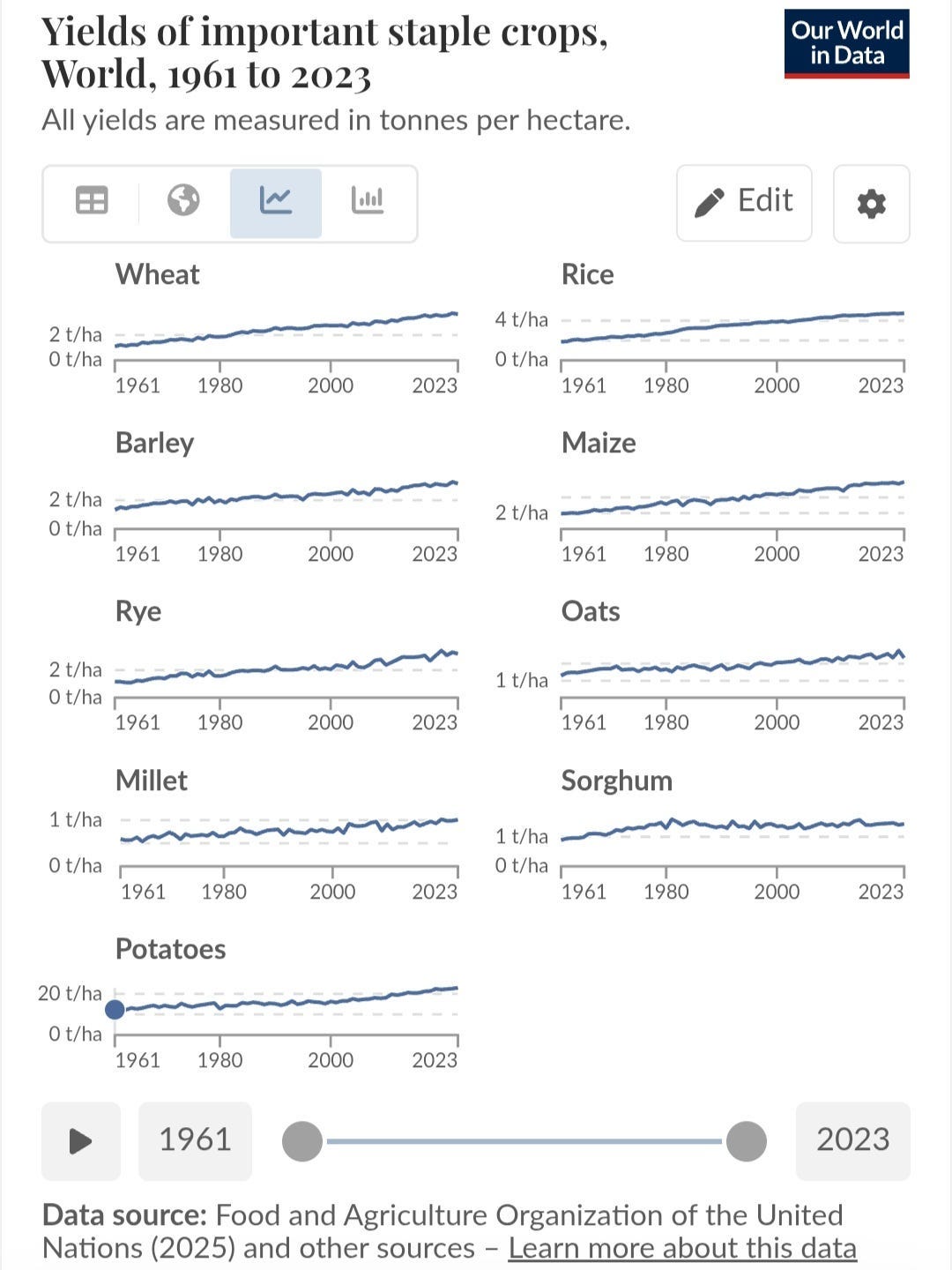
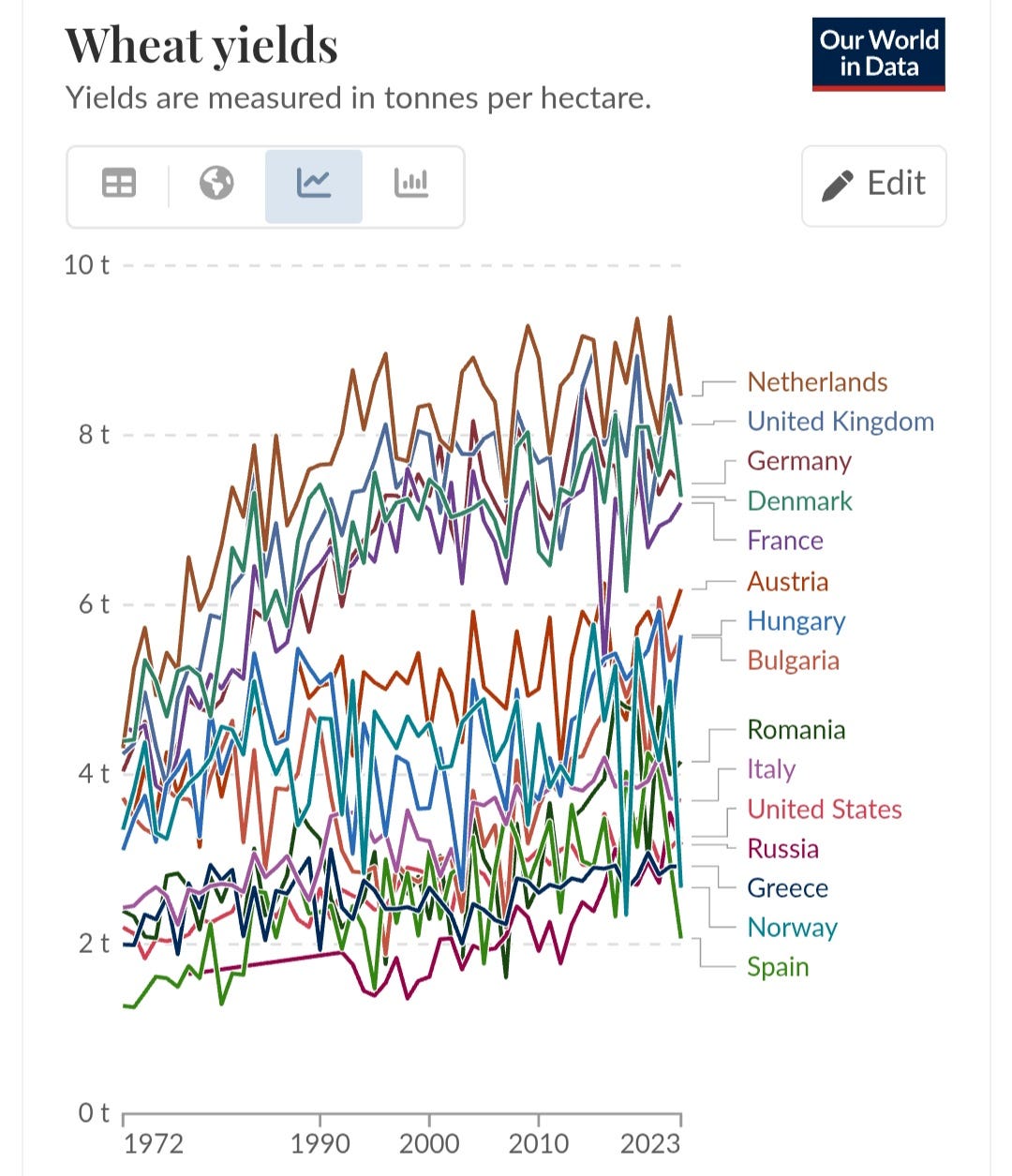
Wheat production per hectare is way up, corn production per hectare is up, dairy is up, beef is up. The productivity gap between intensively farmed land in Europe & North America, and the rest of the world is truly vast.
It's a thumb to the nose aimed at Malthusianism, a gigantic triumph of optimism over fatalism, and suddenly nobody's starving anymore. We're all getting fat instead, so much so that we've had to invent specialist pharmaceuticals to stop us from glutting ourselves on all this bounty.
And amidst soaring populations and skyrocketing food production, the total land area we're using for agriculture is going… down!
So here's my thesis: Let's forecast this forward as our population growth even now slows, massively outstripped by the surge in agricultural productivity, and ask what else we'd like to use all that land for. Because I think it should go back to nature.
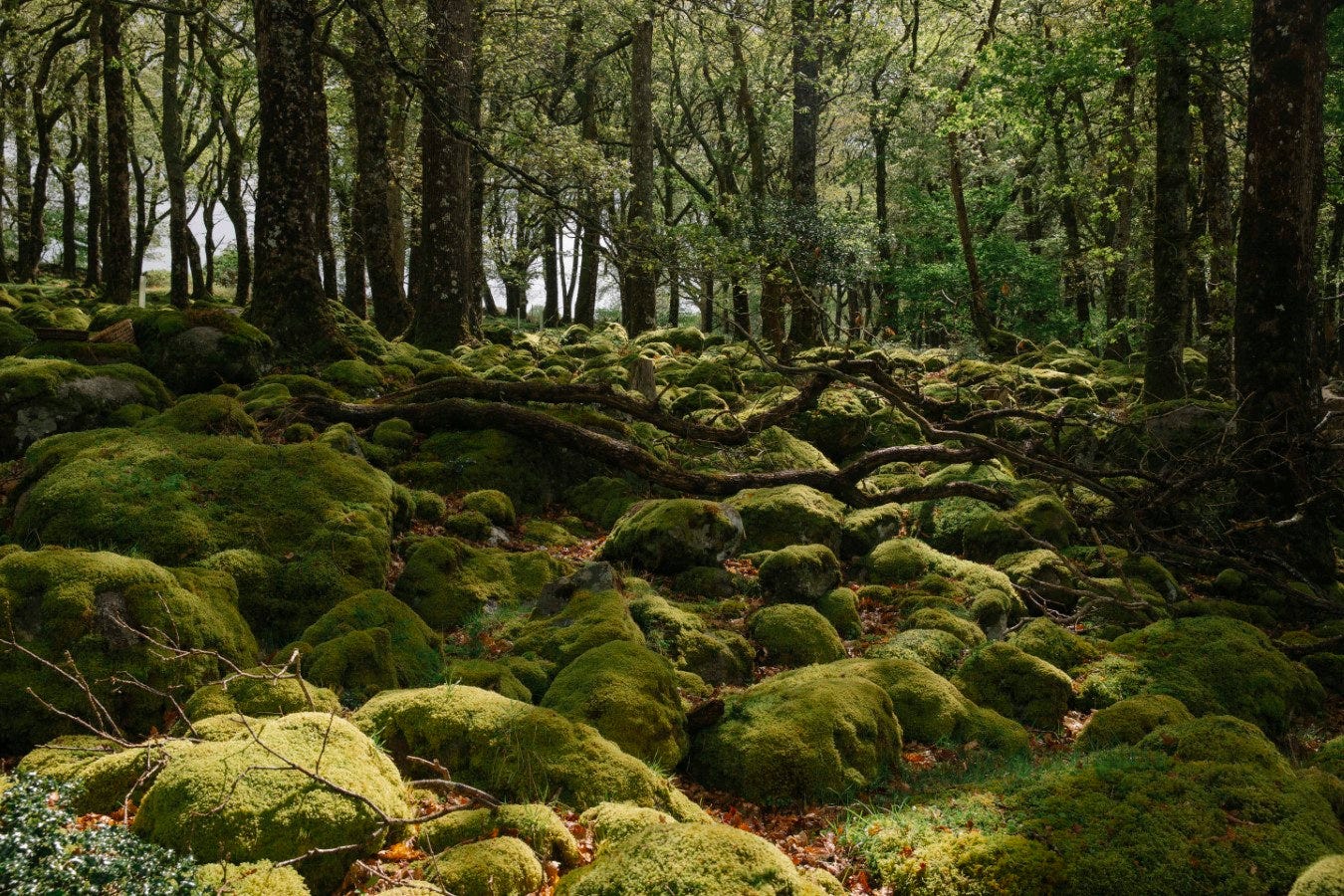
And not the nature of the children's storybook or the hiking trail. Real, briar-tangled endless forest nature. Ancient nature, the kind that we haven't seen for thousands of years, scary clutching-arms-of-wood-and-moss nature. An alien world.
The wild wood.
And where to start? Before we start rewilding productive dairy farms we should probably go for the easy wins: Lumber forestry and hill grazing land, because both are straightforward biodiversity victories that can be started right away. You can be cynical at this point and say that land has to turn a profit, and at least forestry is a carbon sink. Fair enough, but how much income is really generated this way?
The average in Ireland for commercial lumber is about 600 or 700 Euros per hectare per year, which isn't much. A dairy farm grosses ten times more, and brings in much more in net cashflow too: Insert quips about cash cows here.
Lumber is not a cash cow. The entire Irish lumber industry put together brings in gross income of about 700 million Euro a year, or about 0.1% of GDP. We spend about as much on petrol station takeaway coffee, and that doesn't take up 7% of all our land.
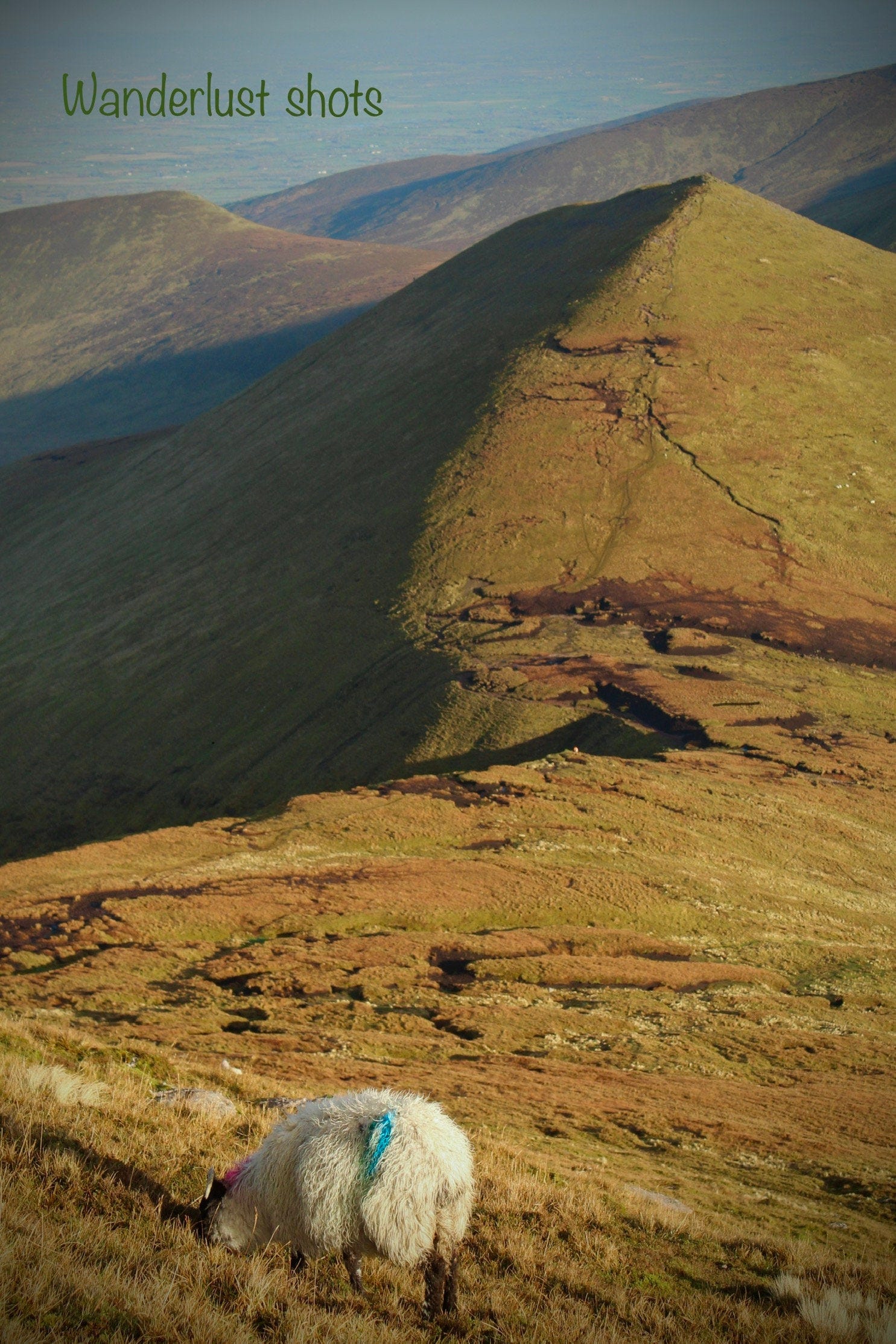
And as for hill grazing? The country is dotted with gorgeous rugged mountains that loom with craggy honesty on rural horizons. I love walking on them and I love their brutal charm, but a lot of that is a learned reaction and I'd probably like them even more if their flanks were thick, unruly wild forest. What the mountains would lose in their stark photogenic beauty they'd gain back ten fold in mist-wrapped mystery.
And what keeps many of these mountains bare is sheep farming. Sheep are voracious nibblers that retard and hold back the growth of young trees, so those mountainside scrublands you see owe much of their genesis to a ruminant’s bottom. That's why woodland and forestry is, with almost no exception, fenced with barbed wire to keep the damned things out. A mature forest wouldn't be felled by sheep, but in marginal land they're sure as hell capable of preventing trees from growing.
And if what you want is to re-create ancient Atlantic rainforests, that sounds like an obvious thing to target.
The sheep farming industry, though a huge farming sector, is even smaller than logging and only a third of that is hill grazing in commonage land that is among the least productive forms of agriculture on a per-Hectare basis. It produces almost nothing but is almost one-fifteenth of all our country's land area.
So why not give it back to nature and re-create something that's been extinct for centuries?
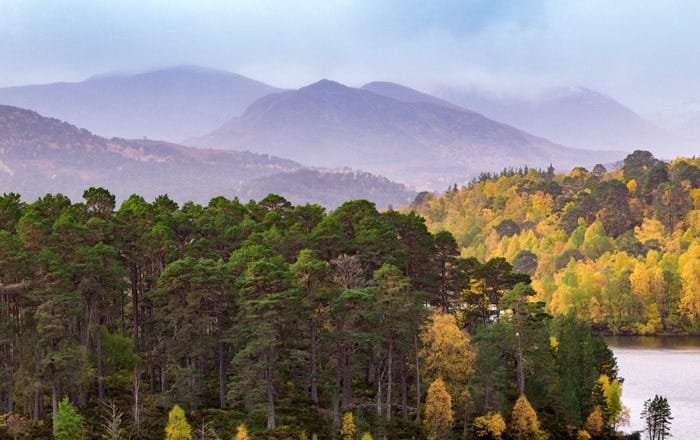
The wild wood whispers to us in moss and myth, but even now there are places where it is being rebuilt. The Affric Highlands project in Scotland, a three decade rewilding effort, aims to plant over five million trees and connect existing Glens from Loch Ness to Kintail into a single continuous wild forest in a rewilding project covering over 200,000 hectares. Another project, ten times larger, is underway in the Carpathian mountains in Romania: Actual Dracula country!
But why would we want to stop using land productively? Isn't this a retrograde step for Luddites?
Well, yes and no. If you regard land as something free that's just lying around, then any return is a good return, if money is all you care about. But then, if that's your contention why not make every building a utilitarian space-maximizing cube, every bridge a minimalist tension beam and every façade a blank-faced concrete exclamation? There are many places in the world like this and I think we can all agree that they're as depressing as hell.
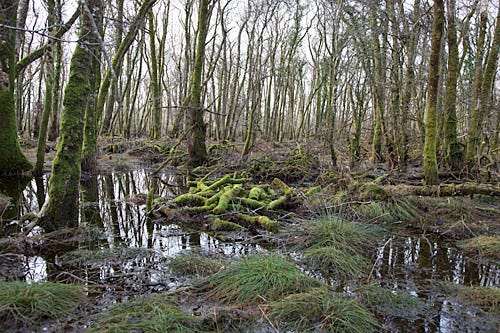
So… what, we should rewild for the sake of beauty? And can it really be beautiful if nobody's there to see it? Eagles don't care for aesthetics.
Partially, but no. We should rewild to get our soul back, and because technology is making it cheap. Desalination and industrial chemistry mean that as long as we have energy to spare, we can make fertiliser where we want and place fresh water where we want. It's the fundamental reason that we should stop lionizing decline and instead view energy as something that should be cheap and available in fountaining abundance, because with it we can do anything.
With it, we can make even harsh climates productive, and there are tricks that go way beyond mere water and power: For a small fee, a farmer in this part of the world can pay for access to nearly-live data on the verdancy and growth rates on their land, taken from aerial and satellite imagery. Combine this with GPS coordinates and programmable precision dispensers and you can micro-dose fertiliser to the exact places that need it; a technique that on its own can add 10%-30% to productivity. Combine this with genetically-tailored selective breeding, crop gene editing for weather resistance and mechanisation and agricultural productivity has nowhere to go but up… and that's before the wacky stuff like vertical farming, AI, algae farming and vat-grown proteins come into play.
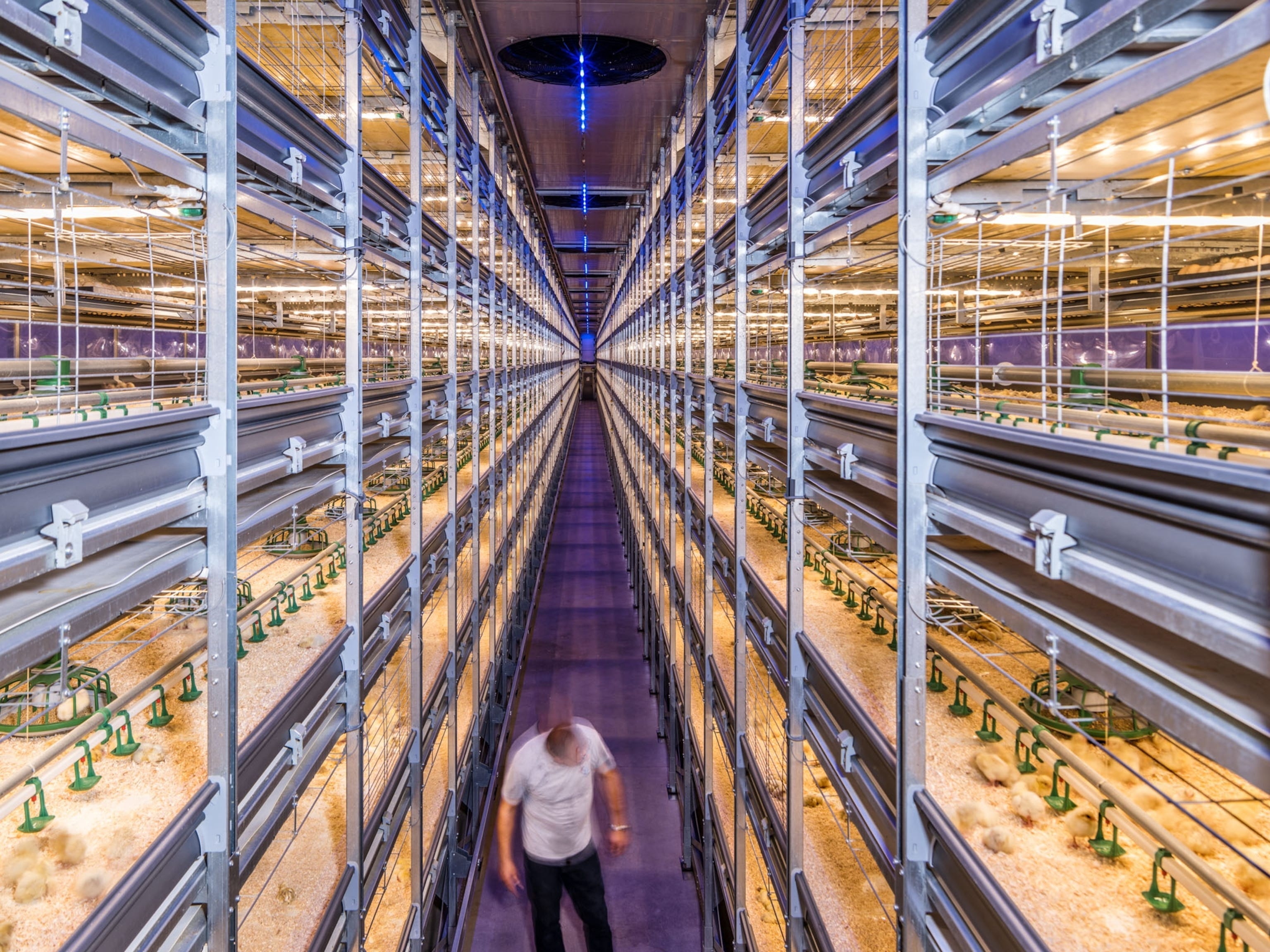
Crank the futurism wheel on all this and there are really only three ways it can go, as long as civilization stays on the rails:
We absorb all this plenty into a massive baby boom. Alas, this currently seems to be the opposite of what is happening.
We absorb all this plenty into becoming life-threateningly overweight hedonists. Again, this trend seems to be reversing as well.
We end up with a huge amount of surplus land that can be returned to nature.
I'd venture that on current trends, a massive land and grain surplus is what we're going to get by mid-century.
So, because trees grow slowly and because the MDF-&-IKEA market that would otherwise claim them is insatiable, we should be buying up marginal land and start rewilding now! This is a cathedral-building game. We're not planting trees for our children to sit in the shade of, or our children' s children. We're setting aside an ecosystem for the centuries, just as a cathedral’s stones are laid by masons who will never worship in it.
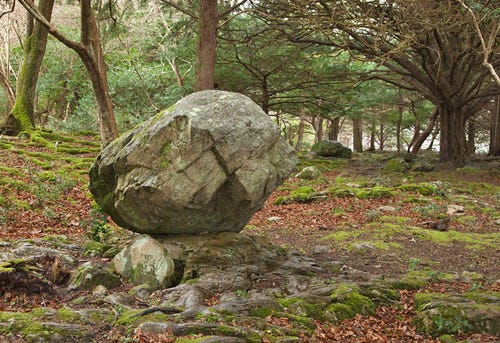
So let's go slow and not shock anybody, just so long as we don't stop: Bit by bit the plantations and high lands can be bought, fenced and returned to nature. Bit by bit the canopies rise and the branches twist together until the woods spread and merge into a vast wild forest, and deep in its aging heart…
…Something alien is born, and starts to spread.
The modern world denies mystery, so we shall return it!
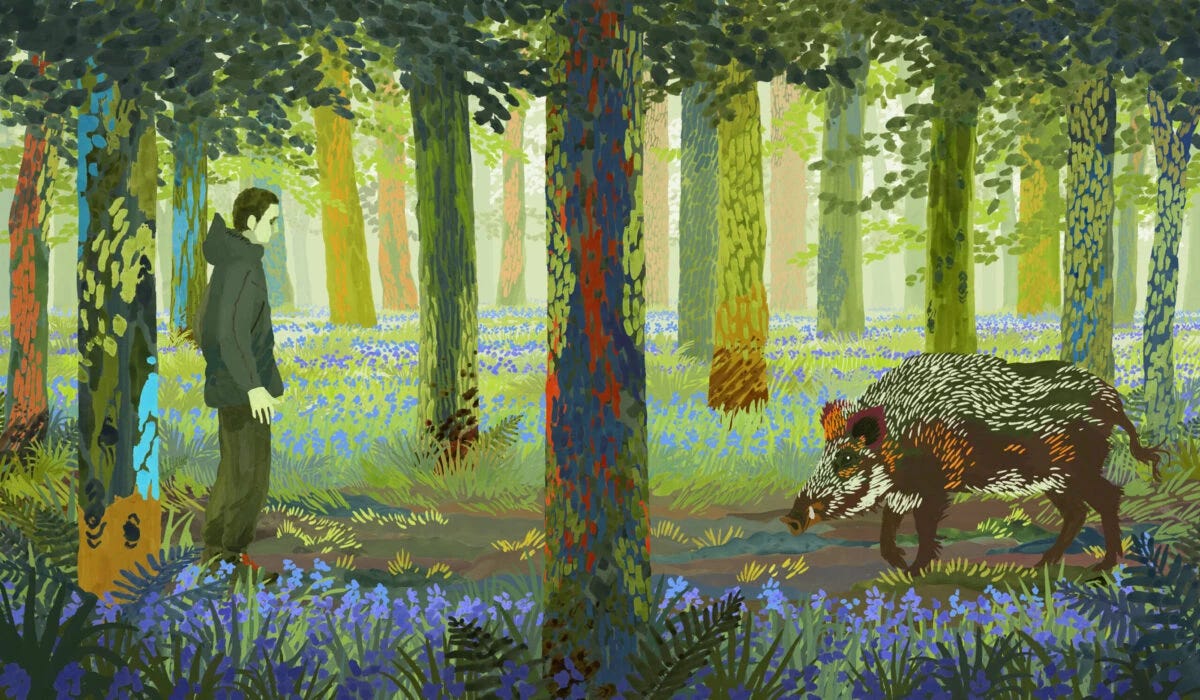
And someday our children's children's children's children's children, with lives we cannot guess at, will look out past their manicured lawns at the twist and weave of an ancient world reborn. In its dark and knotted heart the Green Man and the Púca shall awaken from their centuries-old slumber and look out at the sunlit works of man.
On that day we will have returned something more valuable than mere money.
We'll have brought back Myth.
Great article. We just need some ambition.
I live in New Zealand (but Irish born) and there is a group pushing for something similar here. Well worth a read of what they are aiming for.
Recloaking Papatūānuku
https://pureadvantage.org/recloaking-papatuanuku/
Papatūānuku is the Earth Mother in Māori tradition.
Excellent analysis as always.