
Finding Fermi
Hello? Is anyone out there?

Have you ever wanted to scream into the void? Perhaps in a dark cave, wrapped in sepulchral silence, perhaps over a moonlit landscape stilled by snow.
“Is anyone out there!?”
We can't handle infinity, or being alone, but we know these places aren't really infinite, so most of us resist the temptation, clamp our lips shut and hold our counsel to the dark places.
After all, there's always the fear that they might reply.

And so it is with the night sky, with a few differences. Firstly, while the universe may be finite, it’s unhelpfully big: There are between a hundred billion and four hundred billion stars in our galaxy alone, which is a number so inconceivably massive you'd thirst for a stiff drink just trying to hold it all in your head. And with hundreds of billions of stars, there must also be hundreds of billions of planets.
If even a tiny proportion of these were, Goldilocks-style, just right to support liquid water, that's hundreds of millions of worlds in this galaxy alone that could potentially support life, and with such geologically overwhelming odds, the question isn't really why we hear nothing when we scream into the void…
…The real question is why the void hasn't screamed at us first.
1: Alone in a vast, locked, room.
The question we’re trying to answer is “are we alone?”, and the vast majority of creatures in this world simply wouldn’t care. At the end of the day we're clever apes, and this comes with a locker-full of excess baggage that doesn’t apply to anything else on this globe.
For one, we’re social creatures. If you want to drive a human being insane, you deprive them of company. If you want to make a person feel threatened, you deprive them of support or communication. We don’t have overpowering physiques, sharp claws or lethal venom, or many defences at all which work on the individual level, past simply ‘throwing a rock’, so we need our buddies to survive.

Secondly, we’re intelligent, which means we can think in abstracts. It’s very unlikely that the wandering albatross throws a glance skywards and views the infinity of heaven with a weary sigh, but put a human being in the open to camp under pinwheeling stars and our minds are drawn to The Question.
Is there anyone else out there?
Perhaps I’m wrong. Perhaps Orcas in the Arctic take a break from traumatizing seals to gaze upwards with a sense of spiritual ennui. Or perhaps it goes in the opposite direction, and hundreds of lightyears away a sentient slime mould oozes through an incredible city, casually regards the glory of creation and doesn’t give a shit. But until I’m proven wrong we’re looking skywards and wondering, and that creates a problem because there really, really should be something to see.
You see, as mentioned before there are an absolutely colossal number of stars and planets, so logically there must be life out there somewhere, and if there’s enough life in enough places then presumably there’s intelligent technological life in a few places as well. Except we don’t see them, despite looking, and we’re not silent, so there’s no reason to believe that they would be.
High power planetary radar pulses from specialist facilities are potentially detectable up to 12,000 light years away (about one-fifteenth the width of our galaxy) with equipment like our own radio telescopes, and that potential radius would cover billions of stars. We only occasionally emit signals so powerful however, and they’re directional, so you’d have to have them pointed directly at you. Deep space transmissions used for communicating with craft such as the Voyager deep space probe are maybe detectable out to 60 light-years, which would cover thousands of stars, though again these would be directional signals. Omnidirectional signals such as TV and radio broadcasts can be detected by the very best current radio telescopes out to a distance of 16 light-years, or 70 star systems. There is ample time for an ET in the local neighbourhood to blast back a message saying “Stop showing so many bloody Friends reruns! It was never that good in the first place!”
So we’re not exactly stealthy. Why can’t we hear anyone else, or even see them in the sky?
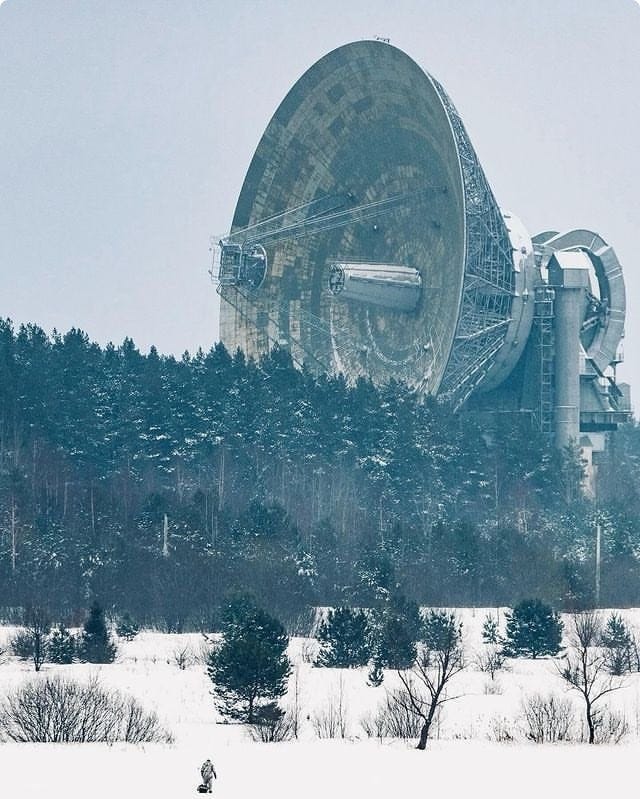
Space travel is hard, interstellar travel might be ridiculously hard and interstellar colonization could be damned near impossible, but if it’s possible at all then all it needs is one civilization capable and willing to do it, plus time. The sky should be thronging with the techno-signatures of intelligent life, yet it isn’t. What is going on?
This is the Fermi Paradox.
I’m not here to solve Fermi, because nobody anywhere has the information needed to do that, but I am going to lead you on a pleasant walk through the most plausible explanations, and recommend some good fiction on the way that you can flick through if you want. It’s nice to take your imagination for a wild ride, once in a while.
So, what do you say: Shall we go find Fermi?
2: Shouting at locked doors.
The first solution could simply be: We are all there is.
Perhaps life really is astonishingly rare and unlikely, the chance formation of order from chaos a cosmic freak that requires an entire cosmos to stack the decks. We don't know how it happened, so we can't be sure.
Or maybe life is common, but technological life is the real super-rarity. There are no scintillations out there in the black, because the spark of extraterrestrial intelligence is just too dim: Dull creatures browsing algae and slime, suckling on rocks and turning rheumy eyes to a heaven they can never comprehend.
It's impossible to know if either of these are likely, but I feel that both lack a certain drama. The all-human galaxy is a narcissistic sort of vision, but one burdened with terrible purpose: If we really are all the intelligent life there is, then we owe it to the universe to tend the spark of sentience and never let it go out. There are cruel things out there in the black, and we must never succumb to them!
That said, surely the all-human galaxy leaves fiction a little monochrome, a little lacking in novelty? You'd think so.

You'd be wrong. Frank Herbert's ‘Dune’, for example, is a dense masterpiece where humans have twisted themselves into becoming alien to each other, characters speak in their inner voice like this and, lacking computers or AI, mankind has spent thousands of years training the mind. The action centres around the desert planet Arrakis, source of the mind-altering Spice needed for interstellar travel, where colossal sandworms and hostile natives make for danger in a brutal world riven with treachery: Treachery which is every bit as tangled as you'd expect from feudal leadership castes bred for cunning over millenia.
It's ferociously dense and hard work at times, but Dune is worth your time without a single alien in sight.
Except for the worms, I guess.
Or perhaps we're not alone, but stuck in a jail cell of relativity, the door locked by lightspeed. It's possible that there's intelligent life throughout the cosmos, but the difficulty of crossing the interstellar gulf is so spectacular that nobody anywhere tries it and succeeds.
I've written on this before, and the reality is that interstellar travel isn't actually impossible, that there are well-studied ways of making it happen, but they are all way up on the civilizational difficulty dial: It's playing on permadeath God-mode, no fast-travel allowed.
But it's not actually forbidden.
For the locked-jail-cell interpretation of Fermi, where all civilizations can do is shout across the ether, you don't need interstellar travel to be prohibited by physics. You merely need interstellar colonization (as opposed to probes or warheads) to be so unlikely to succeed that a hypothetical colonization wave never gets off the ground, or ebbs to glowing embers after a couple of lucky attempts.
It's hard to find fiction in this category, though you could claim the movie Species is an example: An interstellar communication is received and it's a genetic code, with instructions on how to make an alien/ human hybrid. We then do exactly that, like the gullible mugs we are, and the resulting creature escapes and attempts to breed, with predictably horrifying results.
But in a way, the schlock-horror of Species is a refutation of the lightspeed-jail hypothesis, because there are ways around it. For sure, we humans are poorly equipped for interstellar colonization; we need too much stuff, too much food, too much oxygen and we're bulky, fragile creatures who reproduce slowly. Any putative human colony ship would be a colossus unless the colonists travelled as sperms and ovum. Or a sequence on a flash drive. Or a signal beamed to another world.
A civilization of alien slime moulds, or similarly robust creatures, might have no such limitations, and yet they're not here.
To end this section and move onto the next Fermi solution, let's recommend my favourite work of fiction that deals with the ‘all alone’ scenario: Stephen Baxter’s Time.
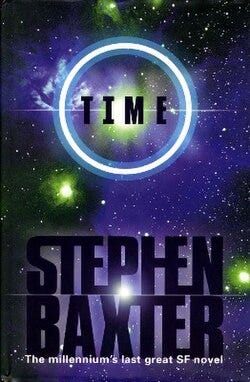
In this, the space entrepreneur Reid Malenfant, an Elon Musk-style disagreeable genius, mounts an expedition to the asteroid Cruithne. The experimental mission is piloted by genetically engineered intelligent squid rather than inflexible robots, and finds an artifact that gives glimpses of the distant future: A future where the stars are stained green by the blossoming of a vast galactic civilization. Hope, perhaps, in humanity’s manifest destiny? A tonic given to a cynical population in a time of decline.
It is not to be.
The squid reproduce and take matters into their own tentacles, opting to colonise ice-rich Cruithne for themselves. Meanwhile, something is happening on Earth, as a scattering of super-genius children are born; the birth of a new type of human being inspiring both awe and superstition.
Belatedly, humanity realizes that its destiny really is to germinate life that spreads throughout creation, but it won't be us doing it. This gives pause for thought in today's world, where interplanetary ambitions are rising once again, alongside the mewling cries of an infant silicon sentience. The first being to reach the stars might come from us, but not be one of us.
Now, what about the other solutions to Fermi? There are darker ones out there…
3: Crying into Dark Forests.
Picture an infant, cold and alone on the bracken, crying into a forest at night as the wolves circle and approach her.
Probably the most chilling resolution to the Fermi Paradox is that the aliens are out there, but they've learned to stay quiet!
More fool us, as we bicker into the radio spectrum.
There is a certain logic to this, since if you can traverse the space between stars, it's easier to send a warhead or kinetic impactor than a colony ship. If you don't know the predisposition of the creatures you've found at Alpha Centauri, or wherever, it might make sense to play it safe and weld them all to the bedrock just in case.
And there's energy levels to consider: If you're capable of traversing interstellar space with any sizeable payload in less than a human lifetime, that means you're already making something move so damned fast that there'll be a serious crater when it impacts.
So far, so logical, but perhaps we're being too hasty?
The Dark Forest is borne from our own evolutionary past, where there really were wolves out there, and worse besides… the Rape of Nanking wasn't conducted by wolves but human beings after all. Sometimes the very societies that prize peace and harmony for the in-group are capable of mind rending atrocities against the out-group. There are enough examples of that just in the last century.
But that doesn't make it a rule of life. Our closest relatives, the chimpanzee, certainly wage war as we do, albeit not quite so terrifyingly. But Orca don't do this, and neither do dolphins, even though they're horrible violent bastards in different contexts. Perhaps it's luck of the draw, then? If you encounter an alien civilization, are they more simian or cetacean?
And perhaps we should shoot first, just in case.
There are many, many examples of the Dark Forest in fiction, most notably the Three Body Problem series by Liu Cixin (recommended!), but to me the quintessential example is Greg Bear's The Forge Of God.

In this, a book that starts with the sudden disappearance of Jupiter's moon Europa, the overnight appearance of small mountains and cinder cones around the world signifies the arrival of an extraterrestrial force. In this cold war-themed book, what follows is the exploration of a particularly nasty resolution of the Dark Forest, as it emerges that Earth has become the target of self-replicating Von Neumann machines whose sole goal is planetary destruction. The Killers, a race that is never seen and might be long dead, released these aeons ago to clear out the forest by annihilating everyone else in it: An extreme paranoid response that has a certain grim, human sort of logic.
The wolves are getting closer and we didn't shut up in time…
Is there a nicer solution to Fermi?
4: Speaking Truth To Jellyfish.
Perhaps the reason we haven't seen or heard a single alien is because they're just too… weird. Maybe we wouldn't recognize what they do as talking, see any intelligence in them or even notice that they're alive at all.
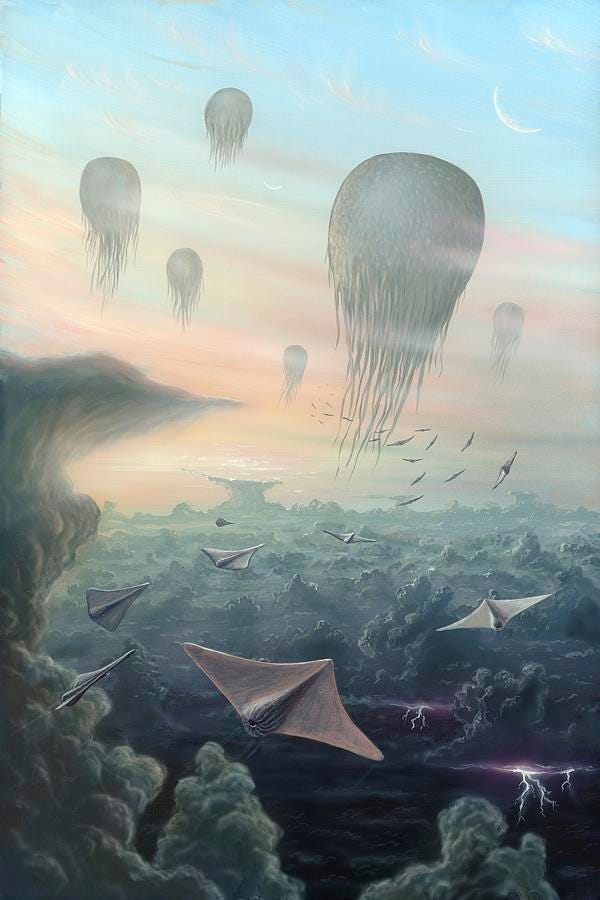
We have no way of knowing if carbon-based protein structures are the most likely form that life could take. Perhaps we're a minority in the universe and the throng of civilization all around takes the form of endlessly patient silicon-based creatures, or gas giant dwellers, or deep-space computers yearning to be cooled to absolute zero.
Or maybe it's life forms like Stephen Baxter’s enigmatic enemies, the Qax; vast self-organizing turbulent cells in roiling oceans or proto stars. Things so alien you could look right at them and never recognize them as life.
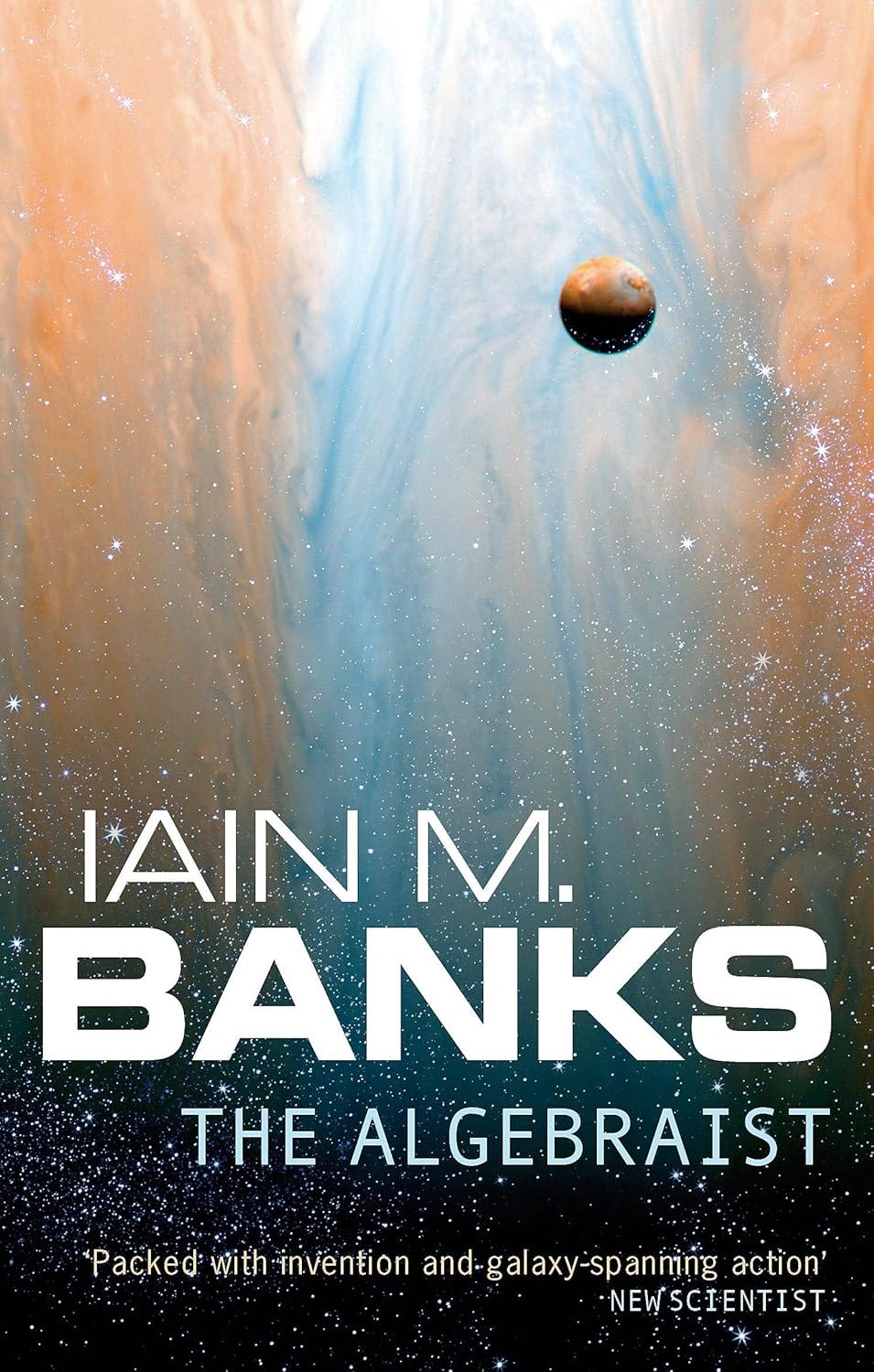
A fun example of this, with plenty of hijinks and space operatics, is Iain Bank's The Algebraist, where to stop a war the protagonist must venture into the atmosphere of a gas giant planet to talk to the quixotic ‘Dwellers’. These are an alien race billions of years old that keep to themselves and are… very… very… slooooooow. The Slow Seers that talk to them must bring their bodily processes to almost geological levels of sloth, while the world outside races on.
Or in Wil Mccarthy's novel Bloom, we see the apparently lethal Mycora, a nanotechnology plague that has eaten the inner solar system and rains spores down on humanity’s refuge in the outer system. The nanotech bloom is thought of as a dumb self-replicating killer plague, until telescope surveys discover something odd on Venus, now consumed totally by the Mycosphere: A clearing, where human shapes walk and live.
Could it be that the computational infinity held within a solar system of self-replicating processors has an intelligence, even a civilization of its own? And if so, what became of the humans swallowed by the nanotech bloom?
But before we go scouting for gas giant philosophers, or sentient nano plagues, perhaps there's another explanation.
Maybe the aliens are all out there looking in, and we're just not meant to see them yet.
5: Exploring The Zoo.
Ever looked into an aquarium and considered how the fish feels about this?
At least the fish gets to occasionally see you walk past and stop, placing your gross distorted face against the glass to smile and point in a gesture completely lost on anything aquatic.
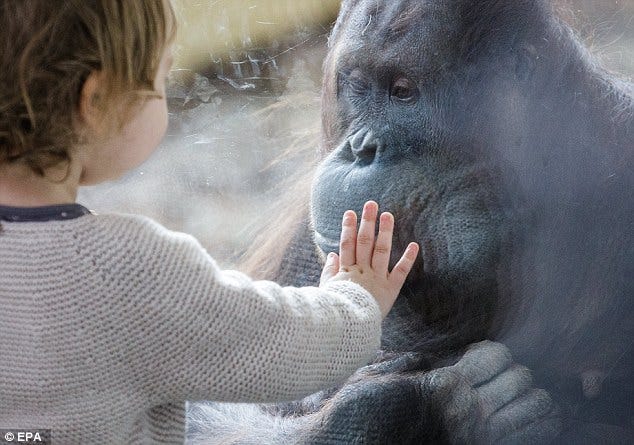
You get where I'm going with this. Perhaps, just perhaps, we're being watched and studied in secret, trapped in an enclosure the size of a planet while things watch us from afar. It's one of the most conspiratorial of resolutions to Fermi, and somehow even more narcissistic than the one where we're all alone. What makes us so special that we'd be a zoo exhibit anyway?
Maybe we're a bit disgusting, or primitive or dangerous. Maybe it's all a simulation, or perhaps we're a harvest.
It's one of the less likely solutions to Fermi in my opinion, but narratively rich. My favourite ‘Zoo’ novel is Iain Bank's State of The Art, written from the viewpoint of the crew of the starship Arbitrary who visit Earth in the late 1970s. The Arbitrary, a character in its own right, is a superintelligent AI and its crew is very nearly human, needing only minor alterations to pass unnoticed on Earth. The novel is made more delicious by using characters and settings from Banks’ ‘Culture’ series of novels, depicting a vast AI controlled communist space-utopia, and viewing Earth through their eyes. The crew are divided between those who want to ‘fix’ the flawed human civilization from the shadows and those who would formally contact it, bringing it into the Culture fold.

The crew are likewise split between those disgusted by our riven and sordid state in the late cold-war, and those who fall in love with Earth, choosing perhaps to settle here for good.
Well, you would, wouldn't you?
6: Here We Go Again…
A very, very unlikely solution to Fermi, but one that yields great narrative potential, is that we're all in this together: There are thousands of intelligent technological civilizations arising at the exact same time, each one the first within its local sphere and so looking on the world with new eyes. Everyone will meet, in the foreseeable future, in a grand competition of equals.
How very convenient!
Given the age of the universe this seems impossible without a precursor event, such as a galactic-level mass extinction that periodically wipes the slate clean, so every new civilization that builds itself up out of the rubble encounters the Fermi Paradox in the same way.

An example is one of my absolute favourite works of fiction, Stephen Baxter’s Space, which deals with exactly this premise. In this, humanity is stunned to find signs of an alien presence in the outer solar system. The cybernetic ‘Gaijin’ are contacted, and reveal that they entered through an ancient fast-transit portal far beyond the orbit of Pluto. Recurring adventurer Reid Malenfant visits and passes through the portal, discovering that it's part of a grand network that predates both humans and Gaijin.
Meanwhile, other explorers start finding the wreckage of ancient terraforming attempts within our own star system. Technological leftovers of events hidden in history, pointing to an unsettling realization: All of this has happened before!
As Malenfant bounces back-&-forth through the portal network, the relativistic time dilation provides a narrative lens to observe the evolution of human society in a series of time-lapses. Decades, then centuries, then millennia pass and our initial advancements become lost potential as we regress into scattered colonial outposts. Meanwhile the stars turn green or start to flare as the colonization wavefront of every other species gathers pace towards us.
And, at the end of it all, Malenfant must journey out to find the source of the Great Reset and see if he, and humanity, can find a way of closing the Paradox forever.
7: The Great Filter.
There are countless solutions to the Fermi Paradox and I invite you to warm up your imagination-muscles and conjure your own! All we know is that a sky that could be full of life is, unaccountably, silent.
Maybe the other Earth-like worlds are all continuous unbroken oceans. Perhaps abundant metals and liquid water almost never coexist on a planet together and so a civilization with jet engines and the microwave oven never gets off the ground.
Or perhaps there is a Great Filter that stops almost all life from reaching the space-faring stage. This filter might be in our past; simply the unfathomable good fortune required to create life in the first place, in which case we have little to fear.
Or it might lie in our future, which means we have to pass through it, whatever it is. Perhaps the first questing tendrils of true Artificial Intelligence into the genetic code will answer us with a genocidal plague, or our swelling numbers will bring our end with an almighty psychic scream, or it'll turn out the dolphins were in charge the whole time.

Or perhaps all this will be answered tomorrow, when the spreading sphere of our radio emissions finally crosses a civilization capable of answering in kind.
And on all the television screens, across our eyes and the skies themselves, a message.
We are here. We are not alone.
Would you feel better after reading that? Or worse?
I like the "solution" proposed by Charles Stross in "Accelerando". Inteligent life ends up uploading itself into vast clouds of computronium. But due to the light speed limit there is a maximal size beyond which you cannot go and mantain coherence. So effectively traveling beyond your star makes you very stupid, like amputating 90% of your brain, and nobody wants that.
Of course we can think of workarounds, but is an elegant variation on the "virtual universe" theme - if highly intelligent life can build an infinitely rich virtual universe, where everything can be calculated and simulated, why bother going to other stars or even communicating.
Another option is that we are like primitive people wondering why we don't see smoke signals of other tribes from afar.