
Atomic Island
Is Britain finally getting its act together?

Which country in the Western world has the most new nuclear capacity either under construction or planned & funded for imminent build? I know what you're thinking, but in fact the answer is Britain.
Yes, really.
It's everyone's favourite source of bad economic news; a foggy Island which has spent the last couple of decades manufacturing bad policy decisions and procrastination, but it seems to have got its head screwed on straight for nuclear power. This is such a turn-up for the books that you probably don't believe it.
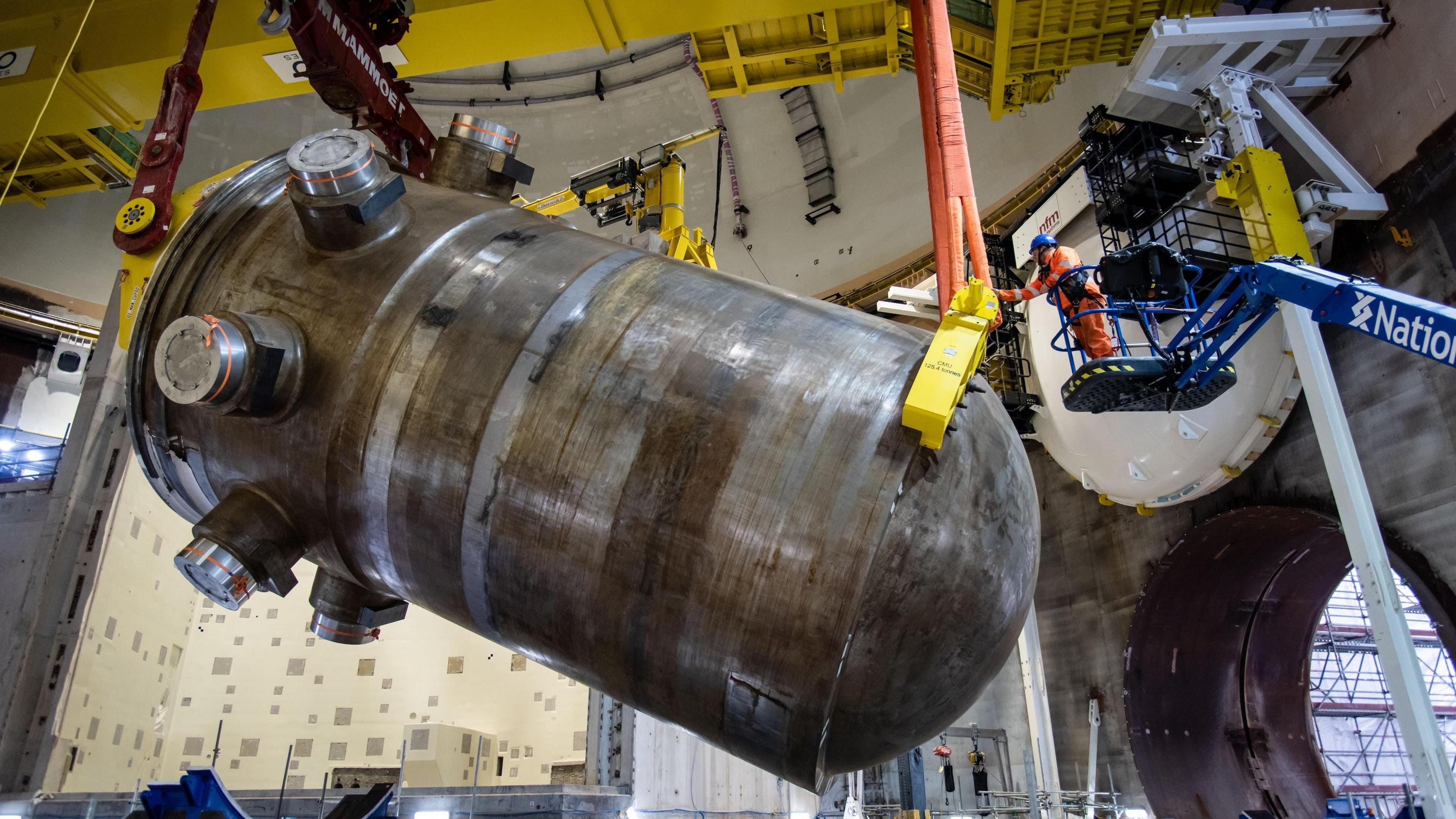
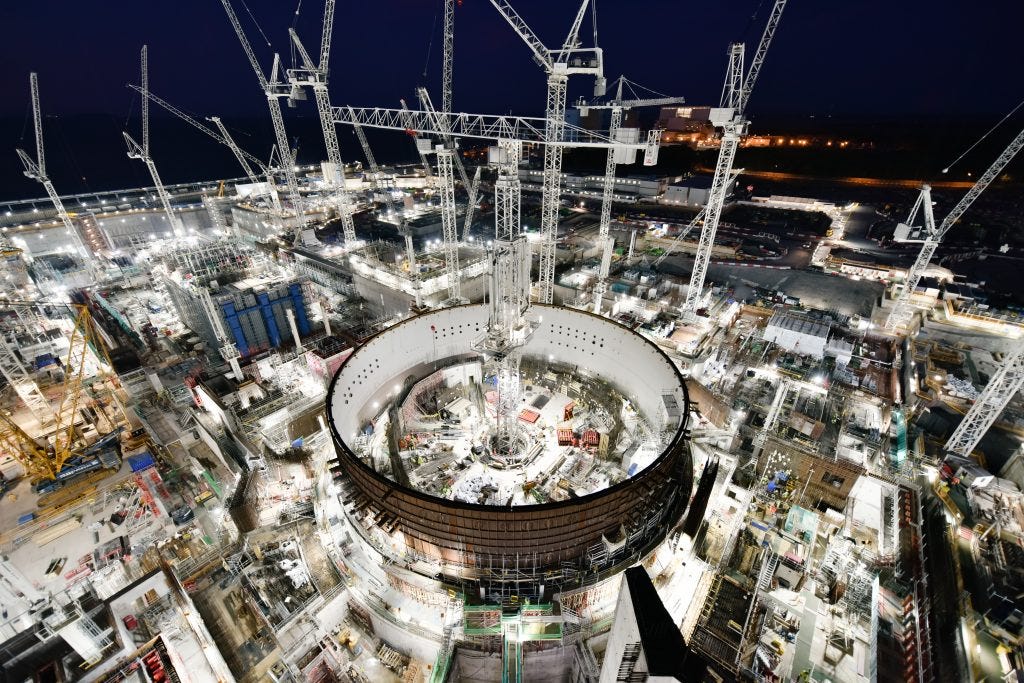
The now well-progressed Hinkley Point C nuke plant may be derided as the most expensive piece of mismanagement since King Midas got his family around for a group hug… but it is being built and it will add 3.2 Gigawatts of much-needed capacity to the UK grid. On top of that, the funded commencement of Sizewell C last year, another duo of big EPR reactors, will add another 3.2 Gigawatts, making 6.4 GW total in funded new-build in the UK.
For comparison, the recently built Vogtle plant in the USA has four reactors giving a combined 4.5 GW of capacity and is the largest nuclear plant in America. The two British new build projects together will add about half this again, onto a much smaller grid.
The cynic in you (and let's be honest, Kier Starmer's government attracts a lot of cynicism) might deride this as an easy default decision by a government with nowhere to go, amidst a huge power shortfall. And fair enough; if this was the only piece of new nuclear news it wouldn't be much to talk about, but it comes with company.
Last year the government also committed to on-shoring the supply of High Assay, Low Enriched Uranium (HALEU) nuclear fuel in the UK, to remove dangerous dependencies on Russian supply chains. This was reinforced recently with up to 300 million in funding.
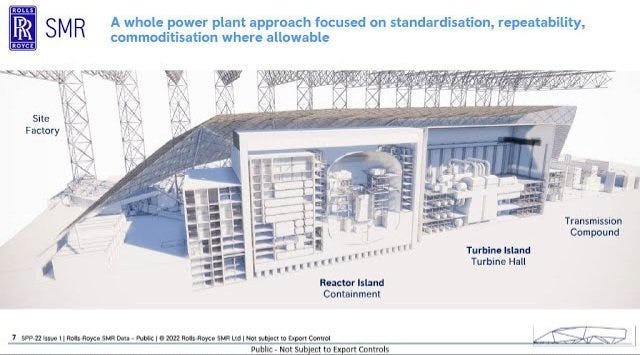
Secondly, the outcome of the Small Modular Reactor competition was announced, with the Rolls-Royce SMR design as the winner. The company is planned to build its first three reactors at Wylfa, North Wales, for a total of 1.4 Gigawatts capacity. More may follow if this is a success, and the company has already started work in a purpose-built ‘research factory’ with the Advanced Manufacturing Research Centre near Sheffield.
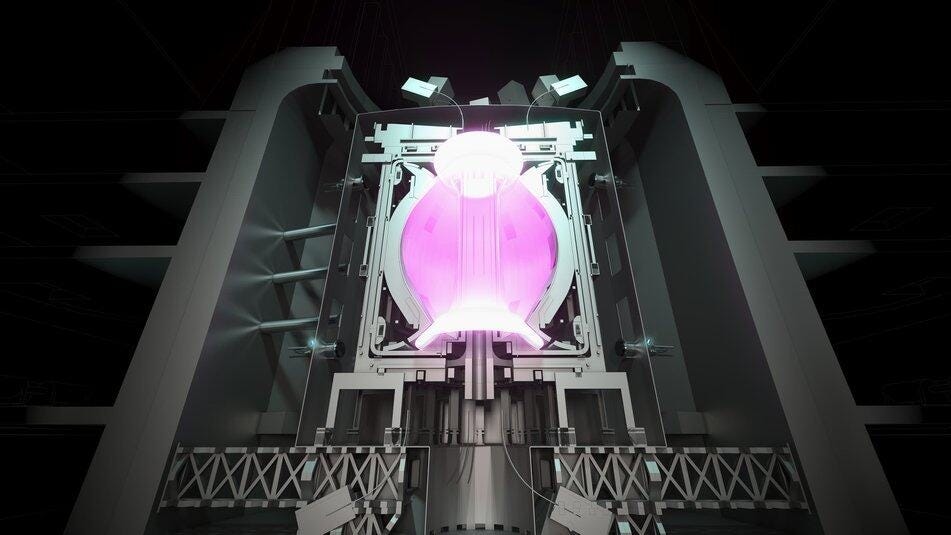
Thirdly, 2.5 billion was announced in fusion reactor funding over the next five years for the STEP spherical tokamak project.
Fourth, all this is on the background of Britain being selected to supply reactors for the Australian navy and the AUKUS submarine project.
Finally, and probably most significantly, a task force called (uninspiring name alert!) the Nuclear Regulatory Taskforce published its 47-point list of recommendations on how to make new nuclear in the UK cheap again, and remove the Midas touch.
To everyone's astonishment, the government agreed to follow the recommendations. The how of this we will find out shortly.
Put this all together and that's a lot of steps in the right direction, all right next to each other. Why, -whisper it now-, it almost seems that the UK has a pro-nuclear government in charge.
Don't say it too loudly or you'll jinx it!
But while all this is great stuff, we're here today to talk about a different piece of Good News, which deals explicitly with how to bring advanced reactor designs into the UK. Specifically the much-discussed, seldom deployed ‘Generation IV’ designs.
Excited? I am!
Fourth Generation Fixation
Just last Wednesday a piece of niche good news dropped about new advanced nuclear plants in the United Kingdom.
Actual good news, from Britain? I know, I know. But it can't rain every day, right? Or at least not for twenty years straight. Maybe.
But with that cautious self-flagellation out of the way, what dropped was a bit of government direction-setting called the Advanced Nuclear Framework, which sets the standard rules & strategy, plus a big pot of cash, to building advanced Generation IV nuclear plants in Britain. A world-first road map to commercialising the most advanced reactors in the world, so people can boil kettles, watch Eastenders and do other acts of performative Britishness using firm, clean power.
But let's back up. What are ‘advanced reactors’ anyway, and why are they better than what we've got already?
The UK currently has five nuclear plants in operation, plus one in construction (Hinkley Point C) and one planned & funded (Sizewell C). And some planned but not-yet-funded with Rolls-Royce SMRs too (Wylfa).
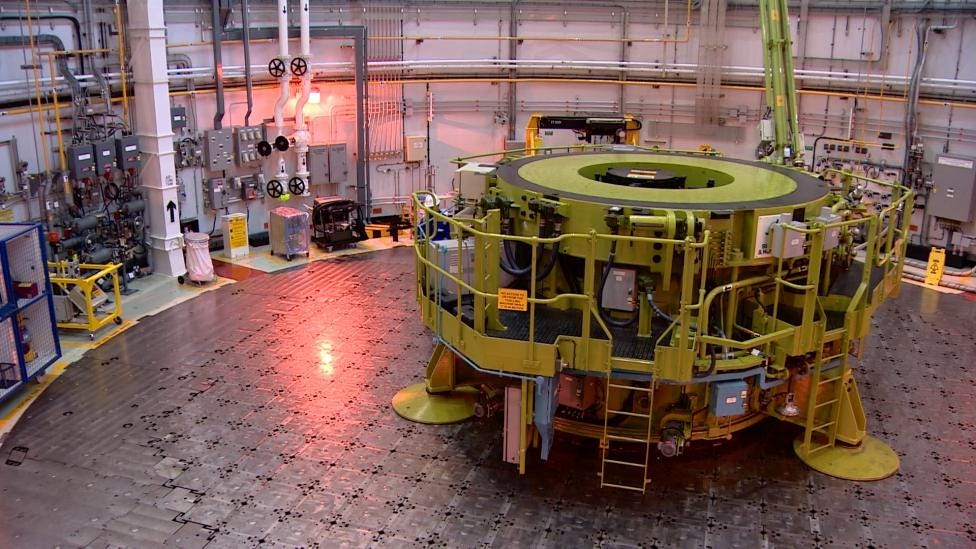
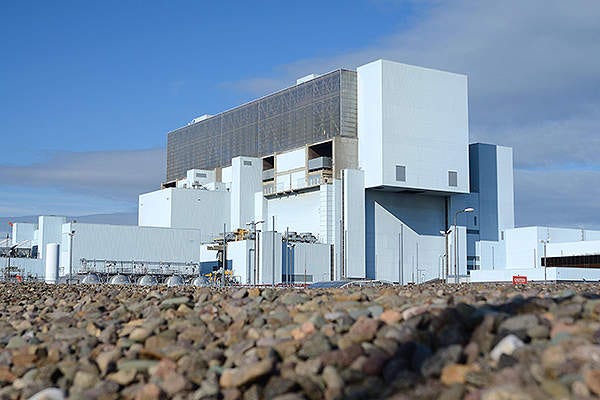
The problem is that the ones in operation now are creaky. They're old and won't be around for much longer. Four of them (Hartlepool, Heysham 1 & 2 and Torness) are powered by high temperature CO2 cooled Advanced Gas Reactors. These were the future when they were introduced in the 1980s, but are due to retire in the next two to four years, leaving a 4.8 Gigawatt hole in the nation's generating capacity that'll only partially be made up for by the 3.2 Gigawatts of Hinkley Point C and a flock of mercurial wind turbines.
And we've established that burning coal and gas would make the polar bears sad, so that leaves a bitter need for more atom smashing, as fast as Britain can get it.
Most of Britain's reactors are ‘Generation II’ reactor designs. The gigantic Hinkley Point C and Sizewell C projects are each powered by two ‘Gen III” European Pressurized water Reactors. But what the Advanced Nuclear Framework is dealing with are so-called Advanced reactors, many of which are ‘Gen IV’ designs. Fancy stuff.
I've discussed some of the GenIV concepts before, including quirky lead cooled fast reactors and helium cooled high temperature beasties. Most GenIV designs are characterised by passive safety, simple compact designs, high temperature output and in some cases a closed fuel cycle with a fast neutron spectrum. There are many coolant and fuel concepts out there and it's not obvious which is going to win long term, but as they say there's only one way to find out…
You have to commit to it first!
Britain, beset on all sides by energy, productivity and economic security constraints, looks set on committing to next generation nukes. But aside from the big boys in Hinkley Point and Sizewell, what kind of things are on offer?
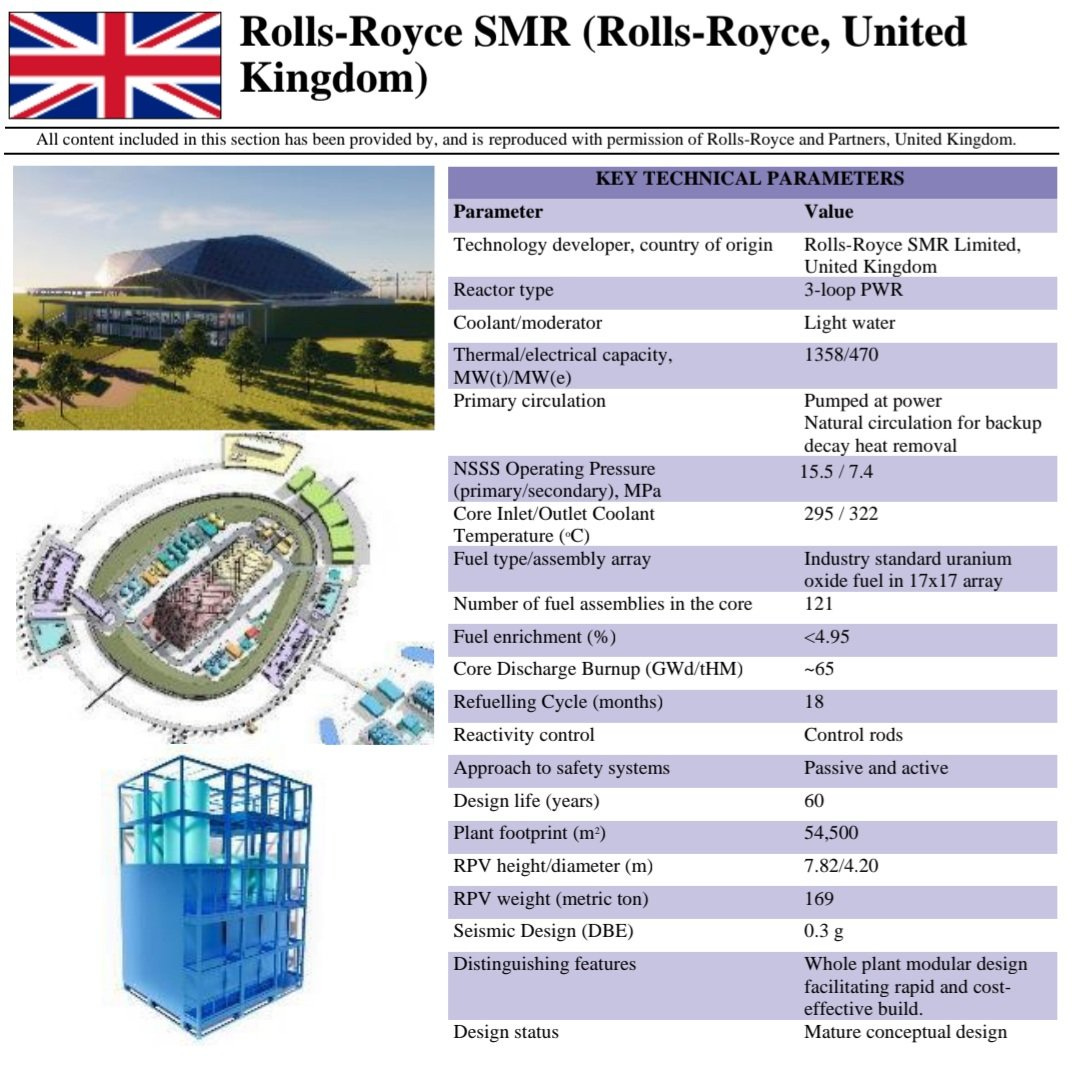
At Wylfa, three Rolls-Royce SMR reactors are planned. These are small modular reactors, but lean more on the ‘modular’ than the ‘small’, having a design capacity of 470 Megawatts, each sufficient to power a small city. They are conventionally fuelled & cooled pressurised water reactors but are designed for high factory build content and fast low-cost deployment under a temporary on-site installation factory to be erected during the construction phase.
Think “atomic lego”.
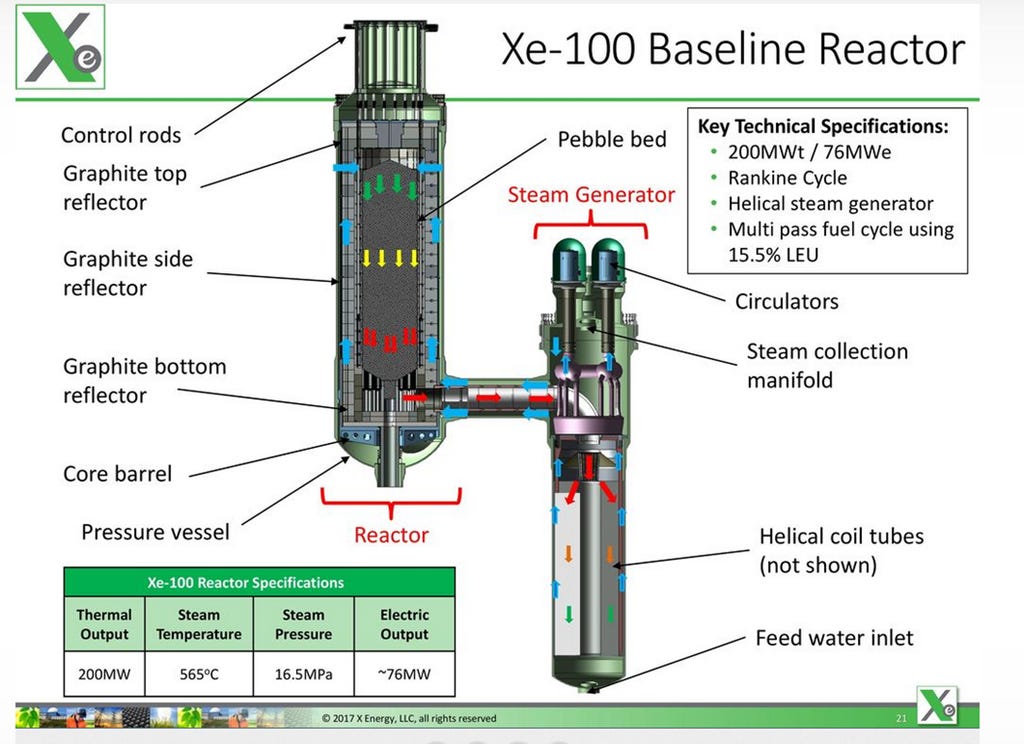
In Hartlepool, adjacent to a soon-to-be-retired Advanced Gas Reactor, a proposal exists for US company X Energy to build up to twelve Xe-100 mini reactors with 80 Megawatts apiece. Like the Rolls-Royce deployment at Wylfa, this would be intended as a bridgehead to a large-scale national buildout if successful, manifesting the fun spectacle of a US versus UK SMR duel on British territory.
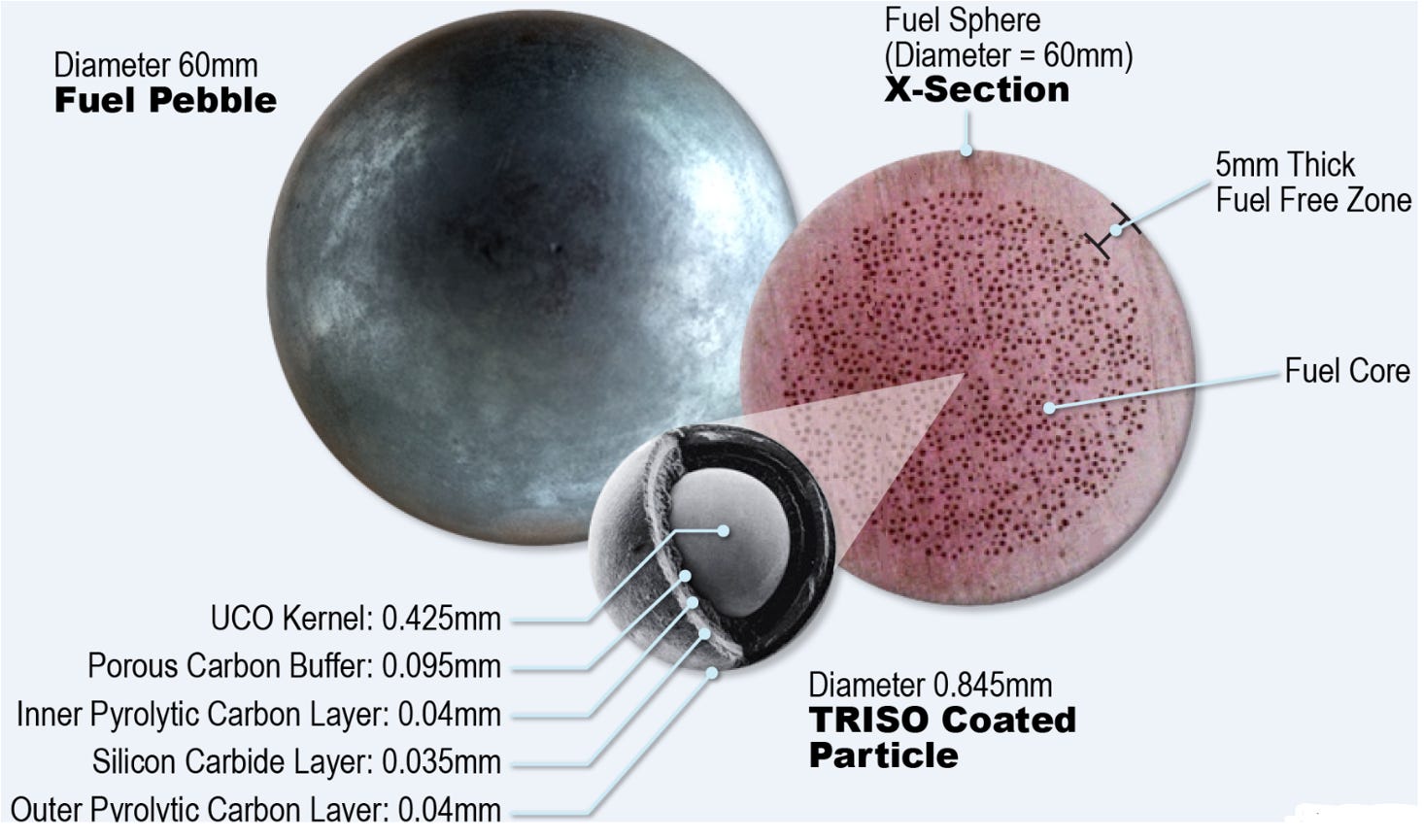
The Xe-100 is a novel modern iteration of High Temperature Gas Reactor technology pioneered experimentally in the UK, Germany and Japan and on a larger scale in China. It uses helium coolant and TRISO fuel pellets, impregnable spheres of carbon and silicon carbide. Sadly Triso pellets create supply chain constraints that need resolving, and the Xe-100 is less mature in planning and design assessment for the UK market than the Rolls-Royce reactor, but you can't win them all, and it has its benefits too: Its development is well financed in the US and there's potential to tie into a deep supply chain with unit cost reduction from many repeat builds.
It's a bit puny, though. At 80 megawatts it's a polar opposite of the big Rolls-Royce PWR and it's not certain whether the best reactor strategy is to stay small & repeatable, or to go-big-or-go-home. A lot could depend on the regulatory environment, which we'll look at in a minute.
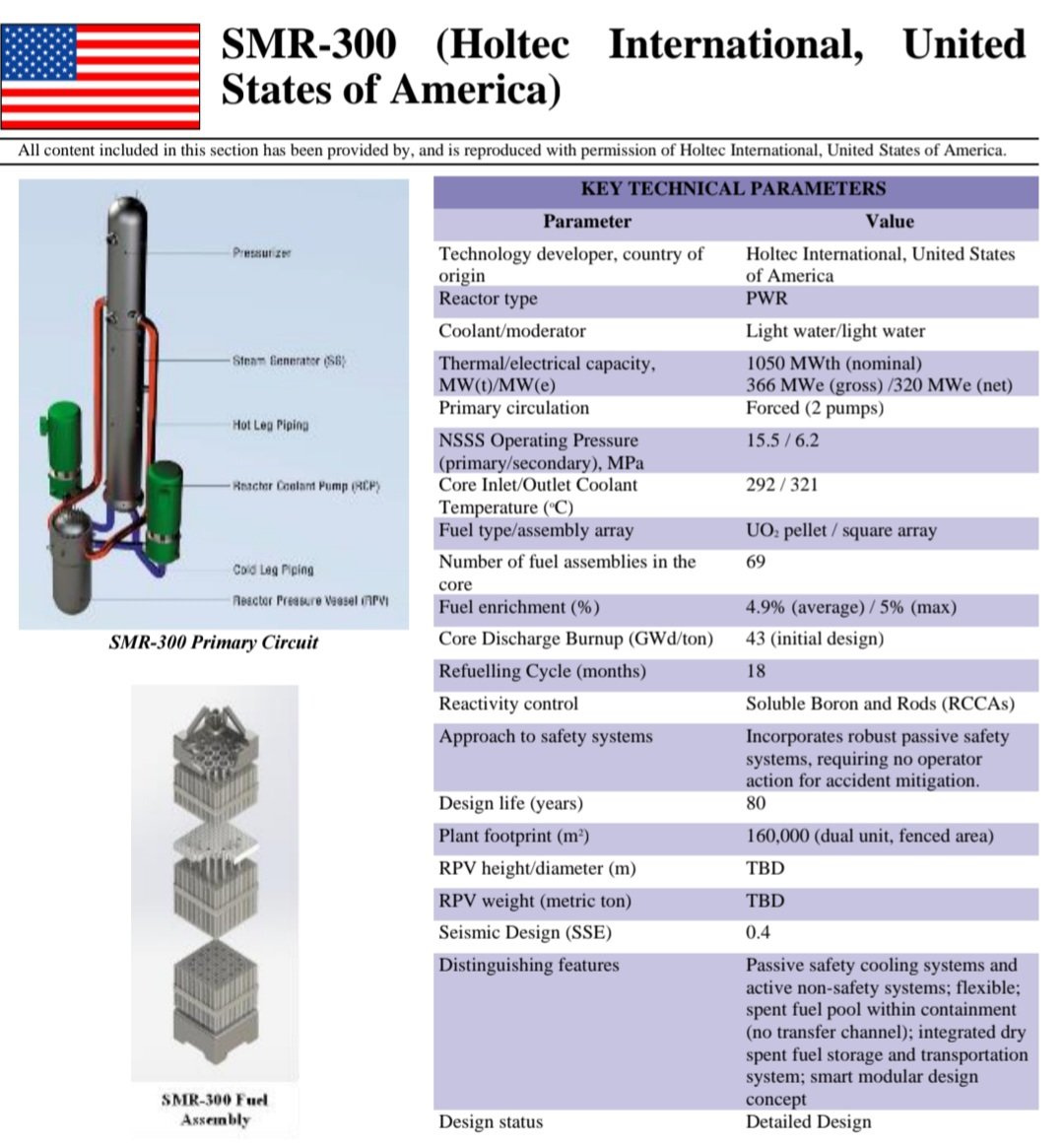
Finally, in Nottinghamshire is a proposed location for SMR development with Holtec, another US company, and EDF. At 300 Megawatts and a pressurised water reactor this is more of a straight competitor to Rolls-Royce, which it lost to in the UK SMR design competition.
Wow, that's quite a bit of variety…
And this is where the Advanced Nuclear Framework comes in, as a standard process by which these beasties, and even more advanced stuff in the future, can be progressed to implementation, along with removing a few speed bumps that make new British nuclear so expensive and drawn-out.
So let's go into what the Framework is, and what it isn't.
Can it save British nuclear..?
The Framework.
